
The Grudge — Episode 9 Termination Clause
The Grudge — The Rivalry Between Mary, Queen of Scots and Queen Elizabeth I
The conflict at the heart of this chapter rose not from spectacle, but from the weight of inheritance—two sovereigns shaped by lineage, expectation, and the impossible demand to secure a future neither could fully control. What began as wary respect between parallel crowns slowly hardened into suspicion, resistance, and a divide that would redefine the fate of a nation.
Their story is not simply about monarchs separated by borders and belief—it is about how conviction, identity, and the burden of legitimacy can turn kinship into opposition. As their courts maneuvered and their advisors whispered, the principles they once hoped might coexist began to clash: claim against claim, caution against resolve, fear against duty. The choices they faced drew them toward positions neither could abandon without surrendering themselves.
This is the grudge that reshaped the political soul of a kingdom, ignited debate over succession and sovereignty, and left a legacy marked as much by their rupture as by the brilliance and force that first bound their destinies together.
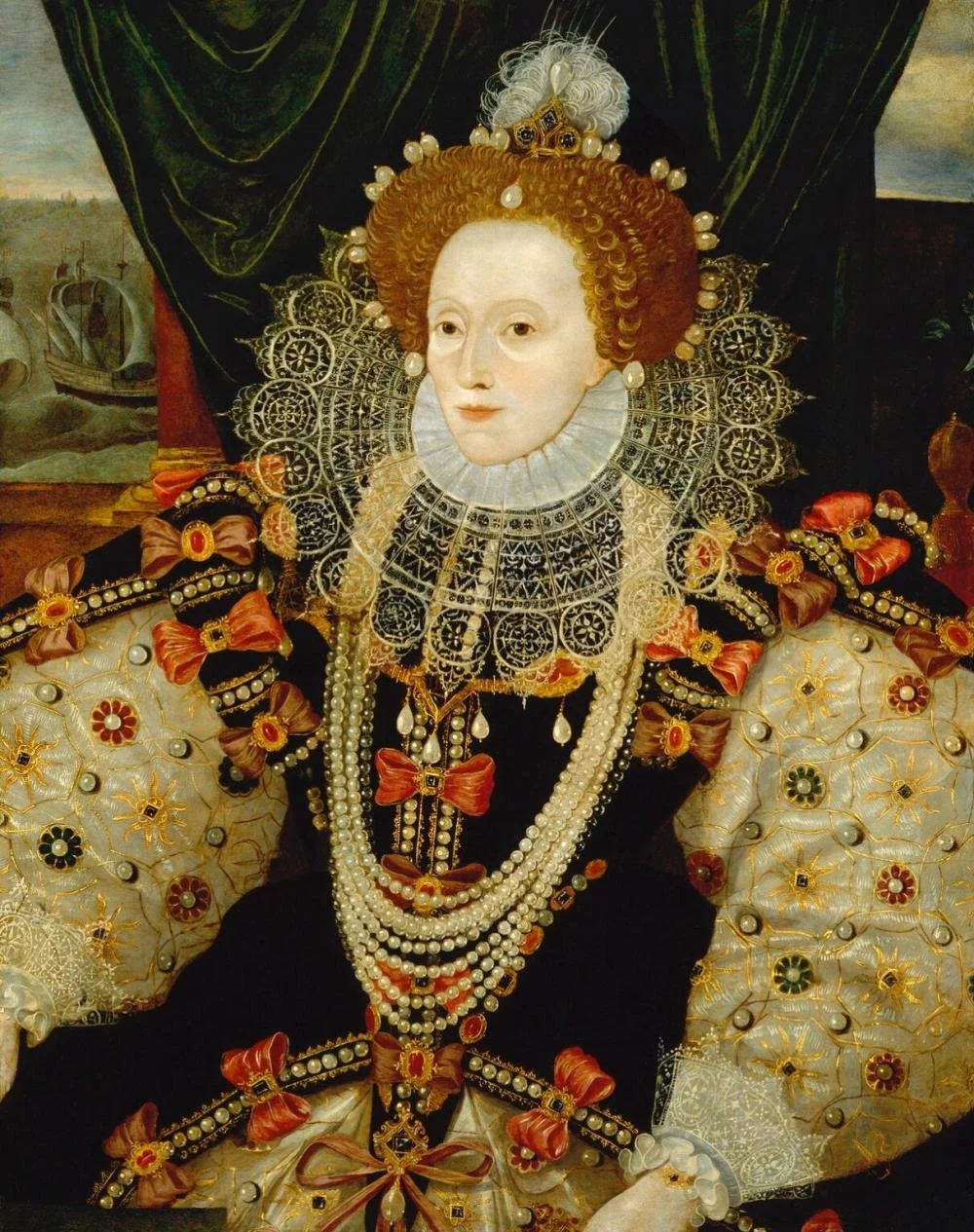
Queen Elizabeth I — The Armada Portrait
This painting depicts Queen Elizabeth I (1533–1603), captured in one of her most iconic representations known as The Armada Portrait (circa 1588). Created to commemorate England’s victory over the Spanish Armada, the portrait stands as a visual declaration of Elizabeth’s power, intellect, and divine right to rule.
The composition is rich with symbolism: the ships in the background reference the defeat of Spain’s naval fleet, marking England’s emergence as a dominant maritime power. Elizabeth’s hand resting on a globe signifies her expanding influence across the world, while her elaborate gown and jeweled adornments reflect the wealth and craftsmanship of the Elizabethan court. The lace ruff and pearls—symbols of purity and authority—frame her face like a halo, reinforcing her image as the “Virgin Queen,” untouched and sovereign.
Painted by an unknown artist, this portrait was commissioned to project Elizabeth’s enduring legacy: a monarch who transformed England into a cultural and political force. It remains one of the most recognized works of Tudor portraiture, blending artistry with propaganda to immortalize her reign.
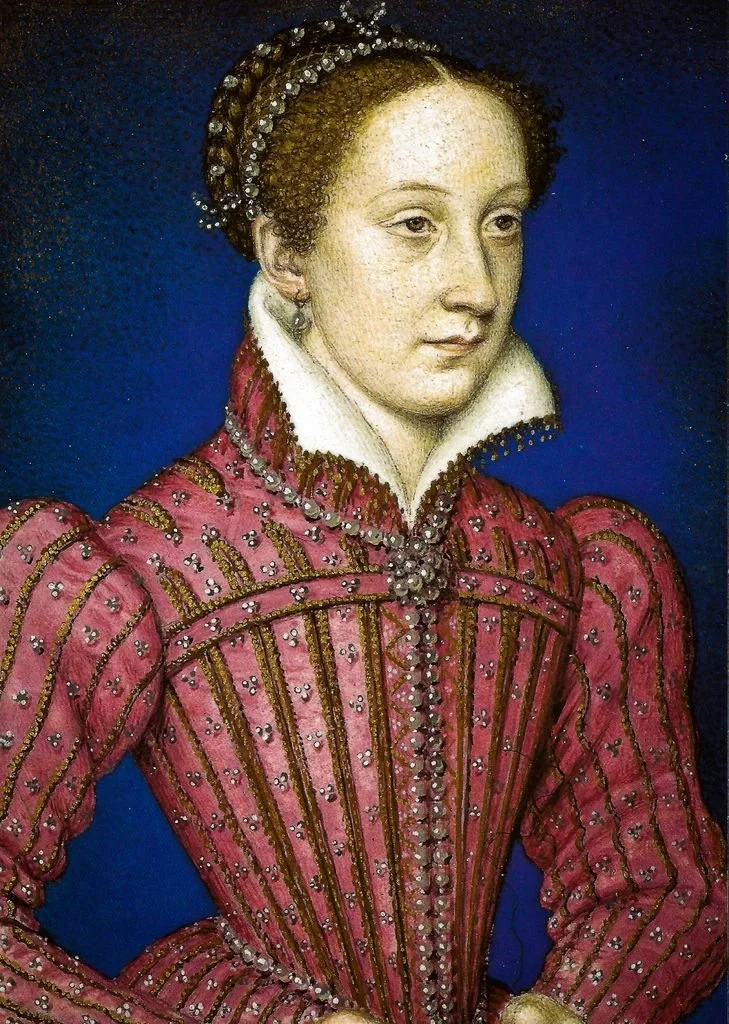
Mary, Queen of Scots — Renaissance Portrait
This portrait depicts Mary, Queen of Scots (1542–1587), one of the most complex and compelling figures of the Tudor era. Born to rule both Scotland and, by lineage, England, Mary’s life was defined by political intrigue, religious conflict, and dynastic ambition. The painting reflects the elegance and symbolism of 16th‑century Renaissance portraiture, where every detail was chosen to convey authority, virtue, and lineage.
Mary is shown wearing a richly embroidered gown of crimson and gold, adorned with pearls—symbols of purity and divine favor. The high ruffled collar and structured bodice represent the refinement of court fashion during her reign, while the pearled headpiece signifies royal dignity and restraint. The deep blue background evokes solemnity and power, contrasting with the luminous textures of her attire.
Portraits like this were not mere likenesses; they were instruments of diplomacy and legacy. For Mary, whose claim to the English throne challenged her cousin Elizabeth I, such imagery reinforced her legitimacy and grace in the face of political isolation. Her execution in 1587 marked the end of a turbulent chapter in British history, yet her image endures as a symbol of resilience, tragedy, and the enduring allure of monarchy.