
The Grudge — Episode 10 The Voice They Tried to Silence
The Grudge — The Rivalry Between Billie Holiday and Harry Anslinger
The conflict at the heart of this chapter rose not from personal grievance alone, but from a collision between influence and authority. One commanded attention through a voice that transformed suffering into truth; the other wielded the power of government, convinced that order depended on controlling the forces he believed threatened the nation. What began as scrutiny from a distance slowly hardened into a relentless campaign, drawing them into a struggle neither could escape and neither was willing to abandon.
Their story is not simply about a celebrated artist and a determined federal official. It is about how conviction, fear, and competing visions of public good can turn attention into obsession. As performances reached wider audiences and official pressure intensified, the principles they represented began to clash: expression against enforcement, visibility against control, truth against authority. Each decision carried consequences, pulling both toward positions that would define their legacies long after the conflict itself had ended.
This is the grudge that transformed a private pursuit into a national battle over power, censorship, and who has the right to shape public consciousness. It left a legacy marked not only by persecution and resistance, but by the enduring force of a voice that remained impossible to silence.
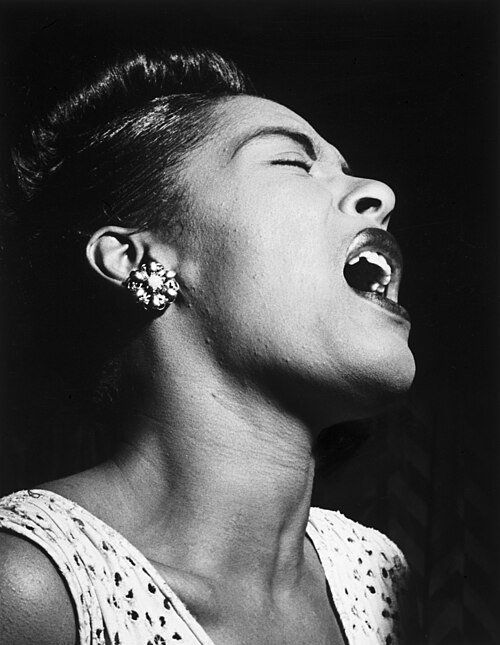
This work is from the William P. Gottlieb collection at the Library of Congress. Rights and restrictions.
In accordance with the wishes of William Gottlieb, the photographs in this collection entered into the public domain on February 16, 2010.
Billie Holiday
Born: April 7, 1915
Died: July 17, 1959
Age at Death: 44
Billie Holiday was one of the most influential jazz singers of the twentieth century, known for a voice that brought uncommon emotional depth to every performance. Rising from poverty and hardship, she became a defining figure of American music, transforming personal experience into art that resonated far beyond the clubs and concert halls where she first performed.
By the late 1930s, Holiday's performances of Strange Fruit, a song confronting the reality of racial violence and lynching in America, had made her more than an entertainer. The song became one of the most powerful political statements of its era, drawing both admiration and hostility. At a time when many preferred silence, Holiday used her platform to force audiences to confront uncomfortable truths, setting the stage for the conflict that would come to define one of the most controversial chapters of her life.
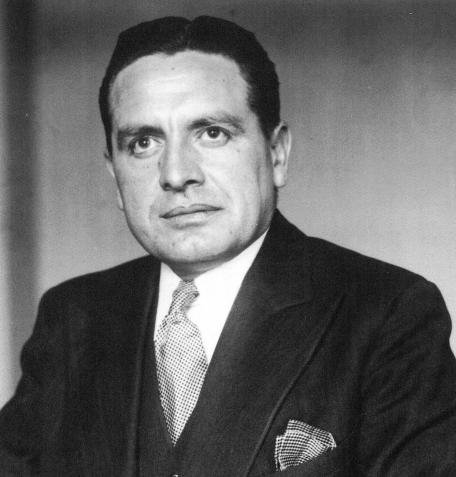
This work is in the public domain in the United States because it is a work prepared by an officer or employee of the United States Federal Government as part of that person’s official duties under the terms of Title 17, Chapter 1, Section 105 of the US Code.
Harry J. Anslinger
Born: May 20, 1892
Died: November 14, 1975
Age at Death: 83
Harry J. Anslinger served as the first commissioner of the Federal Bureau of Narcotics, a position he held from 1930 to 1962. During his tenure, he became one of the most influential architects of federal drug enforcement policy in the United States, advocating aggressive anti-narcotics campaigns and expanding the reach of federal drug laws.
Anslinger is also remembered for his role in the government's pursuit of Billie Holiday. According to multiple historical accounts, he viewed Holiday’s continued performances of Strange Fruit, the anti-lynching song that had become closely associated with her, as a challenge to the social order he sought to uphold. Federal narcotics agents repeatedly targeted Holiday for her drug use, leading to her arrest in 1947 and the revocation of the cabaret card required for her to perform in many New York venues. The conflict between Holiday
and Anslinger has since become one of the most debated examples of the intersection of race, politics, artistic expression, and federal law enforcement in twentieth-century America.