
The Monday Monologue is more than an episode page. Here, Part 1 and Part 2 are presented together, allowing the story to unfold without interruption. This page holds the arc complete, while inviting you onward to the Thursday Thread, where each figure’s legacy is revealed in greater depth.
The Making of a Villain — Part I
This begins where history is first a testament from an unnamed figure—his voice alone, unchallenged, offering the account he believes the world should hear. Today, we step into the chamber where that story is no longer his to shape. Here, prosecution and defense confront the narrative he laid before them, testing its edges, questioning its motives, and pulling the record into the light.
In this contested space, arguments rise against counterarguments, and the distance between myth and memory begins to contract. Political pressures, shifting empires, and the weight of survival itself are examined not as legend, but as evidence. And when the bailiff finally speaks his name, the veil lifts. The figure behind the testimony steps forward—not as a monster or a myth, but as a man shaped by forces far larger than himself.
Enter the courtroom and listen for the moment the narrative fractures—the one history thought it had already decided.

The Making of a Villain — Part II
The Making of a Villain — Part II returns to the chamber where testimony has already been challenged and the record has begun to shift under scrutiny. What was once a solitary account is re‑examined through maps, decrees, and the sweeping plans that split medieval streets into grand corridors and forced a city to remake itself around his vision.
As the court moves deeper into the record, the distance between intention and impact grows impossible to ignore. And though his name remains unspoken, the imprint of his redesign—its precision, its ambition, its wounds—fills every corner of the room.

The Making of a Villain — Part III
The Making of a Villain — Part III returns to the chamber where testimony has shifted from the physical reshaping of a city to the quieter, more treacherous terrain of memory. The unnamed figure at the center of this case now faces a different kind of scrutiny—one built not on maps or decrees, but on rumors, confessions, and the long echo of a story that outgrew the truth that birthed it.
What began as a solitary account is now weighed against the myth that eclipsed it, a myth that refuses to loosen its grip even as the evidence strains under its weight. As the court moves deeper into the testimony, the distance between what was lived and what was later imagined becomes impossible to ignore. And though the figure remains unnamed, the burden of a legacy rewritten—its shadows, its distortions, its wounds—fills every corner of the room.
Step forward and listen as the case turns toward the stories that survive us, the narratives we cannot outrun, and the villainy that can be made not by deeds, but by the world that decides what it wants to remember.
The Making of a Villain — Part IV
The Making of a Villain — Part IV. The unnamed figure at the center of this case now confronts a record shaped not by geography or governance, but by the volatile machinery of succession—where silence becomes accusation, and the absence of a witness becomes evidence in itself.
Alongside this, the testimony revisits the downfall of two powerful adversaries—one who held the highest title, another who held the emperor’s favor. Their political missteps, once ordinary court maneuvering, were later recast as proof of the figure’s ambition, their failures rewritten as the figure’s crimes. What began as a contest within a fractured household became, over centuries, the foundation of a legend designed to warn against anyone who rose too far, too fast.
Step forward and listen as the case confronts the most enduring charge of all: that sometimes the world does not punish what was done, but what it fears could happen when someone refuses to remain in the place history assigned to them.
Introducing: The Grudge Limited Series
A grudge begins with a wound. Sometimes it is public: an insult, a betrayal, a stolen inheritance, a defeat witnessed by an entire nation. Sometimes it is private, buried beneath years of silence, pride, and unfinished anger.
But a grudge does not remain in the past simply because time passes. It can sharpen. It can become identity. It can outlive the people who first caused it. And, in the most dangerous cases, it can reshape families, careers, communities, and history itself.
The Grudge is a series about memory with teeth—the conflicts people refuse to release, the debts they insist must be paid, and the personal resentments that grow into public consequences.
These are stories of rivalries, betrayals, revenge, and old wounds reopened. They ask what happens when the need to be vindicated becomes stronger than the desire for peace. The Grudge in Twelve Unique Parts…In The Grudge, history is told through the conflicts that refused to die: rivalries that hardened over time, betrayals that demanded repayment, and wounds so personal that they spilled out into chaos.
A Summary of The Making of a Villain Series
Villains are rarely born in a single moment. They are shaped gradually—by fear, humiliation, ambition, betrayal, silence, and the stories others choose to tell about them.
The Making of a Villain traces that transformation not as an excuse, but as an examination. Before someone becomes the figure history condemns, they are often a person making choices within the limits of their time, their wounds, and their desires.
Across these stories, the central question is not simply, “What did they do?” It is also, “What happened before?” What pressures, losses, rivalries, and private resentments helped turn a human being into a symbol of danger—or into the villain remembered long after the people around them have been forgotten?
But every villain has a beginning. And sometimes, that beginning is where the real story lies.
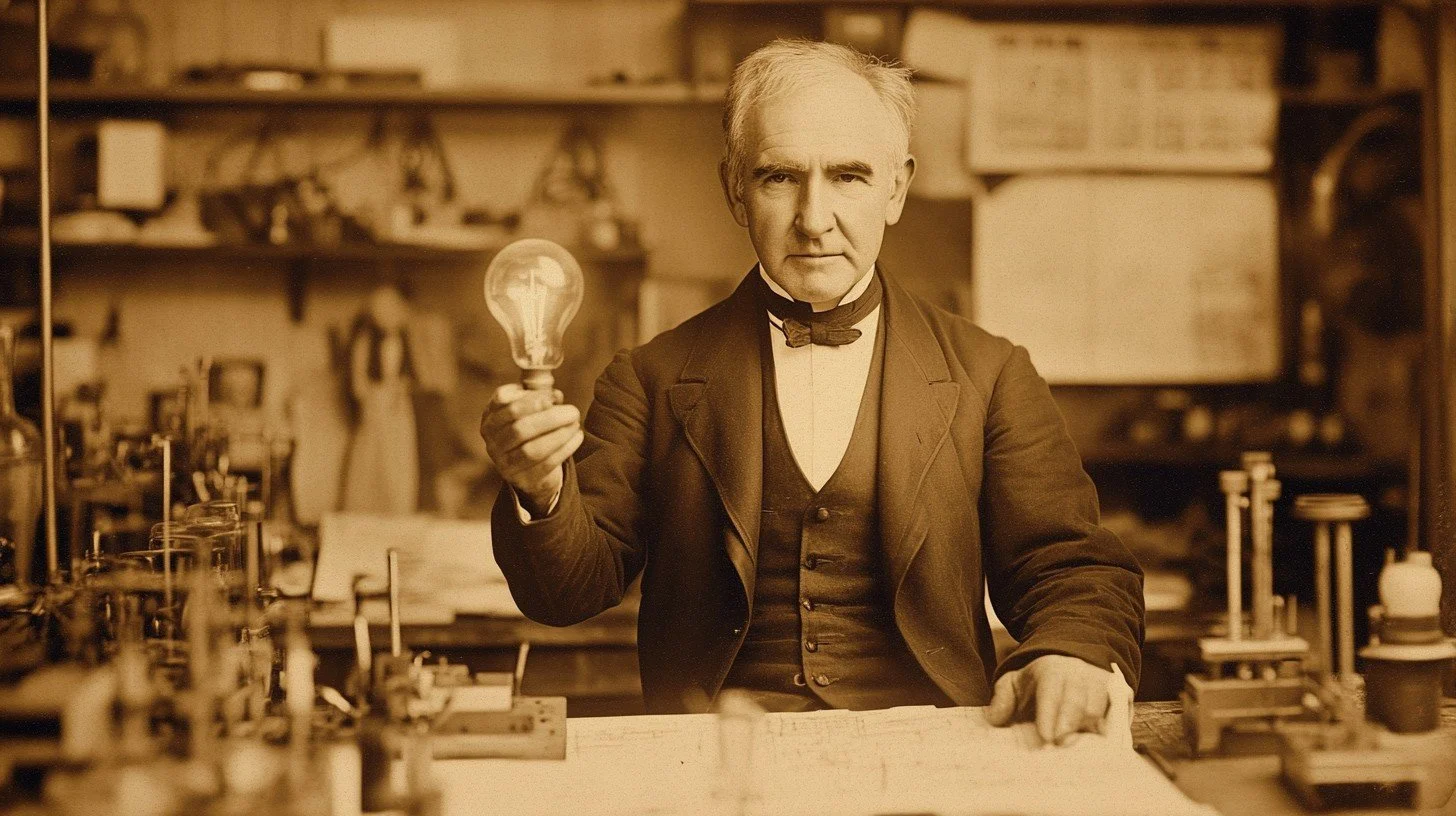
The Grudge — Episode 1 Two Futures. One Collision.
Two Futures. One Collision. returns to the workshop where a promise once sparked possibility and a single invention threatened to redraw the map of modern life. What began as admiration—quiet, disciplined, and full of belief—now fractures under the weight of competing visions, clashing currents, and a world that could not hold both truths at once.
As the record deepens, the distance between brilliance and betrayal grows harder to ignore. And though neither name is spoken, the imprint of their conflict—its voltage, its ambition, its wounds—charges every corner of the room.
Step forward and listen as the divide widens—into the systems they built, the loyalties they broke, and the legacy that still hums beneath every light that flickers on.
The Grudge — Episode 2
A Rift Stitched Into Every Step
A Rift Stitched Into Every Step traces the quiet beginnings of a partnership once bound by precision, discipline, and an almost sacred devotion to craft. What started as a shared pursuit—measured, meticulous, and full of promise—slowly unravels as ambition sharpens, loyalties strain, and a single fracture begins to echo far beyond the walls where their work first took shape.
As the divide deepens, the tension between creation and competition becomes impossible to ignore. And though no names are spoken, the imprint of their break—its weight, its silence, its stubborn permanence—threads itself through every choice that followed.

The Grudge — Episode 3
A Spotlight Too Small for Two
A Spotlight Too Small for Two steps into a world where recognition is currency, admiration is contested terrain, and the glow meant to illuminate begins instead to divide. What first appeared as mutual ascent—parallel, disciplined, and shaped by the same relentless pursuit of excellence—slowly bends under the weight of expectation, legacy, and the unforgiving mathematics of attention.
As the spotlight narrows, every gesture becomes a negotiation, every triumph a reminder of what the other refuses to surrender. The tension between presence and overshadowing grows sharper, quieter, and more enduring than either could have anticipated. And though no names are spoken, the contours of their rivalry—its pride, its wounds, its unspoken calculations—cast long shadows across the stage they once shared.
Step into the history beneath the glare and listen for the truth inside the contest: the one the world believed it already understood, and the one neither could escape once the light turned inward.
The Grudge — Episode 4
A Path to a Divide
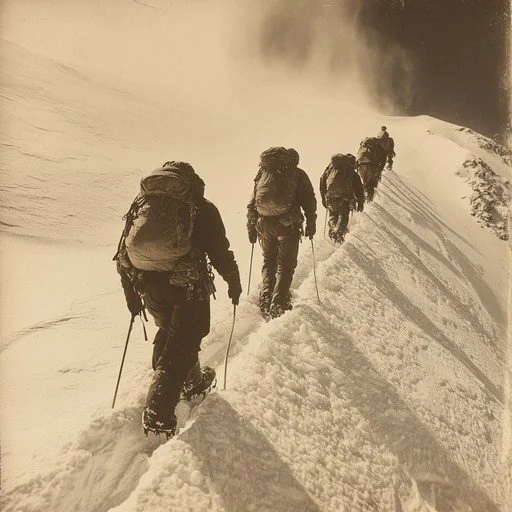
A Path to a Divide steps into a world where ambition meets the unforgiving geometry of the unknown—where two visions of purpose, discipline, and destiny begin to drift apart long before their boots touch the same frozen horizon. What first appeared as shared resolve—parallel, methodical, and driven by the same relentless pull toward the edge of the world—slowly fractures under the weight of temperament, preparation, and the quiet certainty each held about the path ahead.
As the cold deepens, every decision becomes a wager, every hesitation a cost, every advance a declaration of what one believes the journey demands. The divide between caution and calculation, instinct and planning, grows sharper, quieter, and more irreversible than either could have foreseen. And though no names are spoken, the contours of their divergence—its discipline, its risks, its unspoken convictions—etch themselves into the vast white stage they never truly shared.
The Grudge — Episode 5
It Was Never Just Business
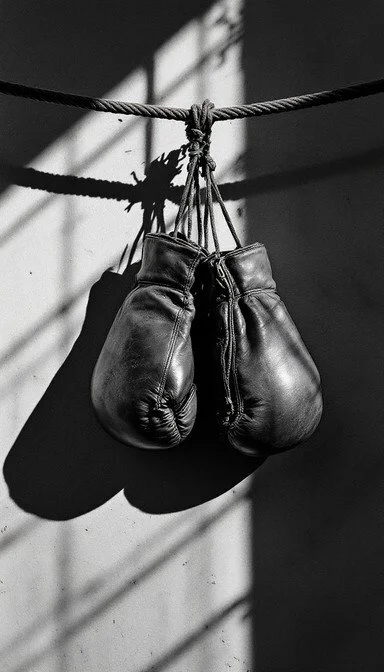
It Was Never Just Business enters the charged space where pride, identity, and the weight of expectation collide—where two paths shaped by discipline, defiance, and the need to be seen begin to twist around one another until neither can move without the other’s shadow. What first appeared as professional contest—public, structured, and bound by the rules of the arena—slowly deepens into something more personal, more volatile, and more enduring than the world watching could fully understand.
As the lights intensify, every gesture becomes a message, every silence a wound, every exchange a declaration of who each man believes himself to be. The line between performance and conviction blurs, hardens, and refuses to fade. And though no names are spoken, the contours of their conflict—its pride, its pain, its unspoken stakes—etch themselves into the stage they shared again and again, each encounter carving deeper into the story neither could walk away from.
Step into the history beneath the roar and listen for the truth inside the rivalry: the one the world believed it already understood, and the one neither could escape once the fight became more than a fight.
The Grudge — Episode 6
The Back Door of Death
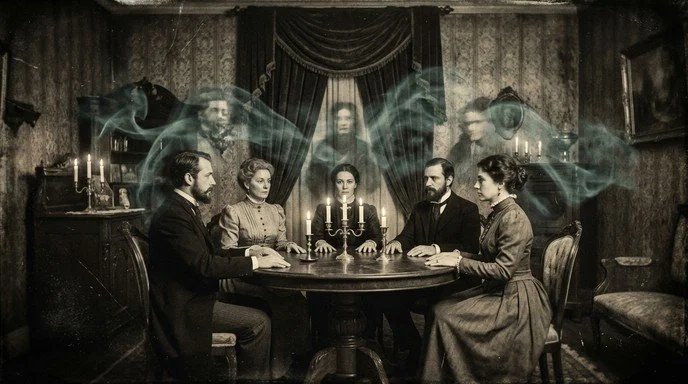
The Back Door of Death enters a conflict born not from rivalry alone, but from two irreconcilable ways of understanding what lies beyond the visible world. One seeks proof in mystery; the other seeks to expose it.
What begins as an exchange of ideas gradually hardens into a contest of belief, each encounter pulling them deeper into a struggle neither intended to sustain, yet neither can abandon. As public fascination grows, every challenge becomes a test of conviction, every revelation an accusation, every attempt at understanding received as an act of betrayal. Doubt and certainty trade places in the shadows between them.
The question is no longer who is right, but how far each is willing to go to defend the truth they have chosen. And though no names are spoken, their conflict opens a door neither can fully close—a threshold where grief, faith, spectacle, and obsession intertwine, leaving both changed by what waits on the other side.
Step beyond the illusion and into the uneasy space where belief and skepticism meet. Listen for the truths hidden beneath the accusations, the grief concealed behind certainty, and the question that lingered long after the debate itself had ended: whether the greatest mystery was what lay beyond death—or what the living needed to believe about it.
The Grudge — Episode 7
Silence Before the Storm
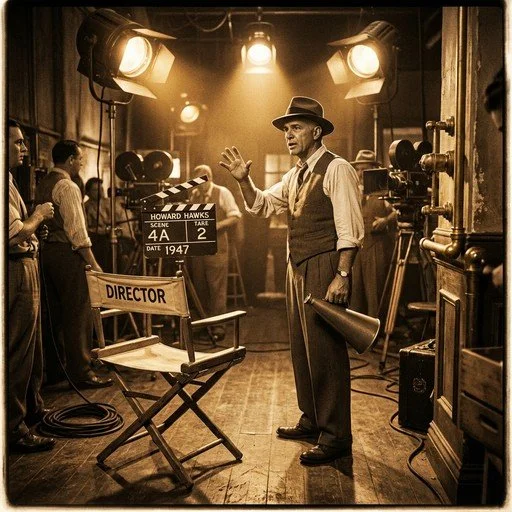
Silence Before the Storm enters the moment when a disagreement stops being a passing tension and becomes a fault line—subtle at first, then unmistakable. What begins as a clash of creative instincts slowly calcifies into a quiet, immovable divide. One mind moves through intuition and improvisation; the other through structure and control. Neither approach is wrong, yet each becomes intolerable to the other.
As their collaboration falters, every pause grows heavier, every gesture becomes a message, and every attempt at clarity is interpreted as an intrusion. The world around them watches closely, sensing the shift but never fully understanding its origin. What was once admiration turns brittle; what was once curiosity becomes suspicion. In the space between them, silence becomes both shield and weapon.
The conflict deepens not through confrontation, but through restraint—through the words not spoken, the apologies withheld, the interpretations that harden into belief. Reputation, pride, and artistic identity intertwine until the question is no longer what happened, but how each will carry the wound forward.
This episode traces the moment before the rupture becomes irreversible: the stillness that precedes the break, the quiet that reveals more than any argument could, and the storm gathering in the distance—shaped by ego, fear, brilliance, and the unspoken truth neither was willing to face.

The Grudge — Episode 8
Built By Hand, Broken By Betrayal
Built By Hand, Broken By Betrayal enters the moment when creation becomes a fragile bond—formed through trust, shaped through effort, and quietly strained by motives that never surface until it’s too late. What begins as a shared vision slowly shifts as subtle choices, withheld intentions, and quiet recalculations reshape the work from underneath. One mind builds through instinct and devotion; the other through caution and guarded strategy. Neither approach is wrong, yet each begins to feel like a challenge to the other’s truth.
As the project evolves, every revision carries weight, every suggestion feels loaded, and every promise echoes with uncertainty. Those watching see only the finished surface, unaware of the tension embedded within it. What was once mutual respect becomes unease; what was once trust becomes a slow, creeping doubt. In the space between them, craftsmanship becomes contested territory.

The Grudge — Episode 9
Termination Clause
Termination Clause enters the volatile space where alliance becomes a calculated risk—where two forces bound by shared lineage, parallel ambition, and inherited obligation begin to see one another not as counterparts, but as contingencies. What starts as a tenuous coexistence slowly sharpens as each move, each message, each silence becomes a negotiation of power. Neither seeks open conflict, yet both understand that survival may demand it.
In this chapter, the bond between them is defined not by trust but by scrutiny. Every gesture carries implication, every concession masks strategy, and every delay feels like a test of resolve. Those watching from afar witness only the formal exchanges, unaware of the quiet maneuvers shaping the ground beneath them. What once resembled mutual recognition becomes a rivalry carved from caution—an unspoken contest over legitimacy, influence, and the right to endure.
The fracture deepens through calculated restraint—warnings disguised as diplomacy, protections framed as necessity, and decisions made with consequences neither can fully control. Identity, inheritance, and authority intertwine until the question is no longer who holds power, but who has the right to decide the other’s fate.
This episode traces the moment when coexistence becomes untenable: the terms drafted in secrecy, the choices made in fear, and the final clause that transforms rivalry into irrevocable action.
The Grudge — Episode 10
The Voice They Tried to Silence
The Voice They Tried to Silence explores the collision between art and authority, where one figure's ability to move hearts becomes a threat to another's vision of order. At the center stands a voice capable of transforming pain into truth, confronting audiences with realities many would rather ignore. Opposing that voice is an architect of control, convinced that influence must be monitored and contained. Their conflict is driven by competing beliefs about who gets to shape the story of a nation.
What begins as scrutiny soon evolves into obsession. Every performance attracts attention, every audience becomes a concern, and every act of defiance is interpreted as a challenge to authority itself. Publicly, the campaign appears justified through policy and procedure. Privately, it becomes a relentless pursuit, where institutions are turned against an individual whose greatest weapon is simply refusing to be quiet. The struggle unfolds across stages, courtrooms, offices, and headlines, transforming artistic expression into contested territory.
This episode traces the escalation of a campaign designed not merely to punish, but to erase influence itself. It follows the machinery of control as it closes in on a singular voice, and the lasting consequences of a struggle that transformed censorship into legend.
The Grudge — Episode 11
Faith, Power and Betrayal
Faith, Power and Betrayal examines a fracture inside a movement built on devotion, discipline, and the promise of transformation. At its center are two figures—one a spiritual architect who believes order is the only path to liberation, the other a rising voice whose conviction grows beyond the boundaries set for him. Their relationship begins in guidance and shared purpose, but as influence shifts, trust erodes and the question of who truly speaks for the faithful becomes impossible to ignore.
What starts as mentorship becomes monitoring. Every sermon is weighed, every gathering analyzed, every moment of independent thought treated as a sign of dangerous ambition. Publicly, unity is preached through ritual, doctrine, and carefully crafted appearances. Privately, the tension deepens into a struggle over authority itself—who defines the mission, who interprets the truth, and who must be restrained to preserve the institution’s power.
This episode traces the unraveling of a bond once seen as unbreakable. It follows the machinery of belief and control as it closes in on a rising voice, revealing how betrayal can grow not from malice, but from the terror of losing influence. And it explores the lasting consequences of a confrontation that transformed devotion into a battleground—one where conviction itself becomes a threat.
The Grudge — Episode 12: Natural Selection
The Man History Forgot
Natural Selection returns to the unforgiving world where one man’s ingenuity met an age hungry for progress—and where the force of his ideas threatened to outlive the name attached to them. What began as vision—restless, exacting, and alive with possibility—now disappears beneath the weight of power, profit, and a history that chose its heroes carefully.
As the record deepens, the distance between invention and recognition grows harder to ignore. And though his name rarely survives in the telling, the imprint of his labor—its brilliance, its sacrifice, its quiet defiance—remains woven through the modern world he helped create.
Step forward and listen as the truth emerges—through the machines he imagined, the credit he was denied, and the legacy still moving silently beneath the life we take for granted.