
The Grudge — Episode 8 Built By Hand, Broken By Betrayal
The Grudge — The Rivalry Between John Francis Dodge, Horace Elgin Dodge and Henry Ford.
The conflict at the center of this chapter emerged not from spectacle or scandal, but from a shared devotion to building something that would outlast them. What began as admiration between two formidable forces—each driven, each indispensable—slowly shifted into tension, resistance, and a divide so deep it would alter the course of an entire industry.
Their story is not simply about manufacturers working side by side—it is about how discipline, ingenuity, and the pursuit of mastery can turn partnership into fracture. As their enterprise expanded, the methods they once believed could coexist began to collide: craftsmanship against empire‑building, transparency against secrecy, loyalty against ambition. The questions they chased together led them toward convictions neither was willing to surrender.
This is the grudge that reshaped American industry, fueled debate about power, credit, and the cost of innovation, and left a legacy defined as much by their rupture as by the brilliance that first brought them into the same room.
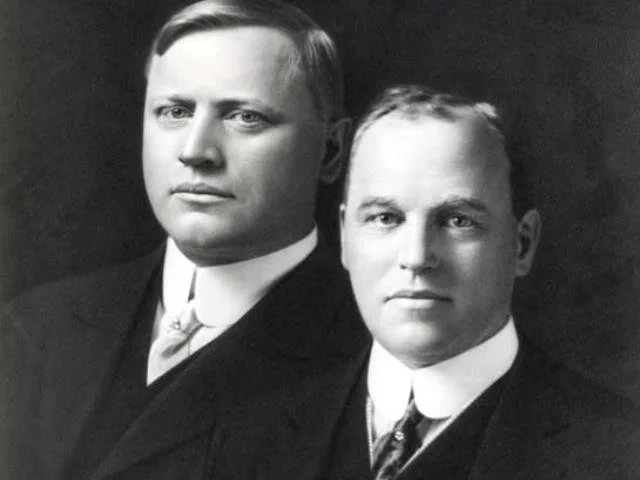
The image captures John Francis Dodge (positioned on the left) and Horace Elgin Dodge, two brothers whose partnership helped define the early American automotive age. Born in Niles, Michigan, John in 1864 and Horace in 1868, they grew up in a world where machinery was transforming daily life. Their fascination with precision and motion led them from bicycle parts to engines, and eventually to the heart of Detroit’s industrial revolution.
Together, they founded the Dodge Brothers Company in 1914, a venture that began as a supplier of parts for Henry Ford’s Model T. Their craftsmanship—meticulous, durable, and exacting—helped Ford’s vision take shape. Yet as success grew, so did tension. The brothers felt their contributions were overshadowed, their loyalty taken for granted. When they launched their own automobile, the Dodge Model 30, it wasn’t just a business decision—it was a declaration of independence.
By 1916, Dodge had become the second‑largest car manufacturer in America, a testament to their relentless pursuit of quality. But the triumph was short‑lived. Both brothers died in 1920, only months apart, leaving behind a legacy built on innovation and integrity—and a silent rift with Ford that symbolized the fragile balance between collaboration and ambition.
Their story remains one of creation and conflict: two men who built by hand, believed in their craft, and left behind a mark that outlasted the betrayal that once divided them.
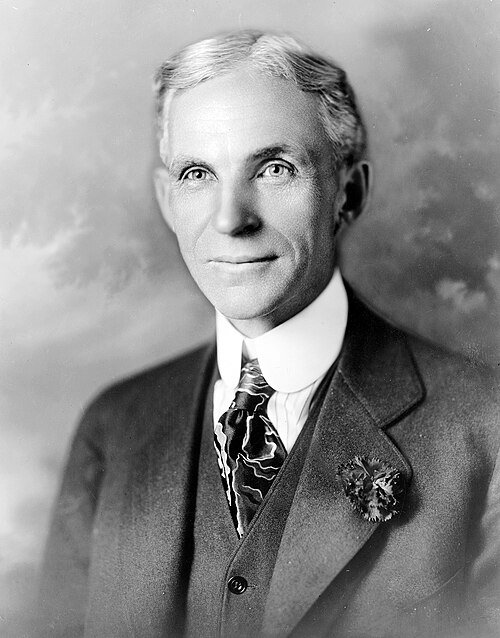
Born July 30, 1863, near Dearborn, Michigan, and passing on April 7, 1947, Ford’s life traced the evolution of the automobile from invention to global necessity. His gaze in this photograph—steady, composed, and quietly assured—reflects the precision and conviction that defined his approach to both engineering and enterprise.
Ford’s legacy rests on his creation of the Ford Motor Company and his revolutionary introduction of the moving assembly line in 1913, which redefined efficiency and accessibility. His Model T became the symbol of mobility for the working class, turning automobiles from luxury items into everyday tools of freedom. Yet, behind the innovation lay a complex web of ambition and rivalry—most notably with the Dodge Brothers, whose craftsmanship and integrity helped build Ford’s empire before their partnership fractured under competing visions of control and recognition.
Together, these figures shaped the industrial age: Ford, the architect of mass production; the Dodges, the craftsmen of precision. Their intertwined story reveals how collaboration can birth greatness—and how betrayal can leave a mark as enduring as invention itself.