
The Cold Table — The Woman Behind the Cells
Episode 28: The Cold Table — The Woman Behind the Cells— Henrietta Lacks
The Cold Table brings listeners into the final days of Henrietta Lacks’s life, when an ordinary visit for medical care became the beginning of one of the most consequential—and troubling—legacies in modern medicine.
Inside the walls of Johns Hopkins Hospital, Henrietta faced severe illness, pain, and treatment in an era when Black patients were too often denied full dignity, information, and control over their own care. Without her knowledge or permission, cells taken from her body would become the first widely used immortal human cell line: HeLa. They would travel far beyond the cold table where they were collected, contributing to scientific research for decades while Henrietta’s name and her family’s story remained largely unrecognized.
This is not only the story of cells that changed medicine. It is the story of a woman—mother, wife, daughter, and friend—whose life deserves to be remembered with the same attention given to the scientific legacy that followed her.
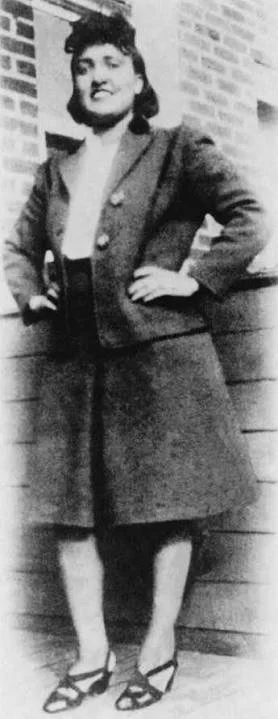
Henrietta Lacks was born Loretta Pleasant on August 1, 1920, in Roanoke, Virginia. After her mother died when Henrietta was four, she was raised by her grandfather in Clover, Virginia, where she worked the tobacco fields, attended school, and grew up alongside her cousin, David “Day” Lacks. They married in 1941 and eventually raised five children.
In 1941, the family moved to Turner Station, a predominantly Black community outside Baltimore, where Day found work at Bethlehem Steel. Henrietta was known by those who loved her as warm, stylish, generous, and deeply devoted to her family. In 1951, at age 30, she sought treatment at Johns Hopkins Hospital for severe bleeding and pain. Doctors diagnosed her with cervical cancer. During treatment, cells were taken from her tumor without her knowledge or consent; those cells became the HeLa cell line, the first human cells grown indefinitely in a laboratory.
Henrietta died on October 4, 1951, at only 31 years old. For decades, her name was largely absent from the story of the cells that traveled through laboratories around the world. Her family later became central voices in the continuing conversation about consent, medical ethics, privacy, ownership, race, and the human lives behind scientific advancement.
She was never merely a sample, a cell line, or a scientific miracle.
She was Henrietta Lacks—mother, daughter, wife, and a woman whose life must be remembered wherever her cells are named.