
Ink and Intention: A Voice Shaping 19th Century America
Episode 15: Ink and Intention— Frances Ellen Watkins Harper
Long before the first line settles onto the page, before the cadence of a lecture hall or the hush of a reading room begins to take shape, we enter the quiet brilliance of a writer who forged clarity from a nation still struggling to see itself. What follows is not a simple chronology, but a restoration — a constellation of surviving portraits, published volumes, and public addresses that together reveal Frances Ellen Watkins Harper, the thinker who crossed movements, defied expectation, and shaped a life in language when the world offered little space for such authority.
As you move through this story, you’ll encounter the words crafted in conviction, the arguments carried with unwavering intention, and the unmistakable imprint of a presence that refused erasure. Each surviving text stands as evidence of Harper’s command of a discipline she was never expected to master, her determination to claim intellectual sovereignty, and her steady resolve to let the pen speak when recognition rarely followed her hand.
This is the unveiling. Not of a figure pushed to the margins, but of the architect within the ink — the guiding force who shaped narratives of justice, resilience, and moral clarity with a precision her era never fully acknowledged.
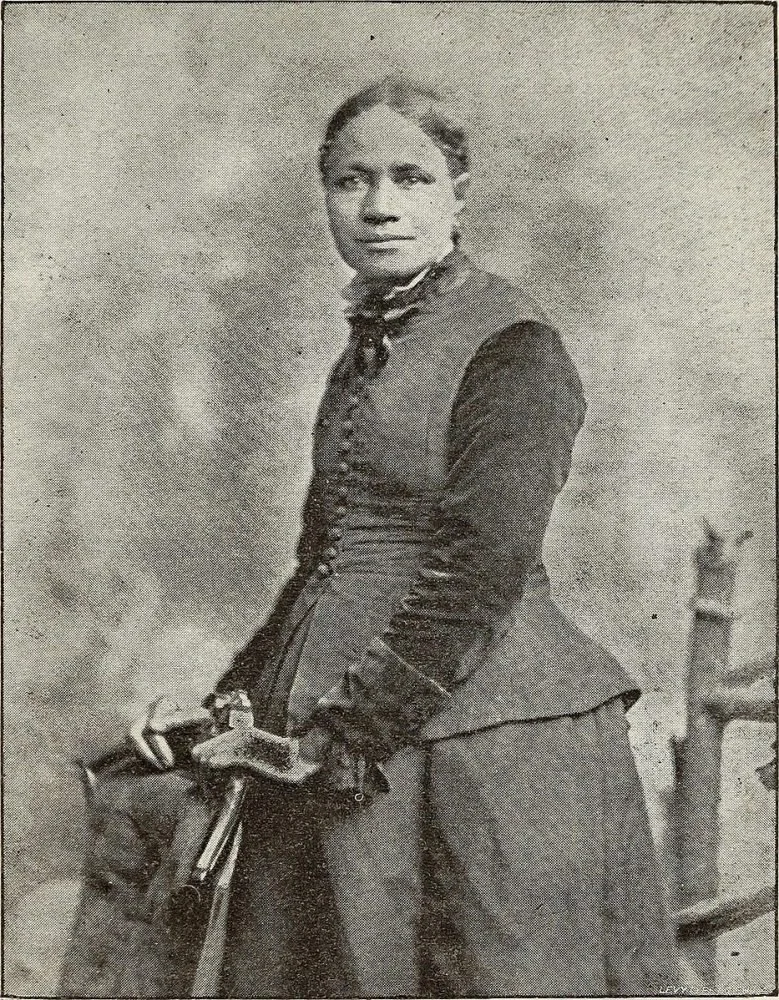
Frances Ellen Watkins Harper (1825–1911)
This early portrait captures a writer and reformer whose presence shaped the moral landscape of 19th‑century America. Born free in Baltimore and raised within a community of Black educators and abolitionists, Frances Ellen Watkins Harper forged a life at the intersection of literature, activism, and public witness. By the time this photograph was taken, she had already become one of the most widely read Black authors of her era and a powerful voice in movements for abolition, women’s rights, temperance, and racial justice.
Standing with the quiet authority that defined her public life, she carries the tools of her craft — the written word and the discipline it demanded. Her lectures reached audiences across the nation, her poems circulated in homes and churches, and her essays challenged a country still struggling to reconcile its ideals with its realities. Through decades of speaking, writing, and organizing, she insisted on a vision of shared humanity long before the nation was ready to embrace it.
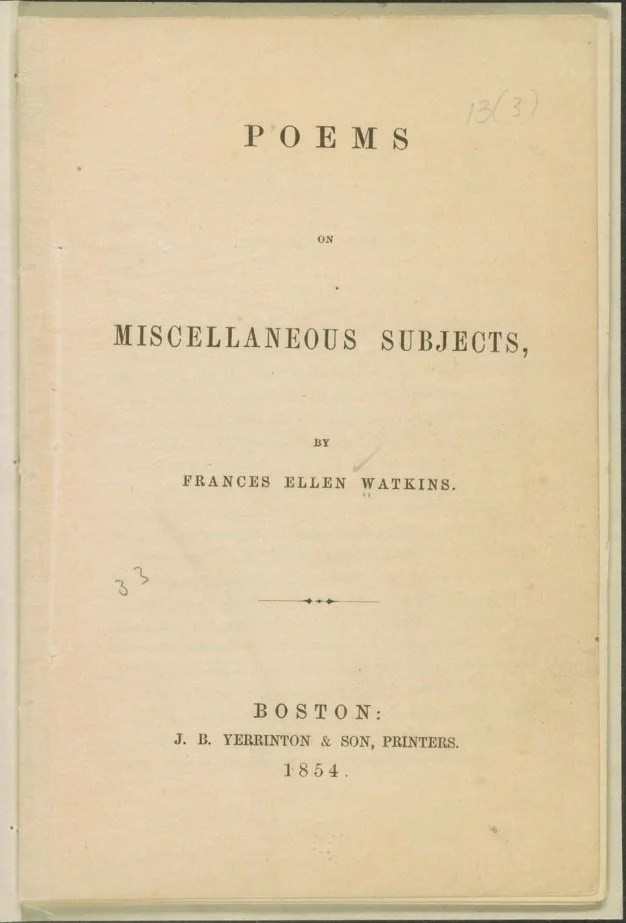
Poems on Miscellaneous Subjects (1854)
The First Major Publication of Frances Ellen Watkins Harper
This title page marks the beginning of a literary career that would shape the conscience of 19th‑century America. Published in 1854, Poems on Miscellaneous Subjects was Frances Ellen Watkins Harper’s first widely distributed volume, a collection that traveled through abolitionist networks, church communities, and reform circles at a moment when the nation was fracturing over slavery.
Printed in Boston by J. B. Yerrinton & Son, the book reflects both the urgency and the discipline of its author. Harper used poetry as a vehicle for moral argument, blending spiritual conviction with a clear-eyed critique of the country’s failures. The volume sold thousands of copies—an extraordinary achievement for any writer of the era, and even more so for a free Black woman publishing in the decade before the Civil War.
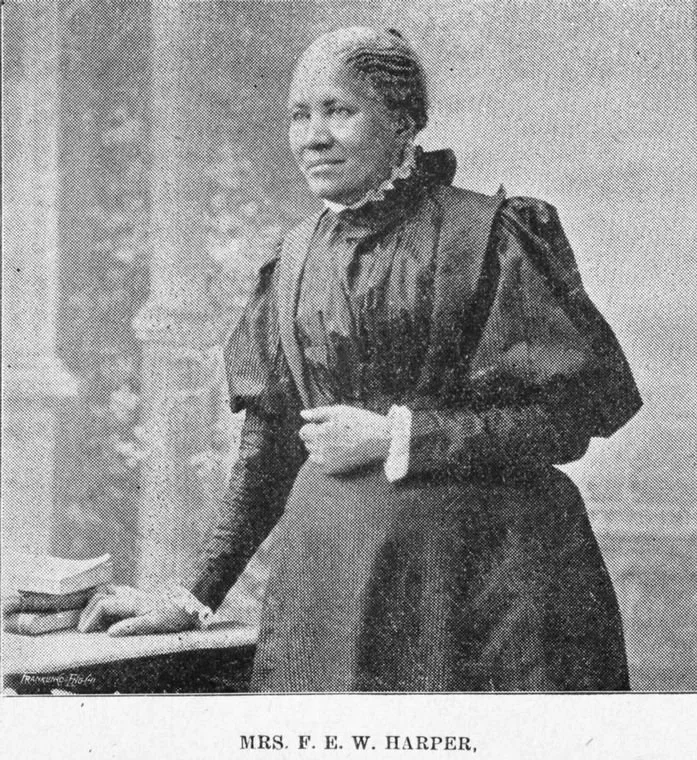
In this later portrait, Frances Ellen Watkins Harper stands as a woman shaped by more than half a century of public service, literary achievement, and moral leadership. The confidence in her posture reflects a life spent speaking to crowded halls, organizing within reform movements, and writing words that carried across generations.
By the time she reached this stage of her life, Harper had become one of the most respected figures in American letters and social reform. She had published widely read volumes of poetry and prose, delivered hundreds of lectures across the United States and Canada, and worked at the forefront of abolition, women’s rights, temperance, and Reconstruction‑era education. Her influence extended through Black literary networks, church communities, and national reform organizations.
This image honors Harper not only as a writer and reformer, but as an elder stateswoman of American justice — a figure whose legacy continues to guide the work of remembrance and repair.
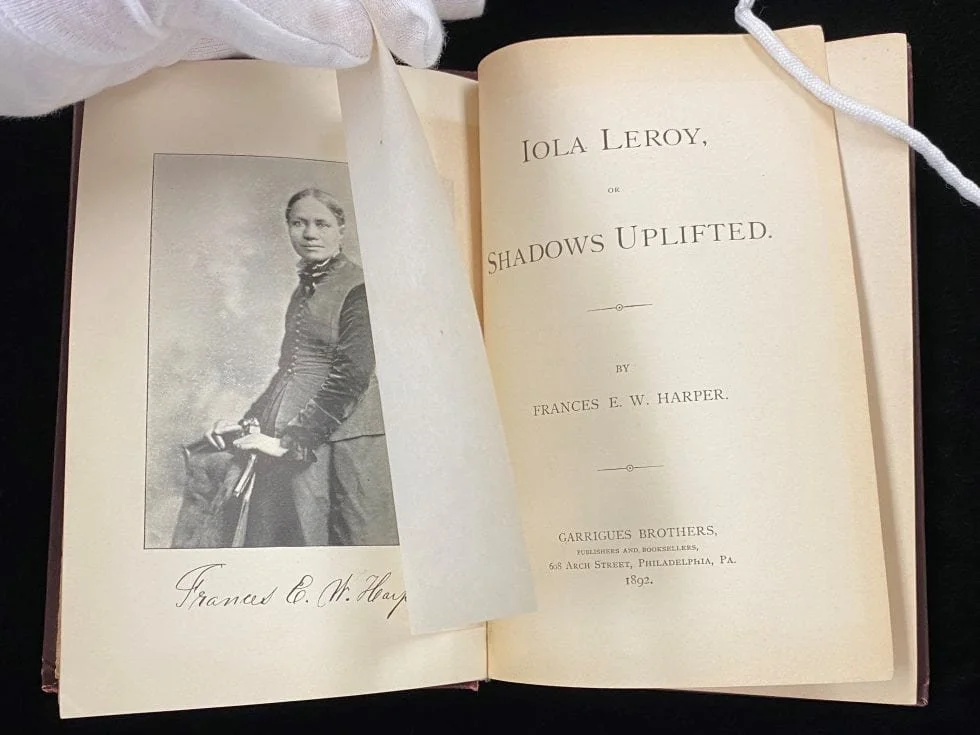
Epitaph for Frances Ellen Watkins Harper
A Life That Lifted Shadows
She wrote so that others might stand in the light.
Across decades of struggle and steadfast labor, she carried her people’s stories with a clarity that refused erasure and a courage that refused silence. Through poems, lectures, and the pages of Iola Leroy, she offered a vision of dignity that outlived the world that tried to deny it.
Her words remain — steady, unbroken, and still rising — a testament to a life spent widening the path for those who would follow.