
Marbled in Exile: A Sculptor’s Pursuit of Freedom
Episode 14 Marbled in Exile— Edmonia Lewis
Long before the first image settles into view, before the contours of her studio begin to emerge, we enter the quiet brilliance of a woman who carved her own freedom from stone. What follows is not a simple chronology, but a restoration — a constellation of surviving portraits, studio remnants, and sculptural echoes that together reveal Edmonia Lewis, the artist who crossed borders, defied expectation, and shaped a life in marble when the world offered her no place to stand.
As you move through this story, you’ll encounter the works she created in exile, the mythic figures she rendered with unwavering intention, and the unmistakable imprint of a presence that refused erasure. Each artifact stands as evidence of Lewis’s command of a discipline she was never expected to master, her determination to claim artistic sovereignty, and her steady resolve to let the chisel speak when recognition rarely followed her hand.
This is the unveiling. Not of a figure pushed to the margins, but of the architect within the marble — the guiding force who shaped narratives of resilience, liberation, and beauty with a precision her era never fully acknowledged.
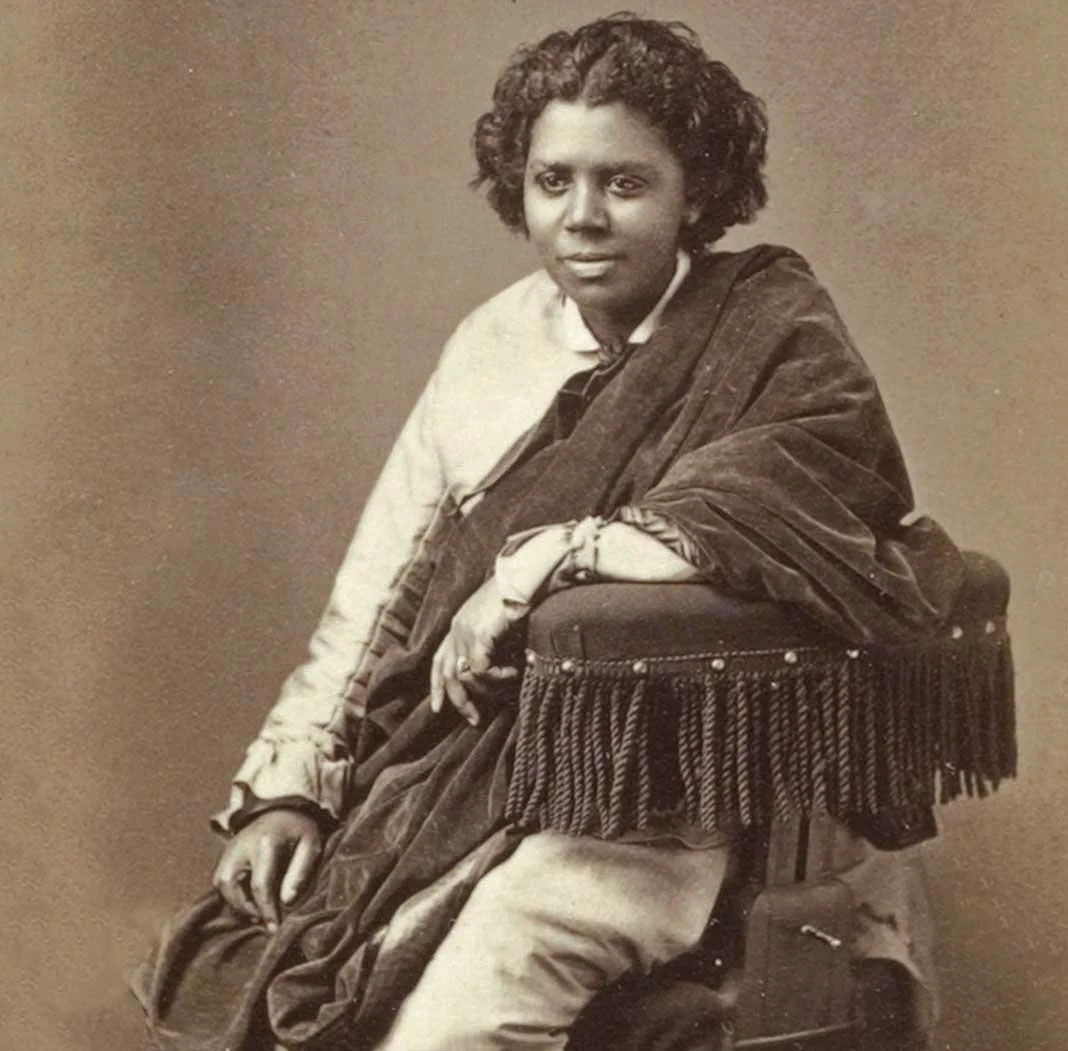
Edmonia Lewis (1844–1907)
This photograph captures Edmonia Lewis, the groundbreaking sculptor whose life bridged continents, artistic traditions, and the fierce pursuit of self‑determination. Born in 1844, she navigated a world that doubted her long before she ever touched marble, yet she carved out a career that carried her from the United States to Rome, where she found the freedom and artistic community that allowed her work to flourish.
Lewis died in 1907, leaving behind a body of sculpture that challenged the limits placed upon her and expanded the possibilities of who could be seen, remembered, and monumentalized. Her portraits — like the one shown here — stand as rare visual records of a woman who insisted on shaping her own narrative in stone when the world offered her little space to stand.
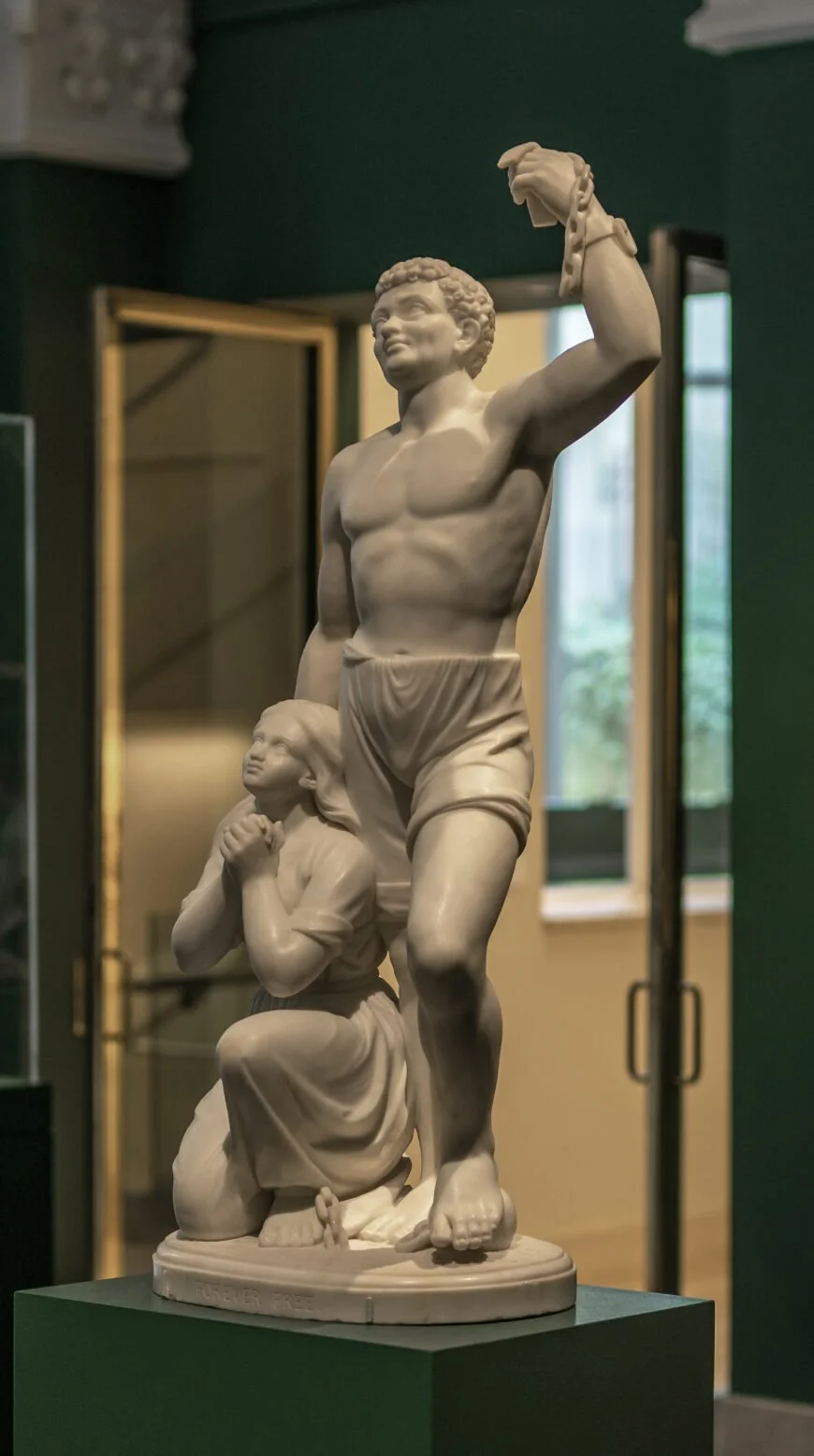
Forever Free (1867)
Carved in Rome in 1867, Forever Free stands among Edmonia Lewis’s most celebrated works — a declaration in marble at a moment when the United States was still reckoning with the aftermath of the Civil War. The sculpture depicts two newly emancipated figures: a man rising with broken shackles still visible on his wrist, and a woman kneeling beside him in a gesture that blends relief, prayer, and dawning possibility.
Today, Forever Free endures as evidence of Lewis’s technical command and her unwavering commitment to carving narratives of resilience into stone — a testament to an artist who insisted on defining freedom in her own terms.
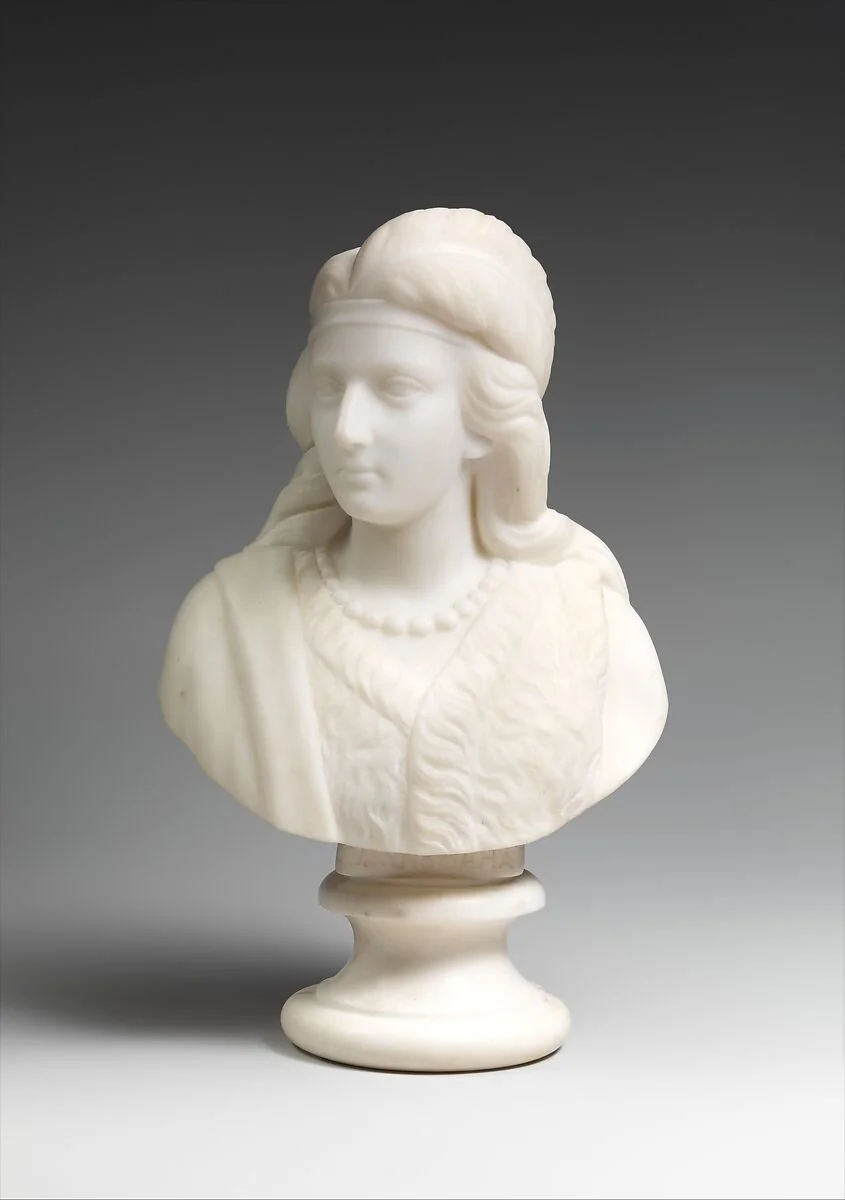
Minnehaha (1868)
This marble bust represents Minnehaha, a character from Henry Wadsworth Longfellow’s The Song of Hiawatha, and stands as one of Edmonia Lewis’s most refined neoclassical works. Completed in 1868, the piece reflects Lewis’s deep engagement with literary subjects and her ability to merge narrative with sculptural precision.
The intricate carving of the hair, the delicately rendered features, and the quiet dignity of the figure all speak to Lewis’s disciplined hand and her commitment to shaping beauty from stone.
She died in 1907, but pieces like Minnehaha endure as evidence of an artist who carved her own place into history — one deliberate strike at a time.
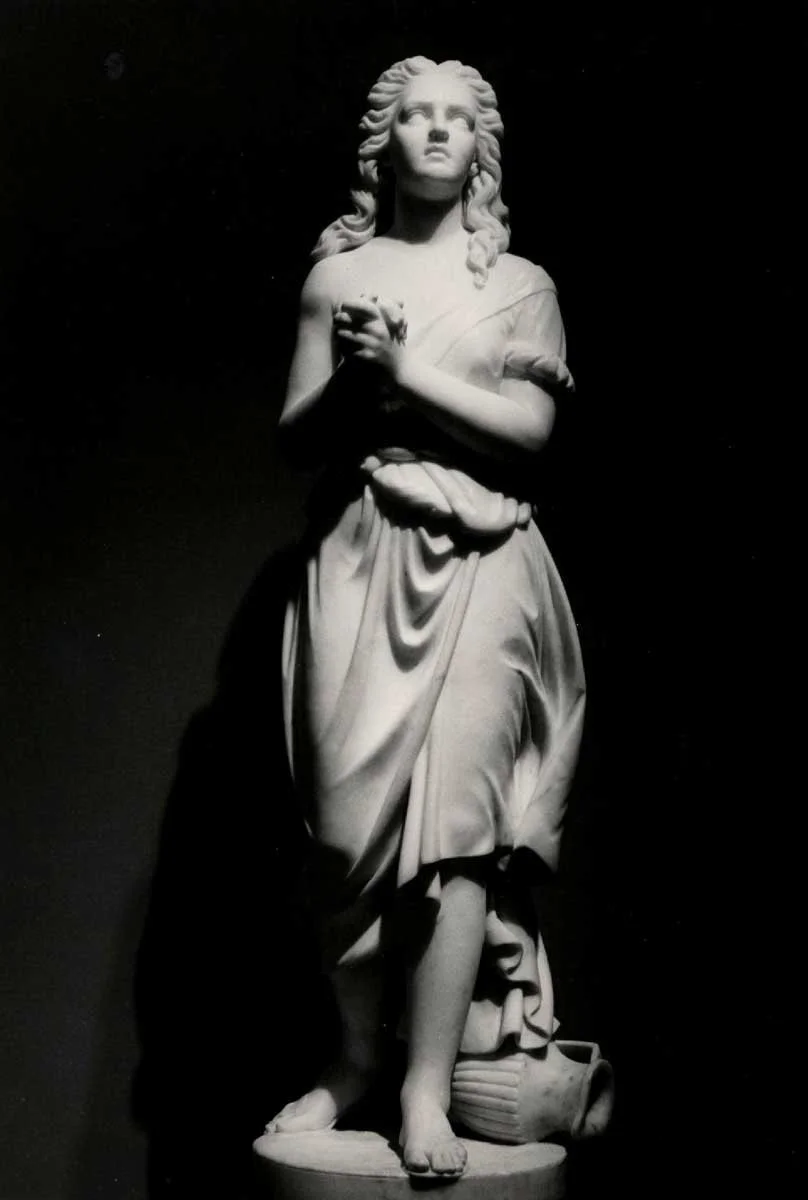
Hagar (1875)
Carved in 1875, Hagar is one of Edmonia Lewis’s most powerful neoclassical works — a figure drawn from biblical narrative but rendered through the lens of Lewis’s own understanding of exile, endurance, and spiritual resolve. The sculpture depicts Hagar at a moment of profound vulnerability, hands clasped and gaze lifted, embodying both supplication and an unbroken inner strength.
Lewis created this piece during her Roman period, where she found the artistic freedom denied to her in the United States. Working far from the racial and gendered constraints of the American art world, she shaped Hagar with a precision that reveals both technical mastery and emotional insight: the delicately carved drapery, the tension in the hands, the quiet determination in the upward gaze.
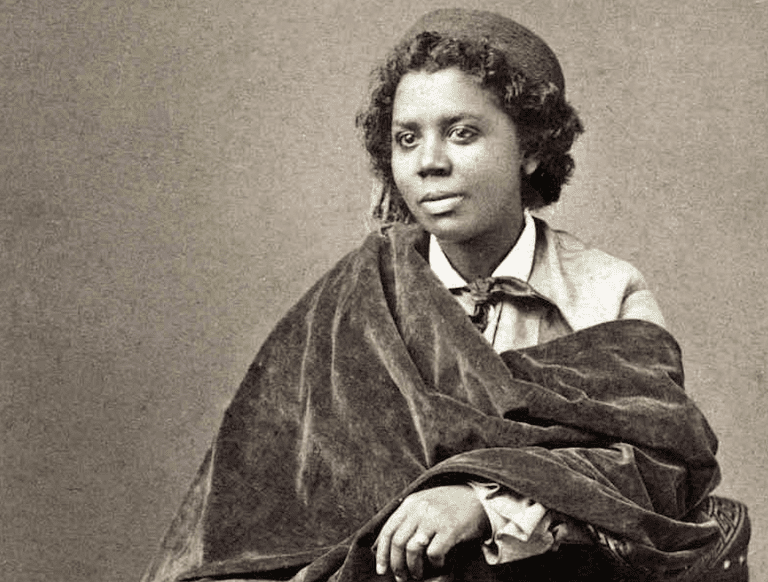
Edmonia Lewis (1844–1907)
This final portrait returns us to the woman at the center of it all — an artist who carved her way into history despite every barrier placed before her. Born in 1844, she crossed borders both literal and imagined, shaping a life that refused confinement. From Boston to Rome, from early studies to monumental commissions, Lewis carried her vision with a discipline that outlasted the world’s attempts to limit her.
She died in 1907, far from the country of her birth, but her work endures — in museums, in archives, and in the hands of those who continue to uncover the stories history tried to set aside. This image stands as a quiet testament to her presence: composed, self‑possessed, and unyielding. A reminder that her legacy was not granted; it was carved, stroke by stroke, into the permanence of stone.