
The Wounded Canvas: Painting Through Pain and Persistence
Episode 16 — The Wounded Canvas: Horace Pippin
Long before the first stroke settles onto the surface, before the weight of a brush or the hush of a studio begins to take shape, we enter the quiet brilliance of an artist who forged vision from a body still learning how to move again. What follows is not a simple chronology, but a restoration — a constellation of surviving canvases, wartime recollections, and deliberate compositions that together reveal a creator who carried history in his hands, defied limitation, and shaped a life in color when the world offered little space for such authority.
As you move through this story, you’ll encounter the images built through endurance, the scenes rendered with unwavering intention, and the unmistakable imprint of a presence that refused erasure. Each surviving work stands as evidence of his command of a discipline he was never expected to reclaim, his determination to translate memory into form, and his steady resolve to let the canvas speak when recognition rarely followed his name.
This is the unveiling. Not of a figure pushed to the margins, but of the architect within the paint — the guiding force who shaped narratives of resilience, witness, and moral clarity with a precision his era never fully acknowledged.
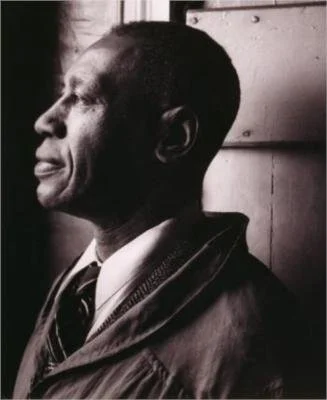
Horace Pippin (1888–1946)
Born in West Chester and shaped by the weight of the 369th Infantry’s trenches, he returned home with a wounded right arm and a memory that refused silence.
In this photograph, you meet the man before the canvas: steady, observant, and quietly resolute. The face that endured the Great War is the same one that later translated its shadows into color, composition, and truth. His life line runs through every detail here — the posture shaped by injury, the gaze shaped by witness, the presence shaped by a determination that outlived circumstance.
This image stands as the threshold. A reminder that the hand which struggled to lift a brush became the hand that reshaped American art, stroke by deliberate stroke.
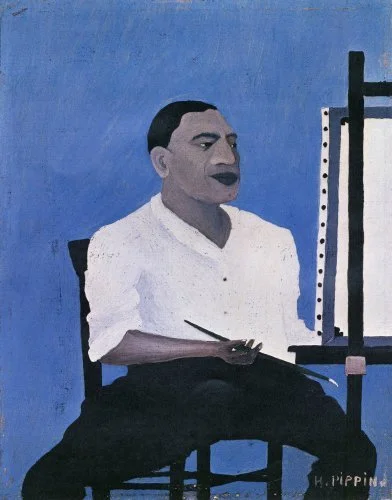
Self‑Portrait, 1941 — Horace Pippin
In this self‑portrait, Pippin meets the viewer with the same honesty that shaped his art. The steady gaze, the restrained palette, and the quiet resolve all reflect a life marked by injury, endurance, and an unbroken commitment to creation. Here, the artist presents himself without embellishment — a man who rebuilt his voice through paint, one deliberate stroke at a time.
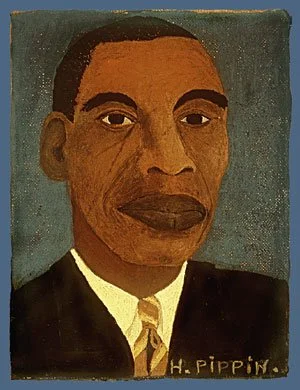
Self‑Portrait, 1944 — Horace Pippin
In this later self‑portrait, Pippin presents himself with a quieter, more distilled confidence. The lines are sharper, the palette more restrained, and the gaze more inward than before. What emerges is a portrait shaped by experience — a man who had weathered war, injury, and acclaim, yet continued to paint with the same deliberate honesty. Here, he offers not performance but presence, revealing the steadiness that defined his final years of work.
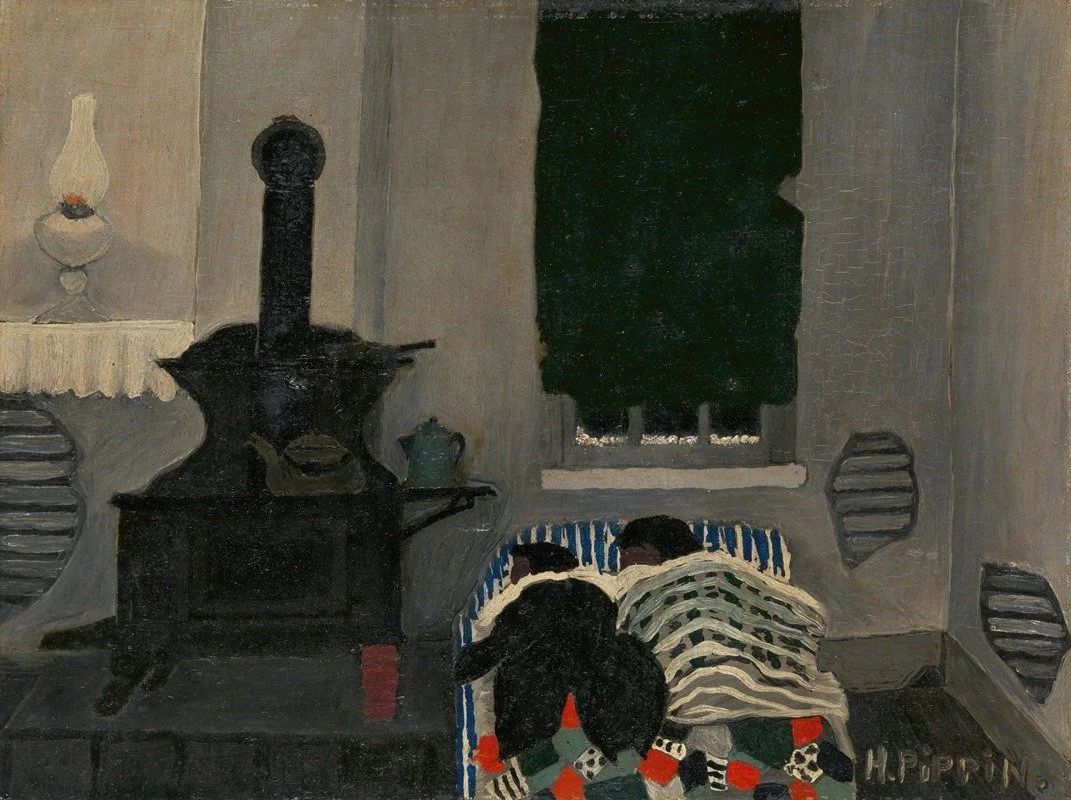
Asleep — Horace Pippin
In this intimate scene, Pippin turns his attention to the quiet rhythms of home. The figure at rest, the softened light, and the careful balance of color reveal his gift for finding dignity in the everyday. What appears simple is shaped by deep observation — a moment held still by a painter who understood how tenderness could speak as powerfully as history.
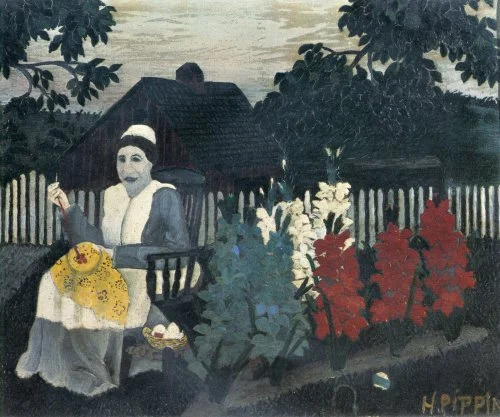
Victory Garden — Horace Pippin
In Victory Garden, Pippin turns his attention to the quiet labor of homefront life during wartime. The careful arrangement of figures, the measured use of color, and the sense of steady purpose reflect his deep respect for ordinary resilience. What emerges is a scene rooted in dignity — a reminder that endurance is not only found in battle, but in the daily work of tending, growing, and carrying on.