
Cold Logic: A Hidden Architect of Modern Technology
Episode 17: Cold Logic — Frederick McKinley Jones
Long before the first circuit hummed to life, before the weight of a blueprint or the hush of a workshop began to take shape, we enter the quiet brilliance of an inventor who forged possibility from a mind still learning how to navigate a world that rarely paused to recognize the cost of ingenuity. What follows is not a simple chronology, but a restoration — a constellation of surviving patents, wartime innovations, and deliberate designs that together reveal a creator who carried solutions in his hands, defied limitation, and shaped a modern age when the world offered little space for such authority.
As you move through this story, you’ll encounter the machines built through necessity, the systems rendered with unwavering intention, and the unmistakable imprint of a presence that refused erasure. Each surviving invention stands as evidence of his command of a discipline he was never expected to master, his determination to translate need into function, and his steady resolve to let the work speak when recognition rarely followed his name.
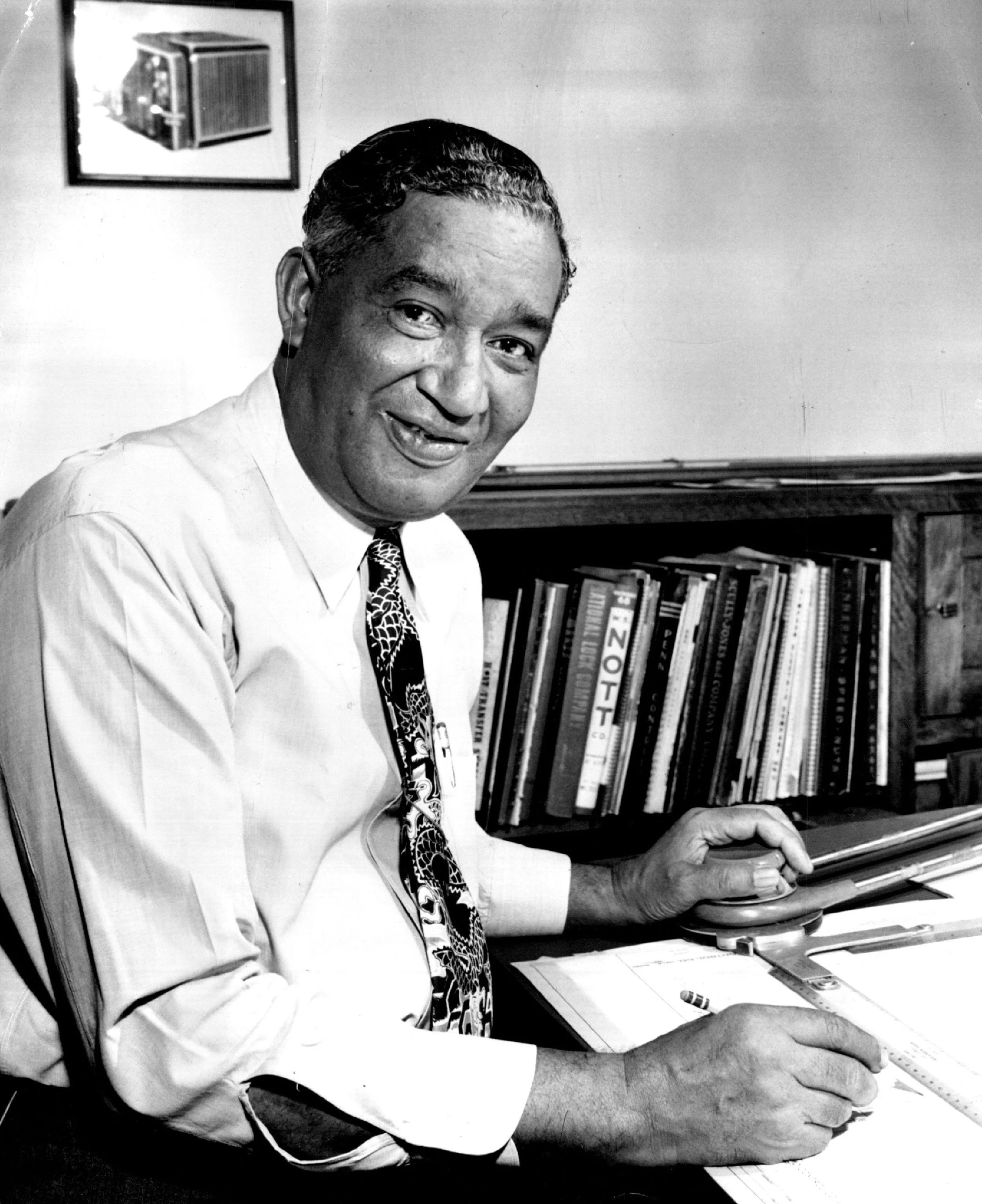
Frederick McKinley Jones (1893–1961)
This photograph captures Frederick McKinley Jones at work in the environment where his ideas reshaped modern life — a drafting table lined with the tools of precision, calculation, and restless invention. Born in 1893 and working through an era that offered him little recognition, Jones engineered solutions that carried food, medicine, and possibility across distances once thought impossible.
Here, surrounded by blueprints and mechanical sketches, he appears in the quiet discipline that defined his career: a self‑taught inventor translating necessity into design, and design into technologies that would transform industries, wartime logistics, and everyday survival. His work in portable refrigeration became the backbone of global cold‑chain systems, a legacy still moving silently through the world today.
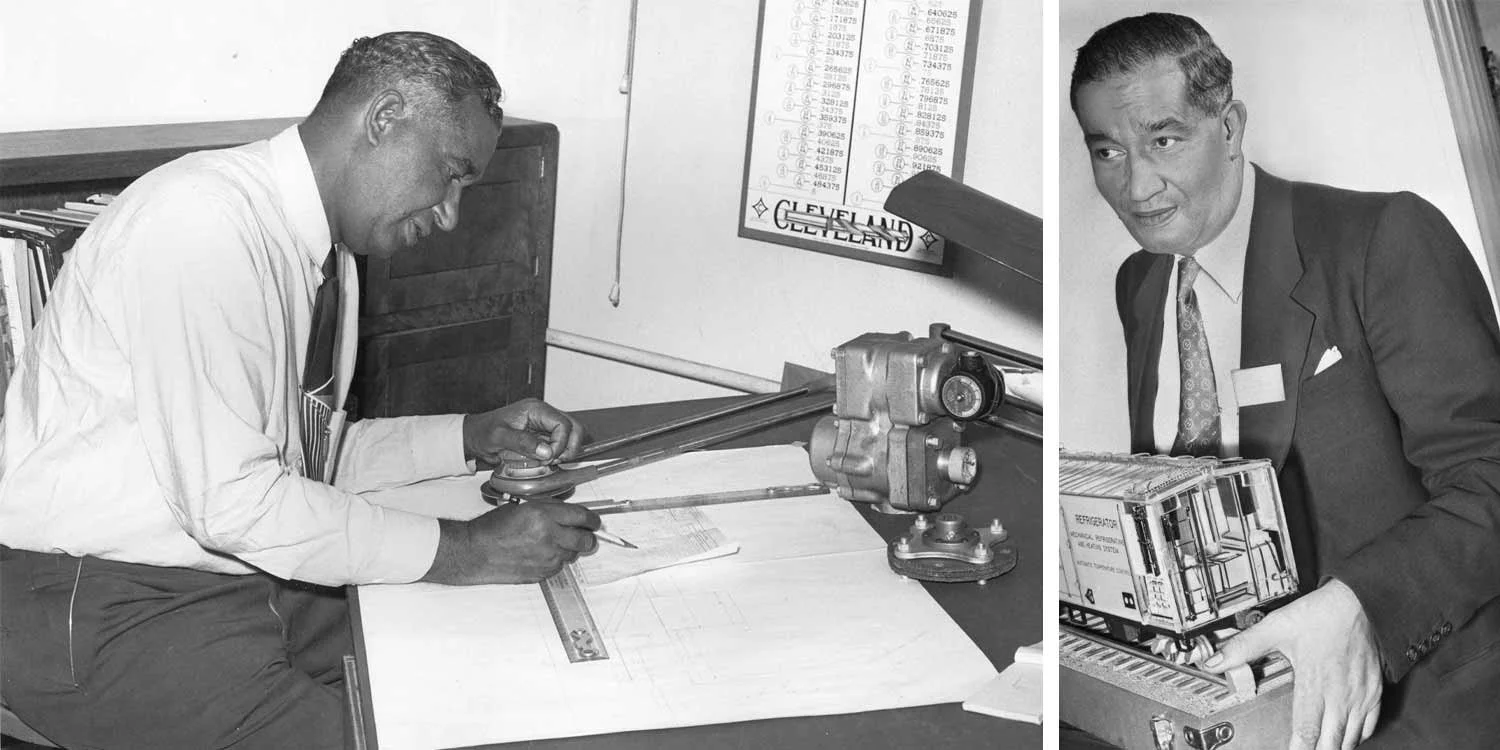
This photograph documents Frederick McKinley Jones in the dual worlds that defined his career — the drafting table where ideas took shape, and the mechanical models that carried those ideas into the modern age. On one side, he works through the precision of technical drawings, translating need into circuitry, measurements, and engineered clarity. On the other, he examines a scale model of a refrigerated railcar, a reminder of the innovations that transformed food transport, wartime logistics, and the global cold‑chain systems still relied upon today.
Active through a period that rarely acknowledged the brilliance of Black inventors, Jones developed more than sixty patents and co‑founded Thermo King, the company whose portable refrigeration units reshaped industries and saved countless lives. The image stands as evidence of a mind that solved problems others overlooked, and of a legacy built quietly, methodically, and far ahead of its time.
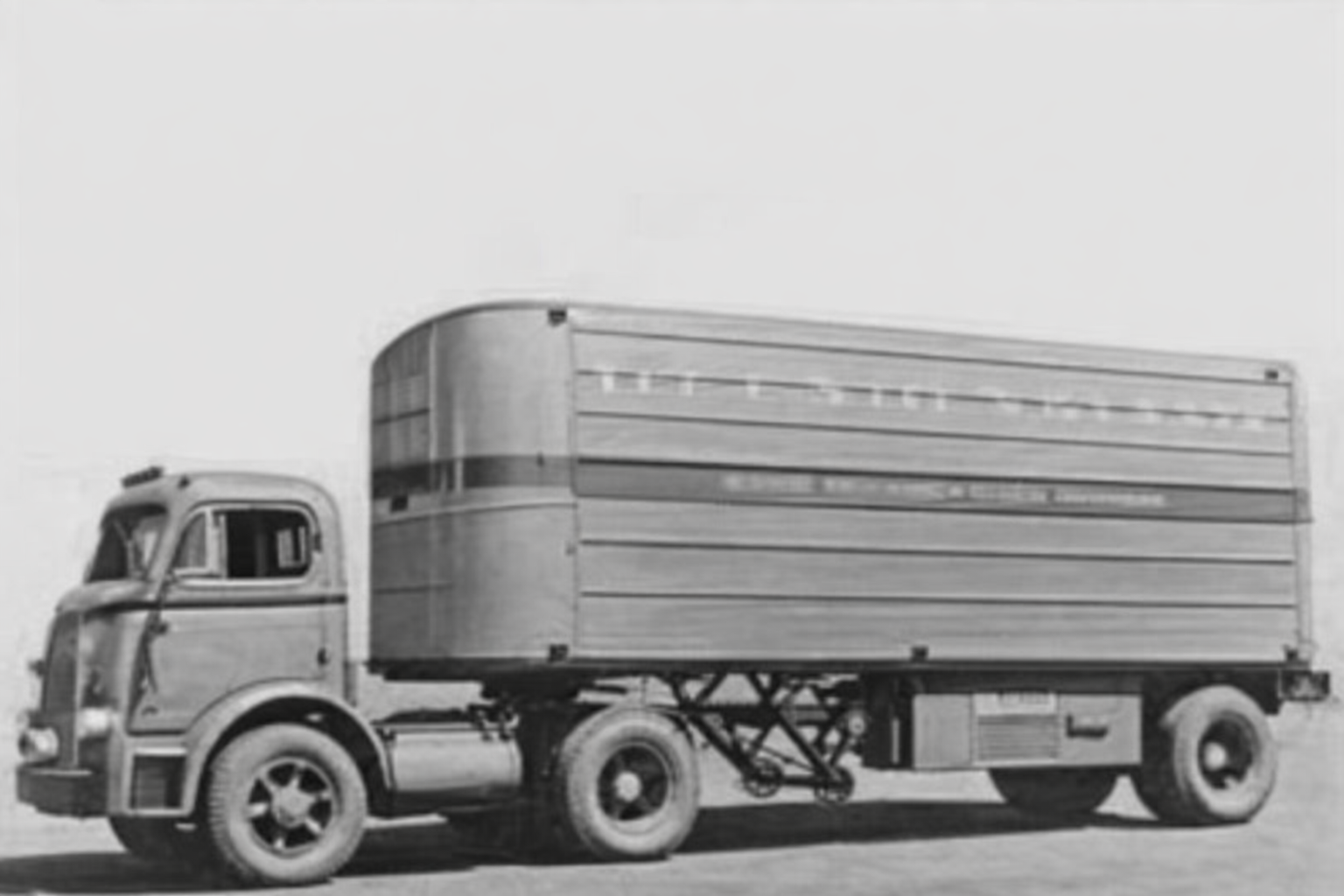
This image documents one of Frederick McKinley Jones’s most transformative innovations: the Thermo King Model A. Mounted beneath the trailer of a mid‑century truck— enabling perishable goods to travel long distances while maintaining temperature control.
Developed in the late 1930s and refined through wartime necessity, Jones’s invention revolutionized food distribution, medical supply transport, and military provisioning. It laid the foundation for modern refrigerated trucking and remains a cornerstone of global logistics.
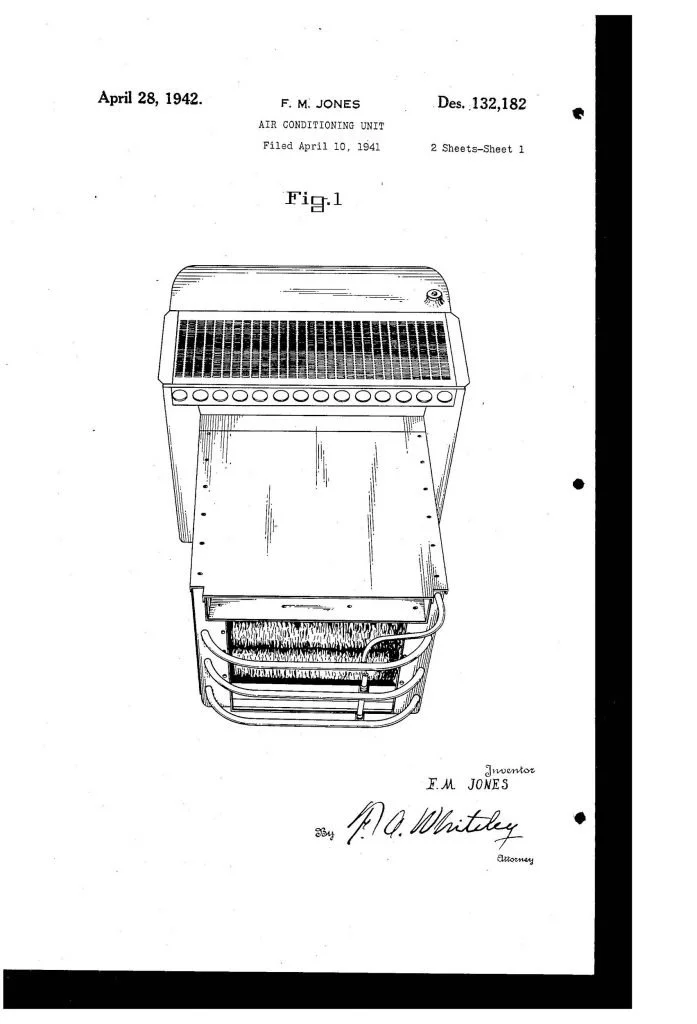
Patent Drawing — Air Conditioning Unit by Frederick McKinley Jones (1942)
This illustration depicts the front view of an air conditioning unit designed by Frederick McKinley Jones, filed in 1941 and granted in 1942 under U.S. Patent Des. 132,182. The design features a vented grille, control panel, and internal cooling components — reflecting Jones’s continued innovation in temperature regulation systems. This patent stands among more than sixty awarded to Jones, many of which laid the foundation for modern refrigeration and climate control technologies.
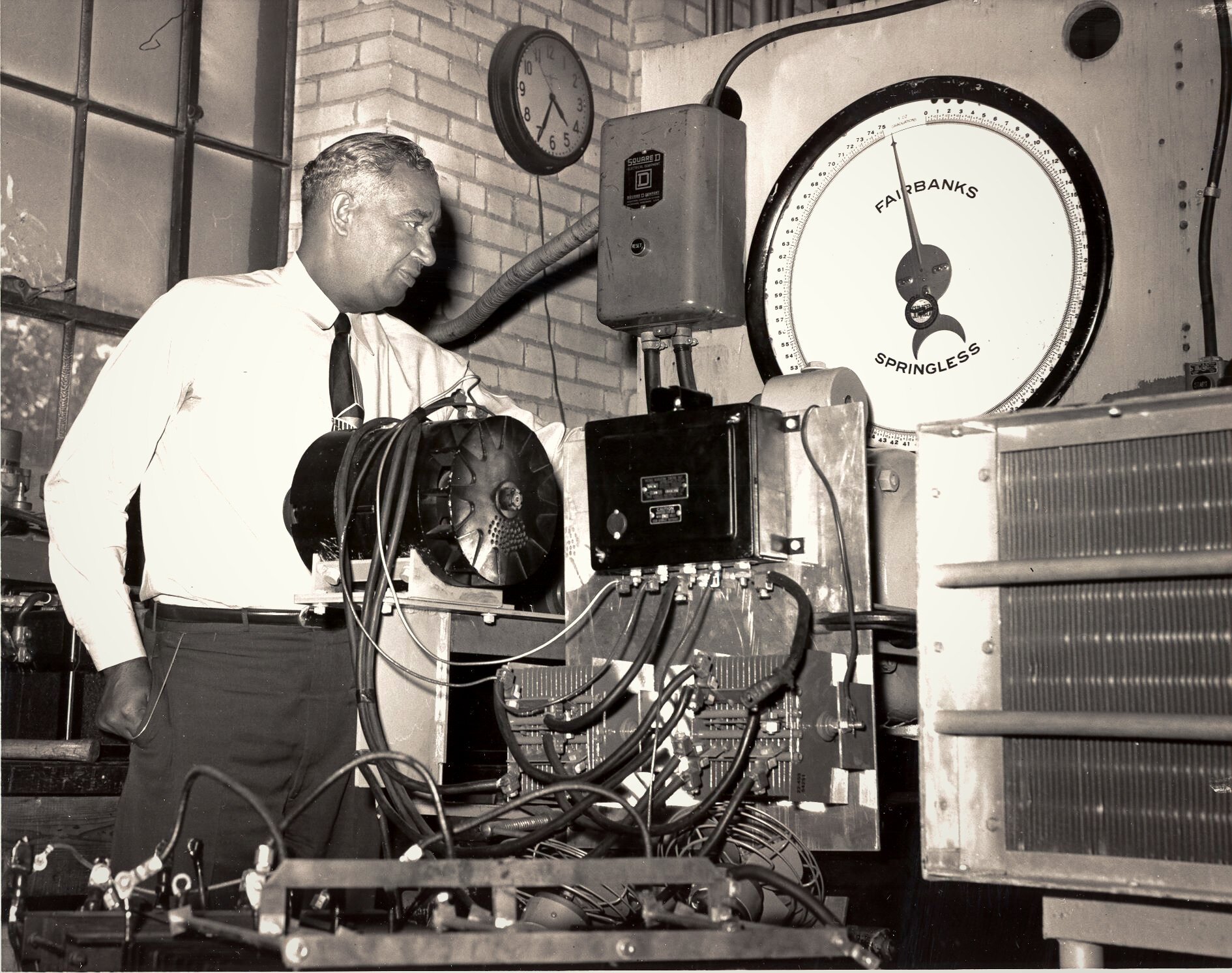
A Final Glimpse — The Precision Behind the Legacy
In this last image, we meet Frederick McKinley Jones in the environment where his genius lived most naturally: surrounded by instruments of measurement, circuitry, and the steady hum of machines he understood intuitively. What appears at first to be a simple moment of testing or calibration is, in truth, a window into the discipline that shaped more than sixty patents and transformed the movement of food, medicine, and possibility across the world.
Here, every dial, wire, and motor speaks to a mind that solved problems others overlooked — a mind that refused to accept the limits imposed on him and instead built systems that carried life across distance and time. This photograph stands as quiet evidence of a brilliance that worked without applause, a legacy engineered in the margins yet felt everywhere today.
A final testimony to a hidden architect of modern technology.