
The Inverted Blueprint:A Vision That Reshaped American Design
Episode 19: The Inverted Blueprint — Paul R. Williams
Long before the first line was drawn across vellum, before the sweep of a compass or the rise of a structure began to take form, we enter the disciplined imagination of a designer who carved possibility from a world determined not to see it. What follows is not a simple chronology, but a restoration — a constellation of sketches, elevations, and deliberate acts of creation that together reveal a mind that carried entire cities in their hands, defied exclusion, and redefined a profession that offered little space for such vision.
As you move through this story, you’ll encounter the buildings conceived against expectation, the solutions rendered with unwavering intention, and the unmistakable imprint of a presence that refused erasure. Each surviving blueprint stands as evidence of a mastery they were never expected to claim, a determination to translate constraint into innovation, and a steady resolve to let the work rise even when recognition rarely followed their name.
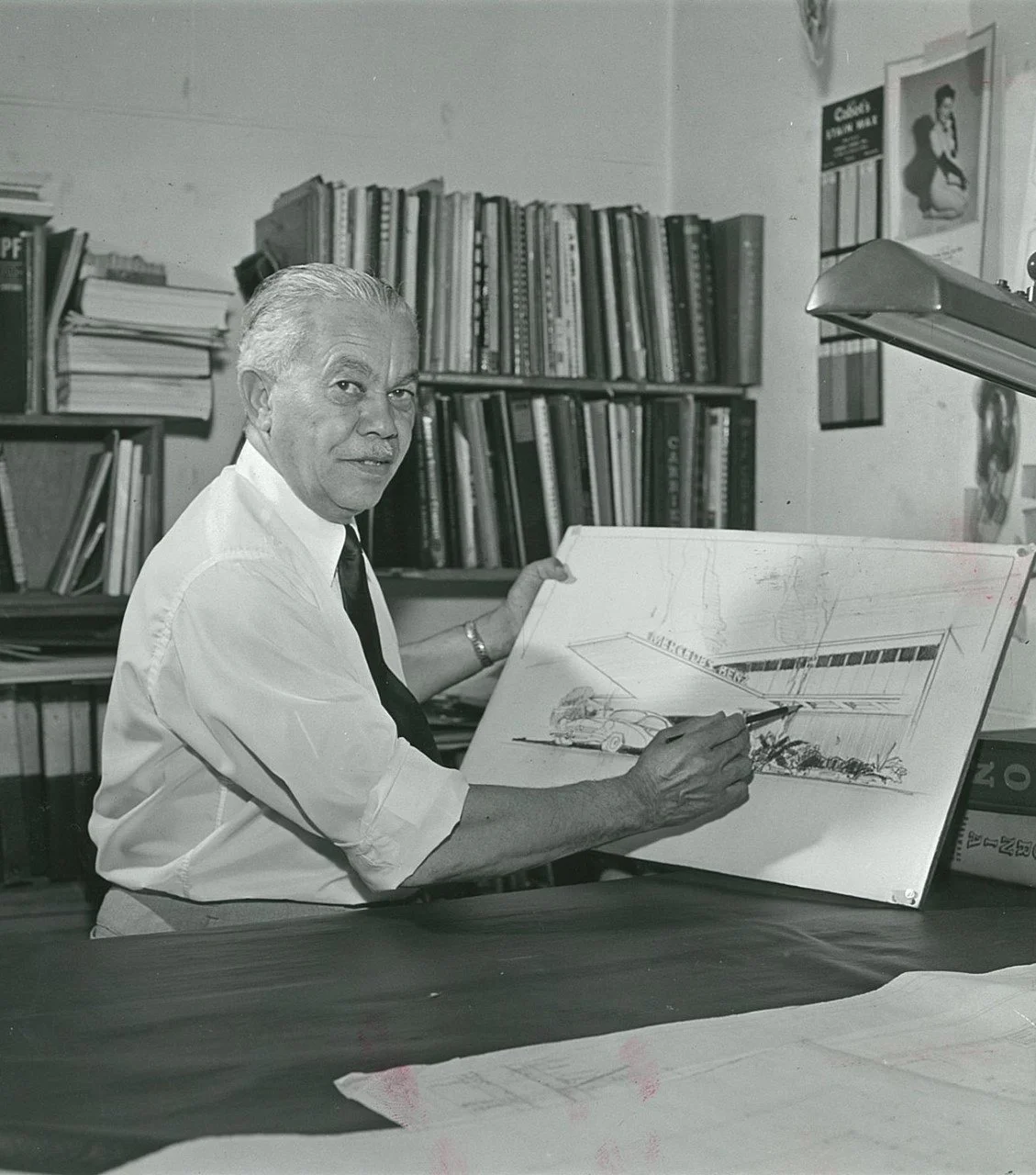
Paul Revere Williams (1894–1980)
A Life Drawn in Quiet Mastery
In this rare photograph, we meet Paul Revere Williams in the environment that shaped his legacy — the drafting table, the lamp angled low, the quiet discipline of a mind translating vision into form. Here, the architect’s hand rests on a rendering of a future still in progress, a reminder that his brilliance was forged not in the spotlight, but in the steady, deliberate labor of creation.
Williams built a career in a profession that was never designed to welcome him, yet his lines reshaped skylines, neighborhoods, and the very language of American design. This image captures the essence of his practice: precision without spectacle, innovation without fanfare, and a presence that refused to be diminished by the boundaries of his era.
What survives in this frame is more than a moment — it is evidence of a life spent drafting possibility into permanence.
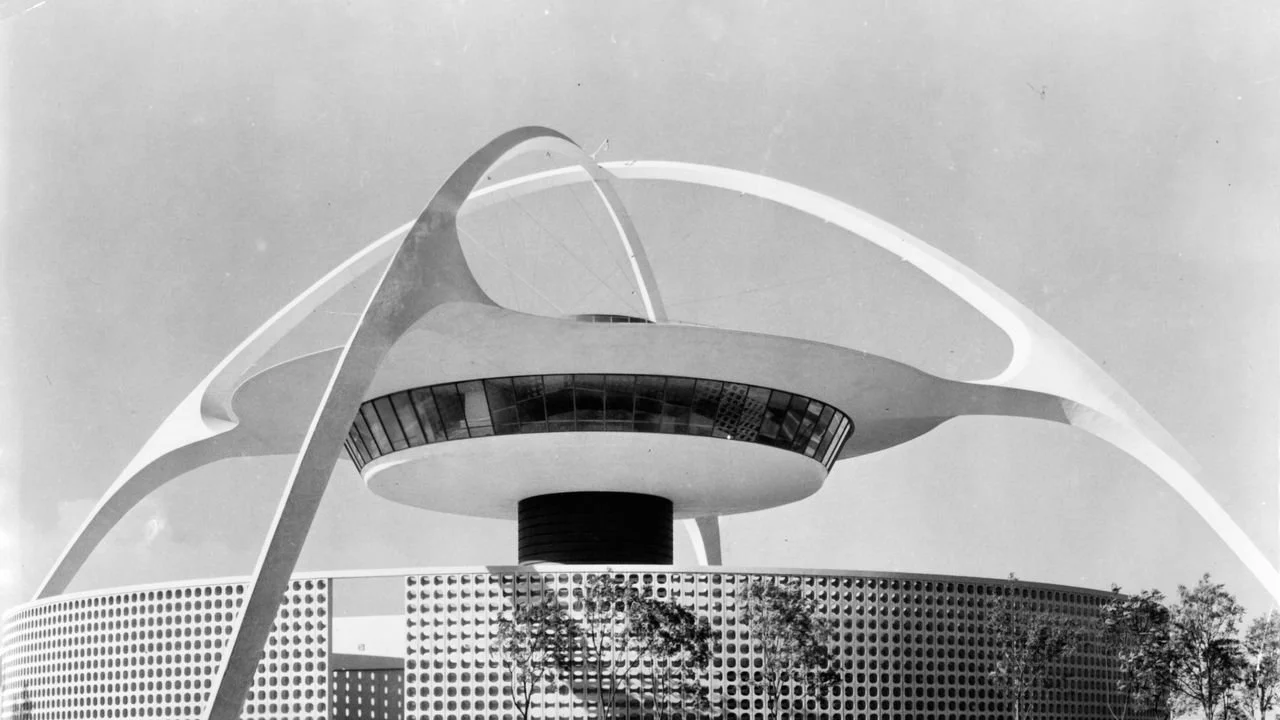
The Theme Building at LAX
A Landmark of Mid‑Century Vision
This photograph captures the Theme Building at Los Angeles International Airport — one of the most recognizable expressions of mid‑century American design. Completed in 1961, the structure’s sweeping parabolic arches and elevated central pod embody the optimism and futurism of the Jet Age.
Paul R. Williams served as one of the principal architects behind this project, contributing to a design that pushed the boundaries of form, engineering, and imagination. The building stands today as a testament to his ability to merge innovation with elegance, shaping a landmark that continues to define the visual identity of Los Angeles.
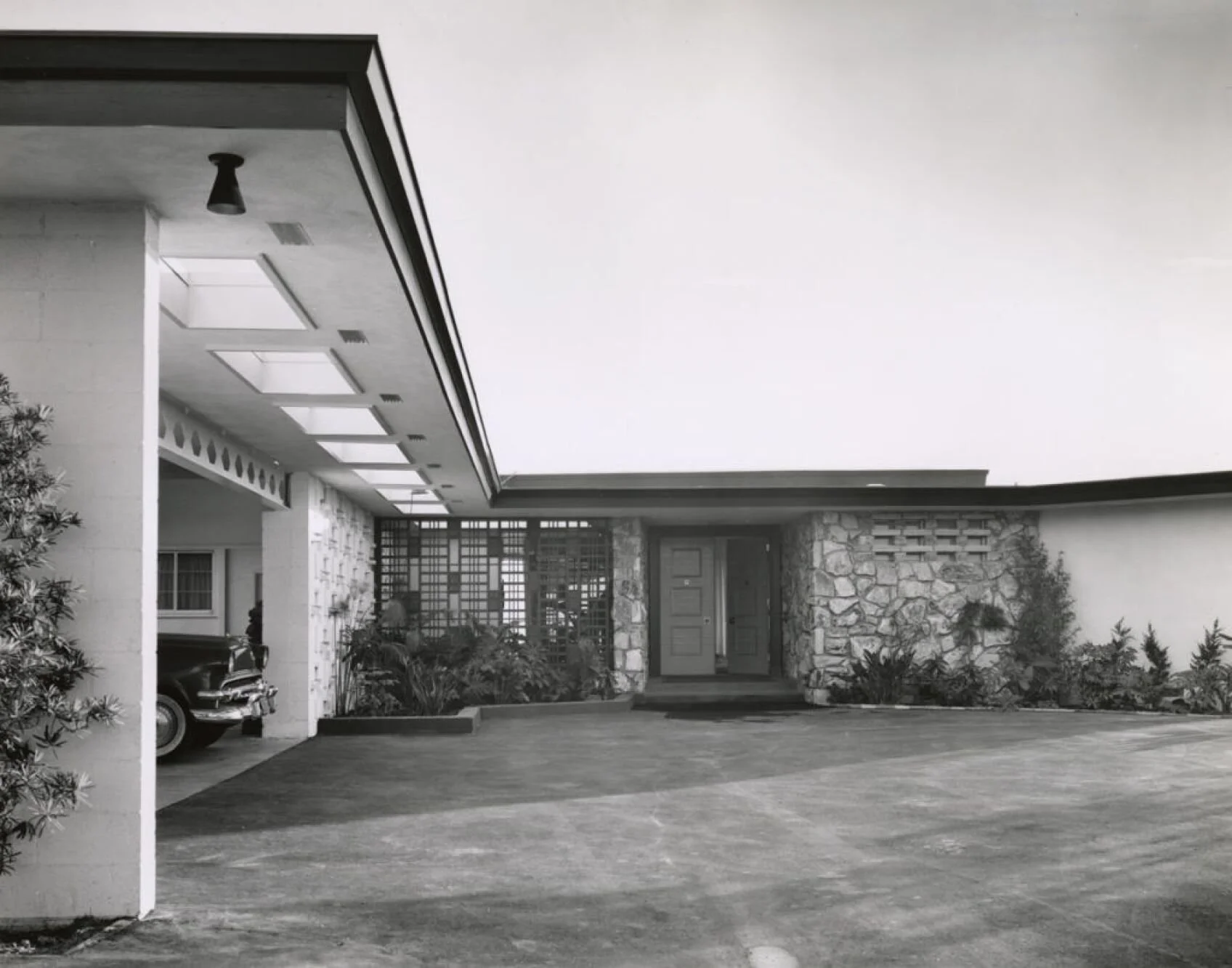
A Signature Expression of Mid‑Century Elegance
Residential Design in the Paul R. Williams Era
This photograph captures the quiet sophistication that defined mid‑century residential architecture in Los Angeles — a style Paul R. Williams helped shape and elevate. The clean roofline, integrated carport, patterned façade, and careful interplay of stone and geometry reflect the era’s shift toward modern living: open, efficient, and deeply connected to the California landscape.
Williams’s residential work often balanced refinement with restraint, creating homes that felt both contemporary and welcoming. Designs like this one reveal his mastery of proportion, his sensitivity to light and flow, and his ability to craft spaces that carried a sense of ease without sacrificing elegance. These houses became hallmarks of a new architectural vocabulary — one that continues to influence the region’s visual identity.
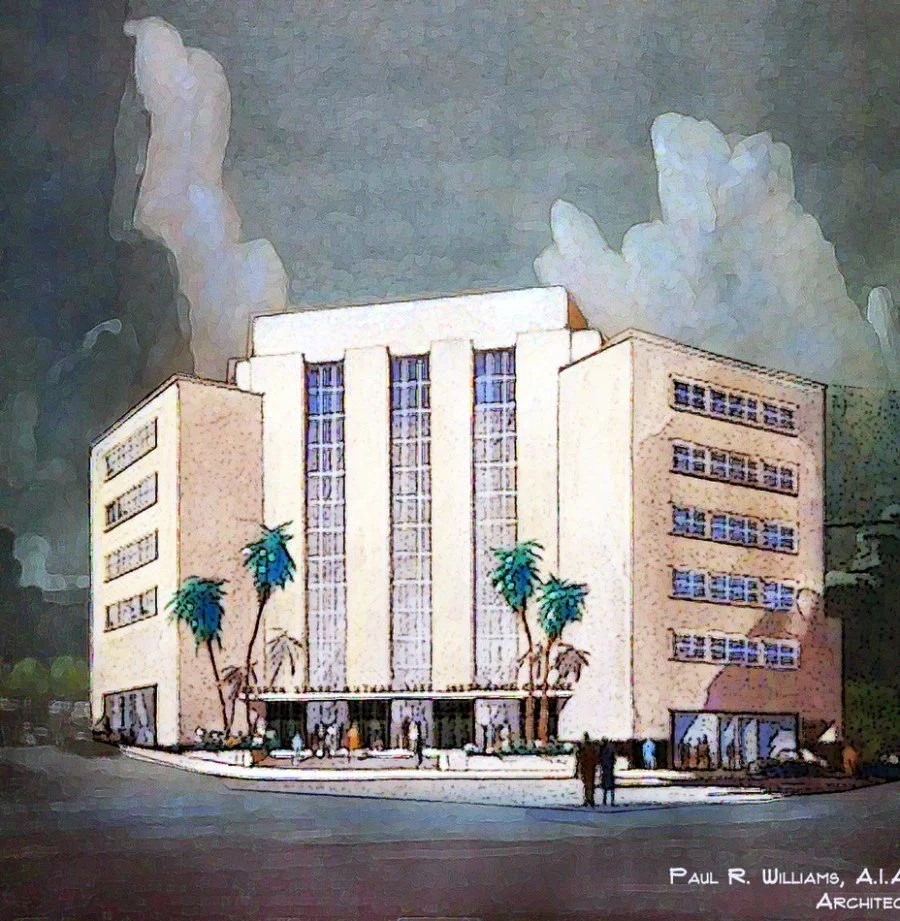
Architectural Rendering by Paul R. Williams, A.I.A.
This architectural rendering showcases Paul R. Williams’s mastery of mid‑century commercial design. With its balanced symmetry, vertical glazing, and low horizontal wings, the building reflects Williams’s ability to merge civic presence with human‑scaled elegance. His renderings were more than technical documents — they were invitations into a future shaped by clarity, order, and optimism.
Williams’s commercial commissions during this era helped define the visual identity of postwar Los Angeles. He designed spaces where Black professionals, families, and business owners could see themselves reflected in the built environment, asserting dignity and possibility in a city that often denied both. This drawing stands as evidence of his disciplined craft and his belief that architecture could reshape not only skylines, but opportunity itself.