
Recipes for Resistance: A Story of Wartime Innovation
Episode 11 Recipes for Resistance — Maria Orosa
This episode unfolds as a monologue of resourcefulness and resolve — the tension between a mind shaped by scarcity and a world that depended on ingenuity it rarely bothered to acknowledge. In this story, invention becomes both nourishment and defiance: a method pressed against the boundaries of survival, a formula refusing to disappear.
Across these images and artifacts, their presence gathers form — not loudly, but unmistakably. Experiments carried out in hidden corners, recipes refined without recognition, and contributions that traveled through history without the name they deserved. What once simmered at the margins begins to rise to the surface.
This opening invites you into an unveiling — where a brilliance long overshadowed steps forward, and the legacy of crafting sustenance under siege finally claims its place. Move ahead and witness the ingenuity that endured, even when the world tried to look past it.
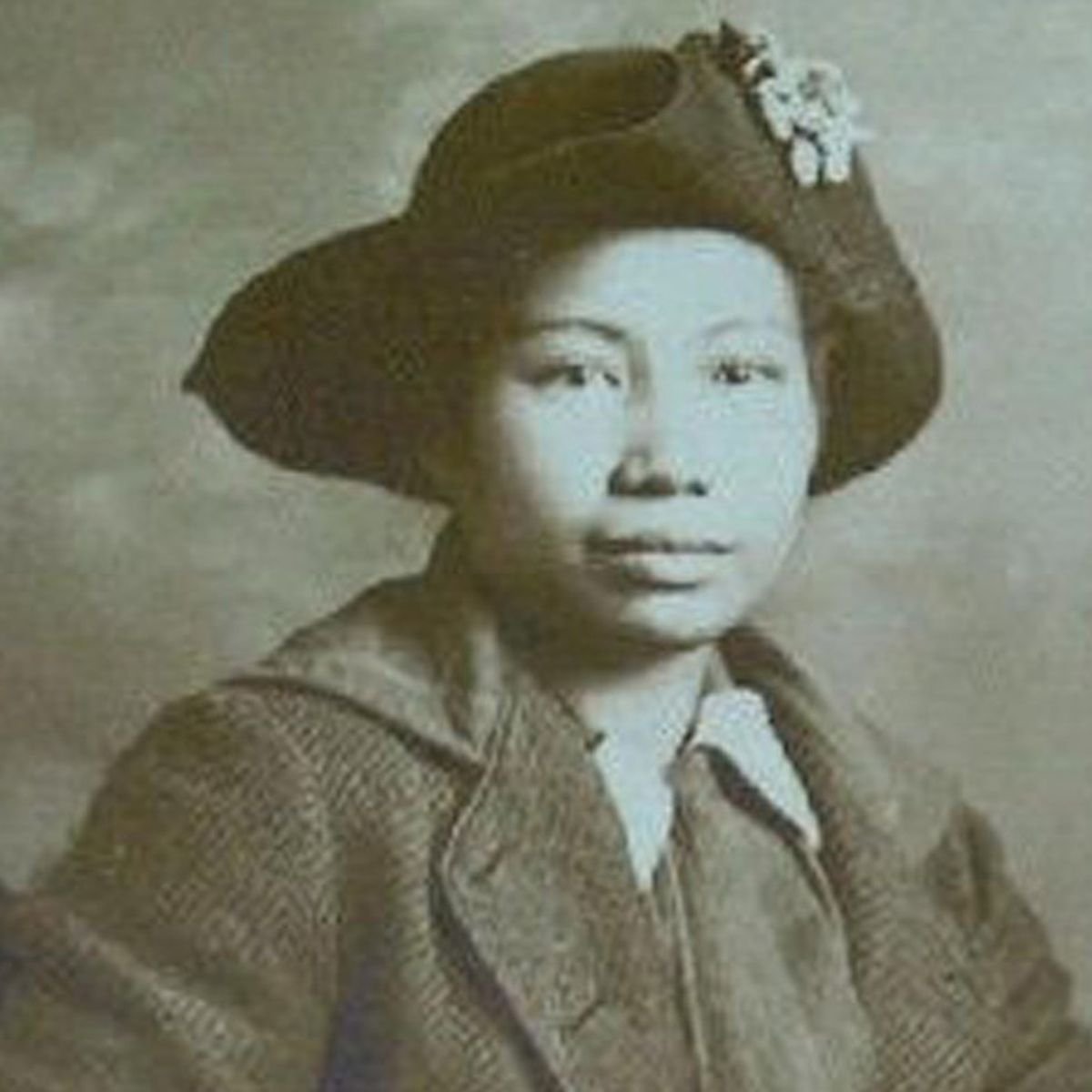
Maria Ylagan Orosa (November 29, 1893 – February 13, 1945)
This archival portrait captures Maria Orosa, a pioneering Filipino chemist, food technologist, and wartime humanitarian. Born in Taal, Batangas, she earned degrees in pharmaceutical chemistry and food science in the United States before returning to the Philippines to revolutionize nutrition and preservation techniques.
During World War II, Orosa developed life-saving innovations like Soyalac (a protein-rich soybean drink) and Darak (vitamin-packed rice bran cookies), which were covertly delivered to prisoners in Japanese internment camps. Her most famous creation, banana ketchup, remains a staple of Filipino cuisine.
She died during the Battle of Manila while continuing her humanitarian work — but her legacy endures in every act of nourishment, resistance, and ingenuity she inspired.
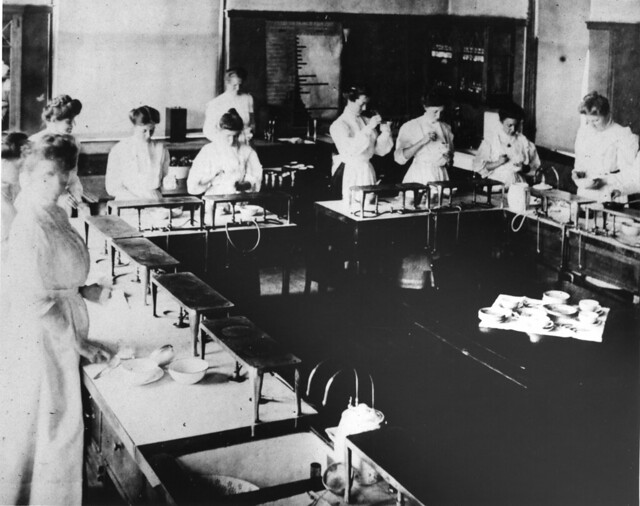
This photograph reflects the kind of hands-on, interdisciplinary lab Maria Orosa would have studied in while earning her degrees in pharmaceutical chemistry and food science in the United States. At the University of Washington, she trained in environments like this — where chemistry, nutrition, and domestic science converged in classrooms filled with burners, beakers, and raw ingredients.
These labs were designed not just for experimentation, but for innovation. Women in white coats worked at individual stations, testing preservation techniques, analyzing food composition, and developing formulas that could extend shelf life, improve nutrition, and support public health. It was in spaces like these that Orosa honed the skills she would later use to invent Soyalac, Darak, and banana ketchup — transforming scientific training into wartime strategy.
This image stands as a testament to the rigor and creativity of early food technologists — and to the quiet brilliance of those who used science not just to understand the world, but to nourish and protect it.
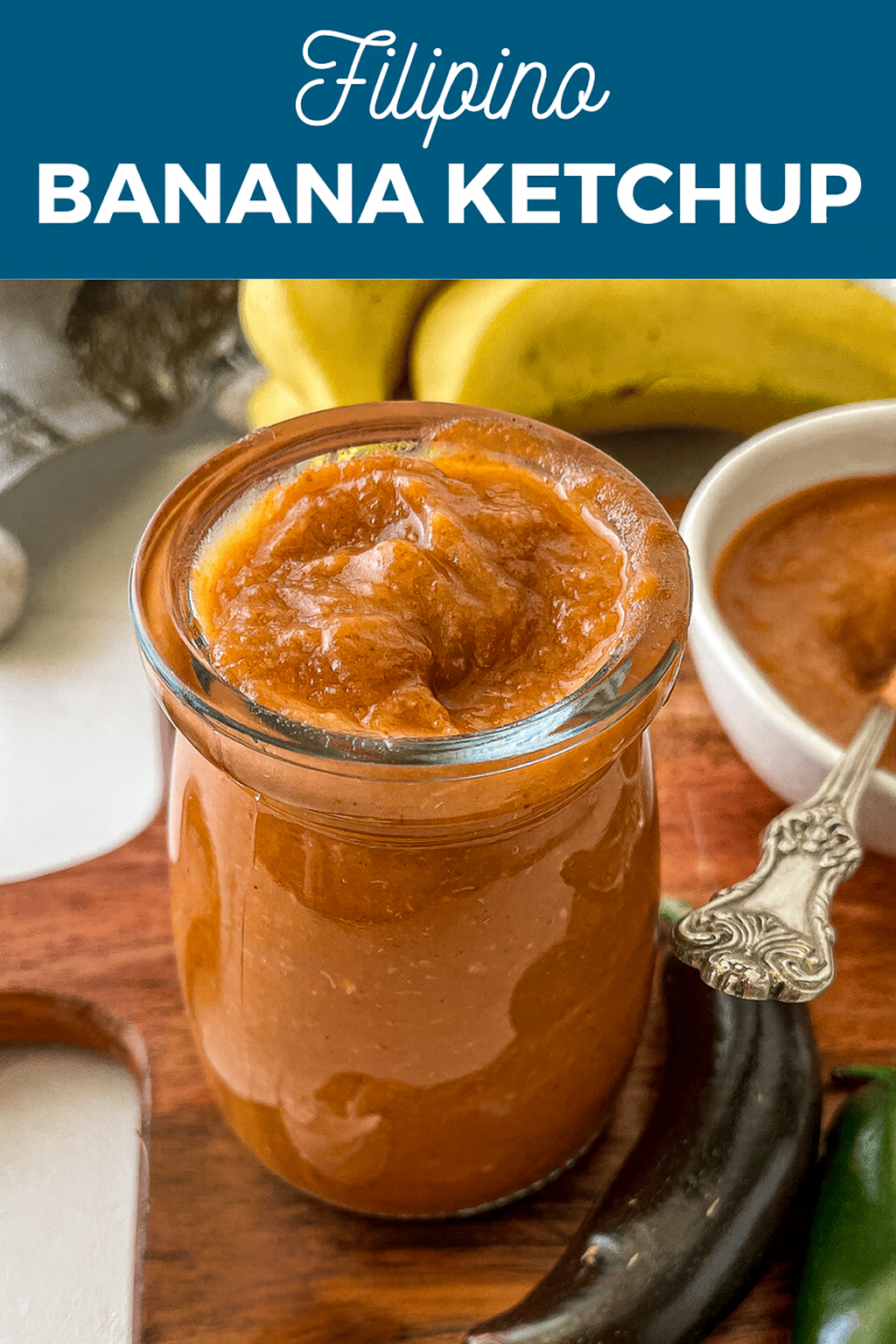
This vibrant condiment isn’t just a Filipino pantry staple — it’s a symbol of wartime ingenuity and cultural defiance. Developed by Maria Ylagan Orosa, a pioneering food technologist and guerrilla captain, banana ketchup was born from necessity: a tomato shortage during World War II and a deep commitment to Filipino self-reliance.
Orosa’s version used mashed bananas, vinegar, sugar, and native spices — transforming local abundance into culinary resilience. But her work went far beyond flavor. Her inventions saved thousands. Banana ketchup, with its sweet-tangy profile and unmistakable color, became a quiet act of resistance — a way to nourish, to preserve, and to assert identity under occupation. Today, it remains a testament to Orosa’s belief that science, culture, and compassion could coexist in every bite.
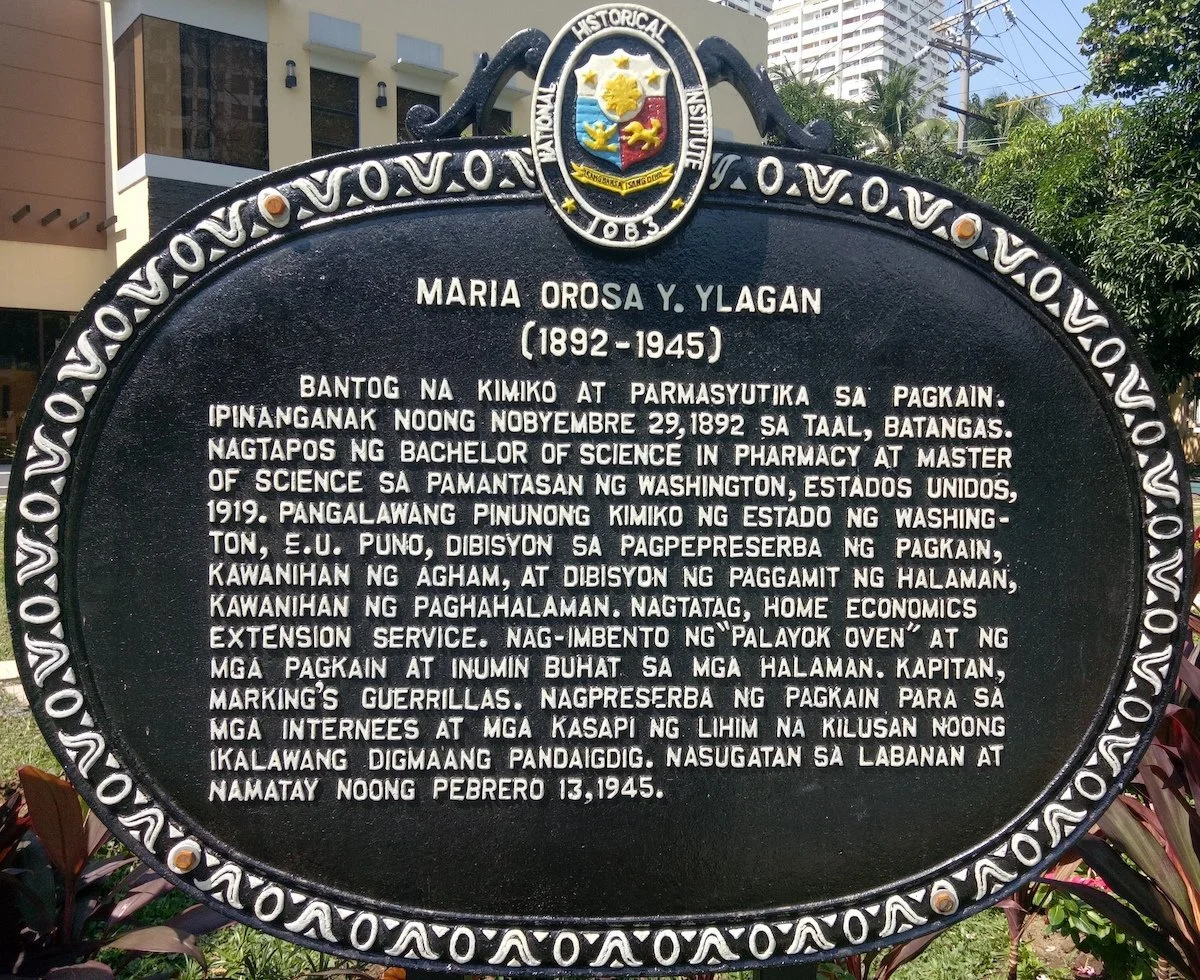
Maria Orosa: Science in Service of Freedom
This marker stands in solemn tribute to Maria Ylagan Orosa (1892–1945), a chemist, inventor, and wartime hero whose brilliance fed a nation under siege. Born in Taal, Batangas, and trained in the United States, Orosa returned to the Philippines not for comfort, but for purpose — pioneering food technologies that saved lives during World War II.
She invented the “palayok oven” for rural communities without electricity, and developed nutrient-rich foods like Soyalac and Darak to fight malnutrition. Her most iconic creation, banana ketchup, transformed local ingredients into a symbol of Filipino resilience.
As a captain in Marking’s Guerrillas, she risked everything to smuggle food into internment camps, using hollow bamboo tubes to deliver sustenance and hope. She was mortally wounded during the Battle of Manila, but her legacy endures — in every bite of banana ketchup, in every act of nourishment as resistance.
This marker, issued by the National Historical Institute of the Philippines, reminds us: Maria Orosa didn’t just preserve food. She preserved dignity.
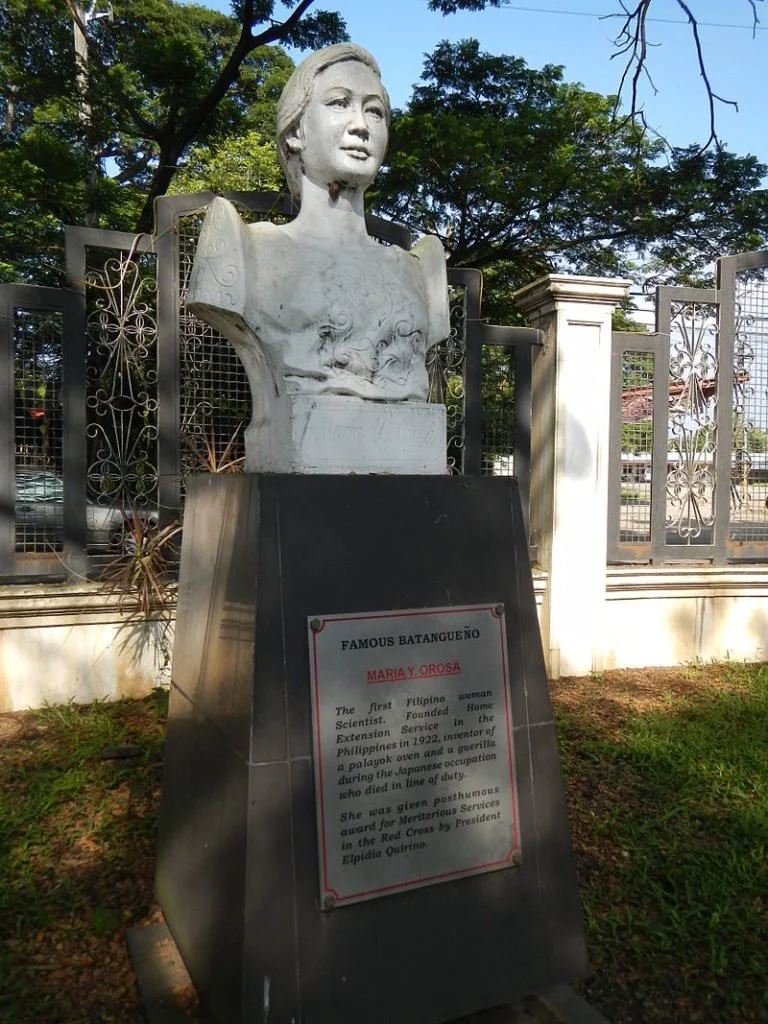
Maria Y. Orosa: A Monument to Nourishment and Defiance
This bust stands in quiet tribute to Maria Ylagan Orosa — the first Filipino woman scientist, a visionary who fused chemistry with compassion. Trained abroad but rooted in the Philippines, she founded the Home Extension Service in 1922 to empower communities through food science and self-sufficiency.
As a guerrilla fighter during the Japanese occupation, Orosa risked her life to smuggle life-saving food into internment camps, using hollow bamboo tubes to deliver sustenance and hope.
She died in the line of duty in 1945, but her impact endures — in every act of nourishment, in every Filipino kitchen, and in every story of resistance told through food. This bust, framed by trees and memory, reminds us that science can be a form of service, and that courage often wears an apron.