
Anchored in Absence: A Voice Behind the Monument
Episode 12 Anchored in Absence — Emily Warren Roebling
Before the scroll begins its descent, before the architecture of this story is fully unshrouded, we invite you into the quiet force of a life lived in the margins of a monument. What follows is not a simple archive, but a reclamation — a constellation of surviving documents, letters, and engineering traces that together illuminate Emily Warren Roebling, the mind who carried a bridge across the chasm left by another’s absence.
As you scroll, you’ll encounter calculations in her handwriting, correspondence that steadied a faltering project, and the unmistakable imprint of a guiding presence that refused to yield. Each artifact is a testament to Roebling’s command of a discipline she was never meant to enter, her insistence on mastering the science that others believed beyond her reach, and her unwavering resolve to see a vision completed when doubt threatened to halt its rise.
This is the full reveal. Not just of a figure behind the scenes, but of the architect in the shadows — the steady force who kept a monument standing and never stepped back from the weight it demanded she bear.
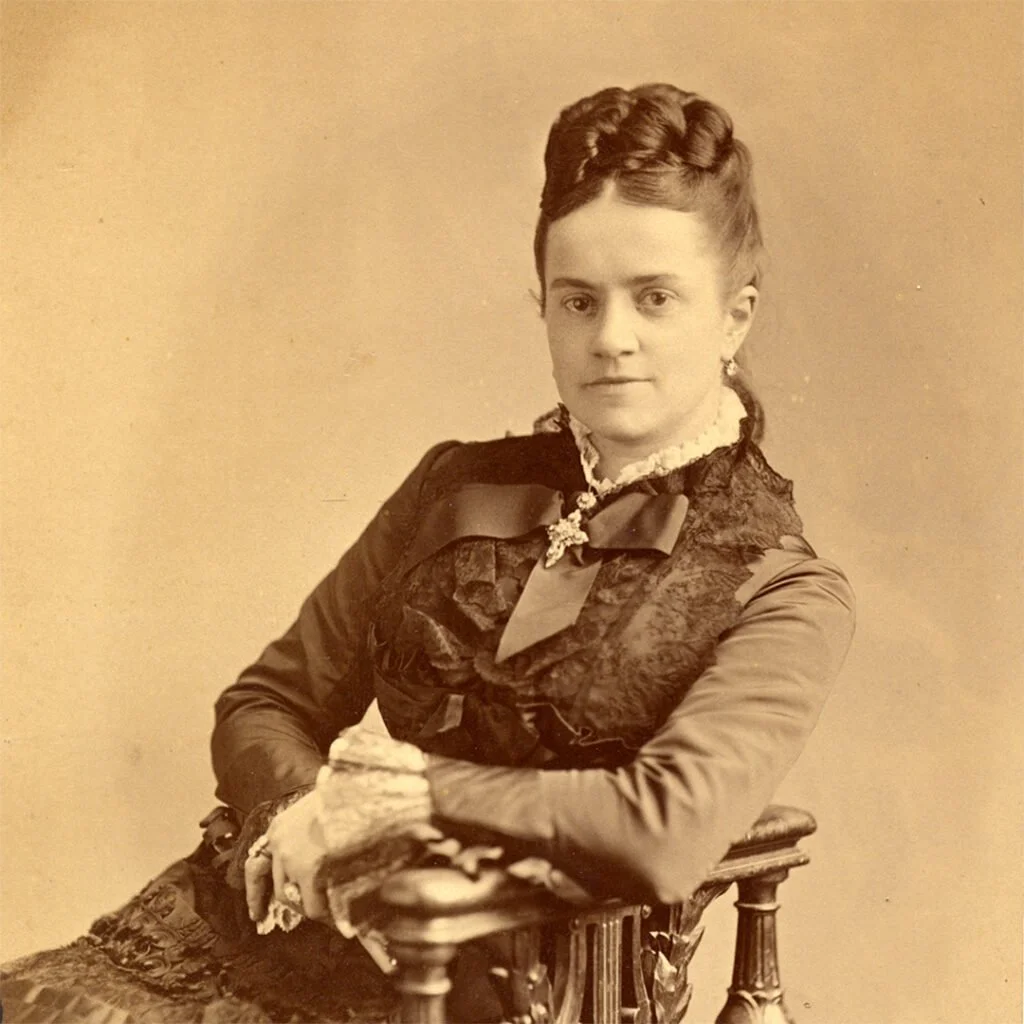
Emily Warren Roebling (1843–1903) stepped into history not by invitation, but by necessity. When her husband, chief engineer Washington Roebling, was incapacitated during the Brooklyn Bridge’s construction, she became its de facto field engineer — mastering suspension design, translating technical plans, and serving as the bridge’s public face. This portrait captures the quiet authority of a woman who carried a monument across the finish line, long before her name was widely known.
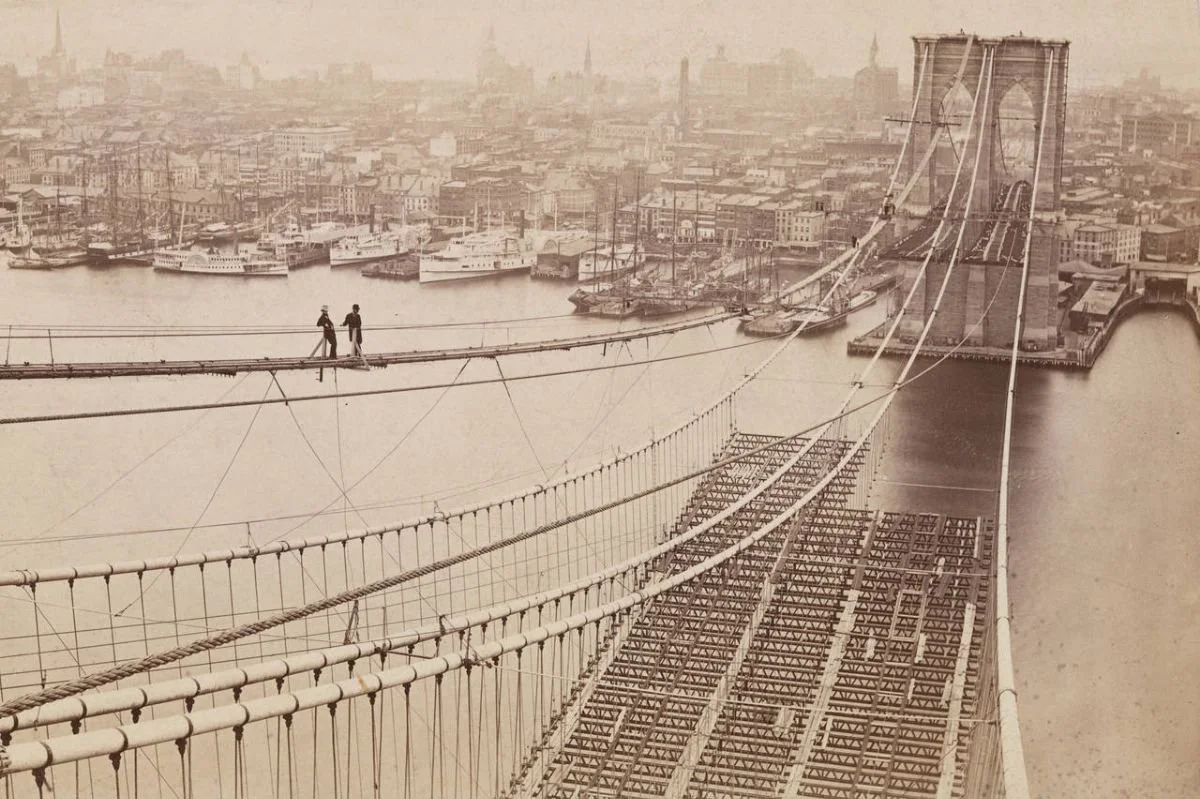
Brooklyn Bridge under construction, circa late 1870s. This image captures the perilous catwalk suspended above the East River, where engineers and laborers balanced between sky and steel. During this phase, Emily Warren Roebling served as the bridge’s critical liaison — conveying technical instructions, managing correspondence, and ensuring the project’s continuity while her husband, chief engineer Washington Roebling, remained bedridden. Her presence was not ceremonial; it was structural.
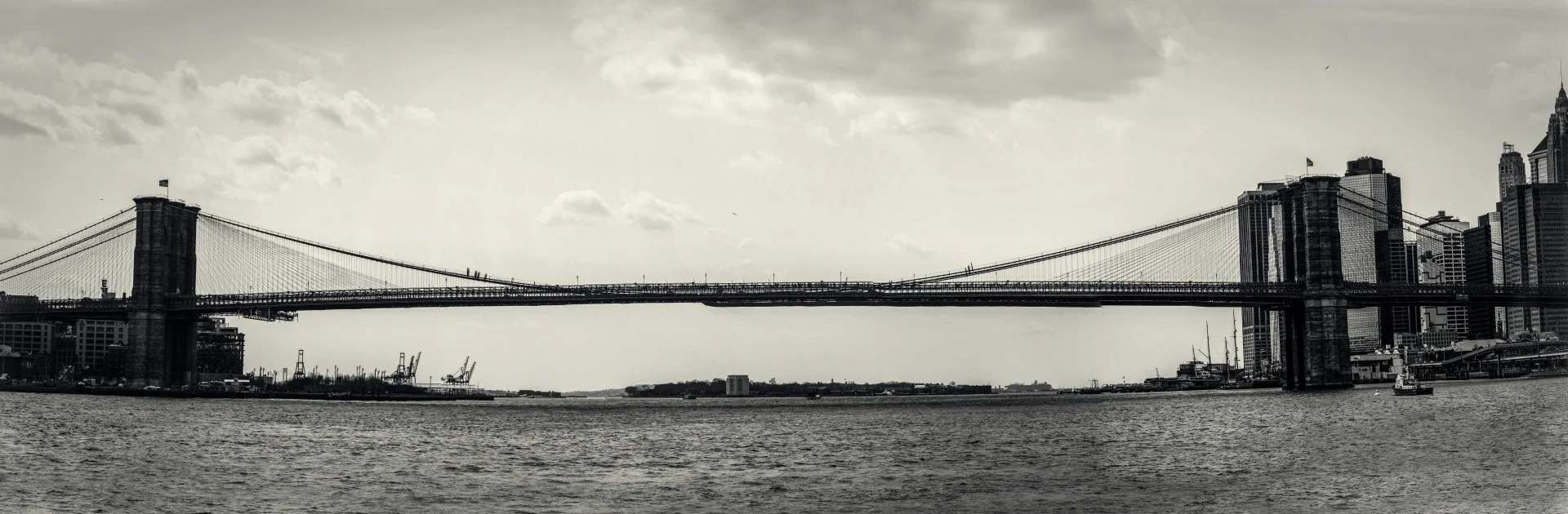
Brooklyn Bridge, spanning the East River between Manhattan and Brooklyn, as seen in a panoramic view from the early 20th century. Completed in 1883, the bridge stands as a triumph of engineering and perseverance. Its stone towers and web of suspension cables reflect the vision of John A. Roebling, the resilience of Washington Roebling, and the indispensable guidance of Emily Warren Roebling — whose technical command and diplomatic skill carried the project through its final, uncertain years. This image captures not just a structure, but the silhouette of a legacy anchored in quiet leadership.
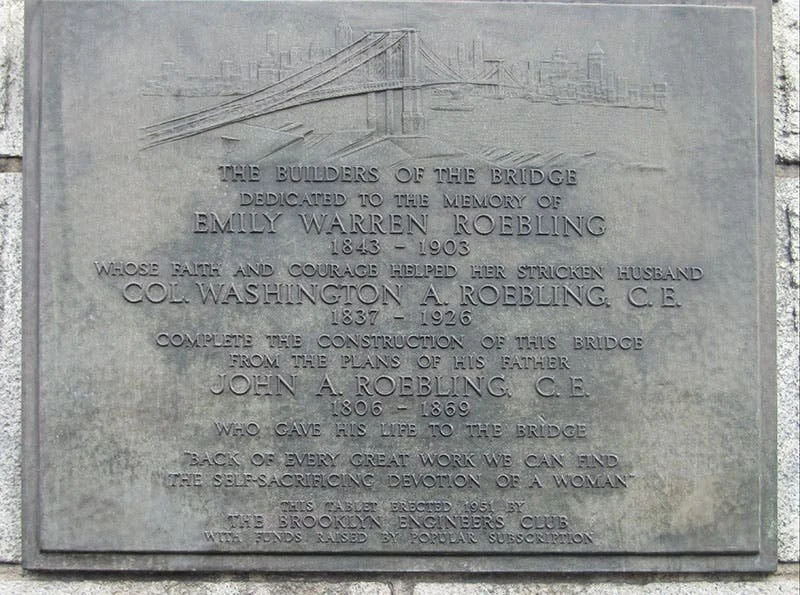
Commemorative plaque honoring the builders of the Brooklyn Bridge, installed in 1951 by the Brooklyn Engineers Club. At its center is the name of Emily Warren Roebling (1843–1903), whose technical command and unwavering resolve helped carry the bridge to completion after her husband, Washington Roebling, was incapacitated. The inscription recognizes her role not as symbolic, but structural — a testament to the unseen labor that held the bridge together. The quote etched below speaks to the broader truth her story embodies: “Back of every great work we can find the self-sacrificing devotion of a woman.”
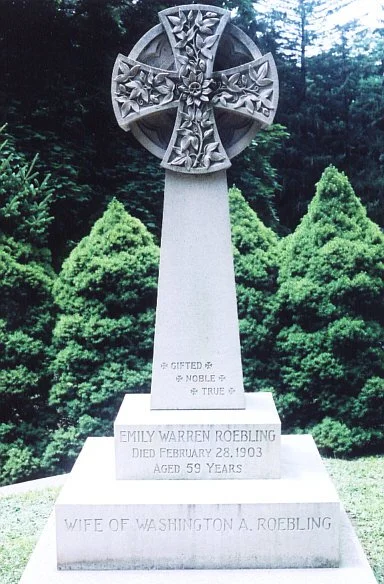
Gravestone of Emily Warren Roebling (1843–1903), Cold Spring Cemetery, New York. The monument’s inscription — “Gifted, Noble, True” — reflects the virtues she embodied while carrying the Brooklyn Bridge to completion. Beneath the Celtic cross and floral carvings lies the memory of a woman whose intellect, resolve, and quiet leadership shaped one of the most iconic structures in American history. Though her name was once hidden behind stone and steel, this marker stands as a permanent acknowledgment of the mind behind the monument.