
Composed in Silence
Episode 9: Composed in Silence — Fanny Mendelssohn
This is a monologue of vision and restraint, formed in the tension between an inner world overflowing with sound and an outer world that insisted on silence. Here, composition becomes both revelation and rebellion — a score pressed against the boundaries of expectation, a pulse refusing to disappear.
Across these images and artifacts, their presence emerges — not loudly, but unmistakably. Notes written in private, ideas carried in secret, and works that slipped through history without the name they deserved. This opening invites you into a space of unveiling —where hidden genius steps into the light, and the legacy of crafting beauty in silence finally takes its rightful place. Move forward and witness the journey that could not be erased.
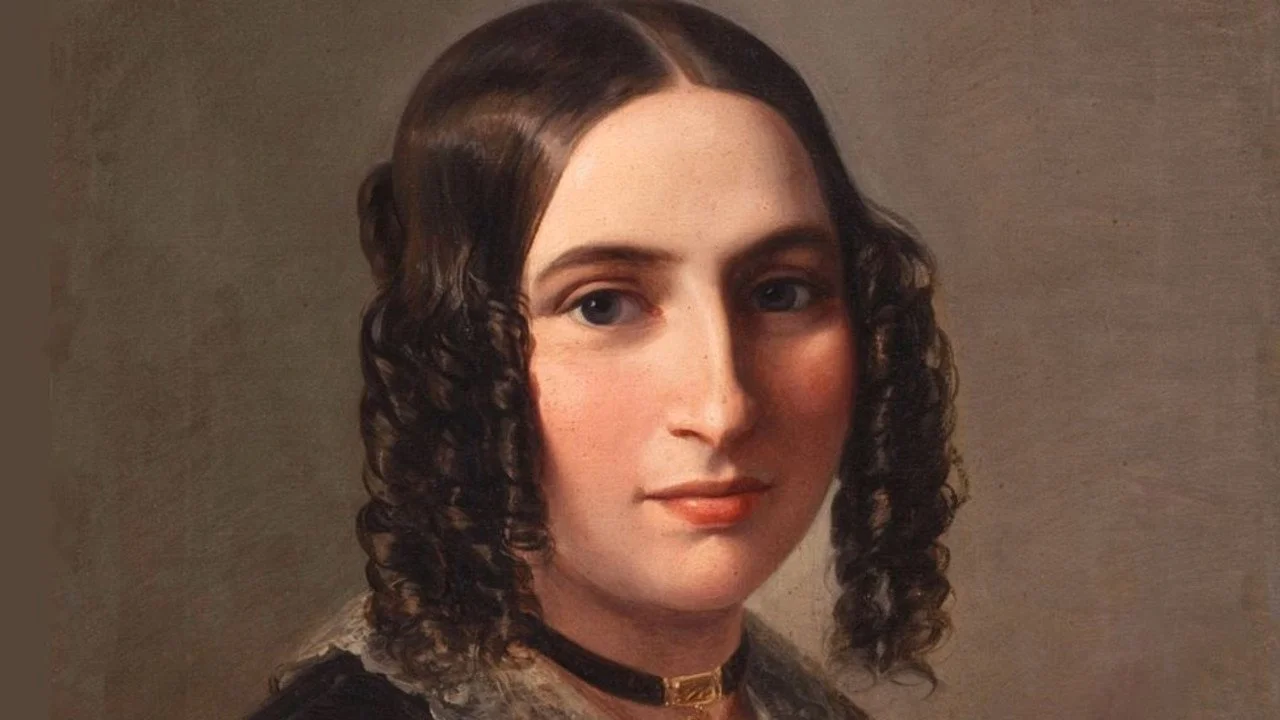
Fanny Mendelssohn (1805–1847)
A leading composer of the 19th century, Fanny Mendelssohn created more than 450 works — from piano cycles to choral pieces — despite the social constraints that limited her public recognition. Portraits from this era often depict her with the composed elegance expected of women in her social class, yet behind that poise was a fiercely original musical mind. Her manuscripts, letters, and surviving compositions reveal a visionary whose artistry shaped the Romantic era, even when her name was not allowed to.
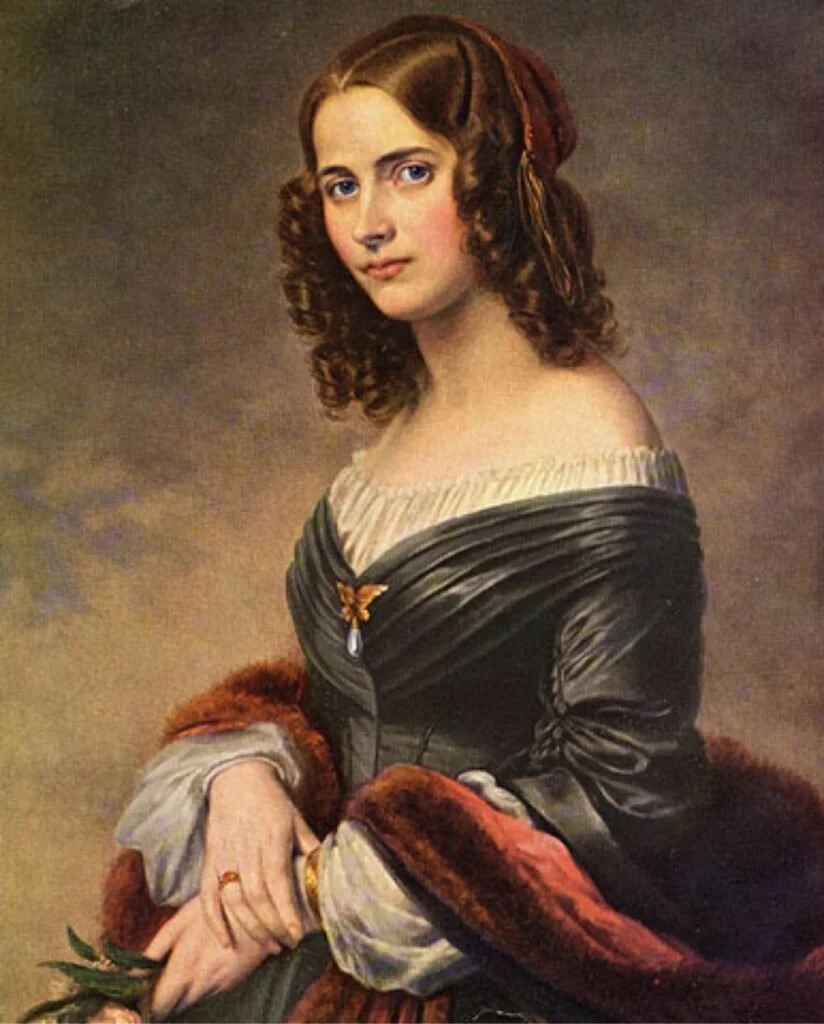
This 19th-century portrait captures Fanny Mendelssohn in the elegance expected of her social class — adorned in velvet, fur, and jewelry that reflect the Romantic era’s aesthetic ideals. Yet behind the composed exterior was a prolific composer whose creative output rivaled her more famous brother’s. She wrote over 450 works, many unpublished or misattributed during her lifetime, navigating a world that praised her talent privately but discouraged her public voice.
The butterfly-shaped brooch and bouquet may symbolize transformation and fleeting beauty — themes echoed in her music, which blended emotional depth with formal mastery. Today, her legacy is reclaimed not just through manuscripts, but through images like this: visual testaments to a life of brilliance lived in partial shadow.
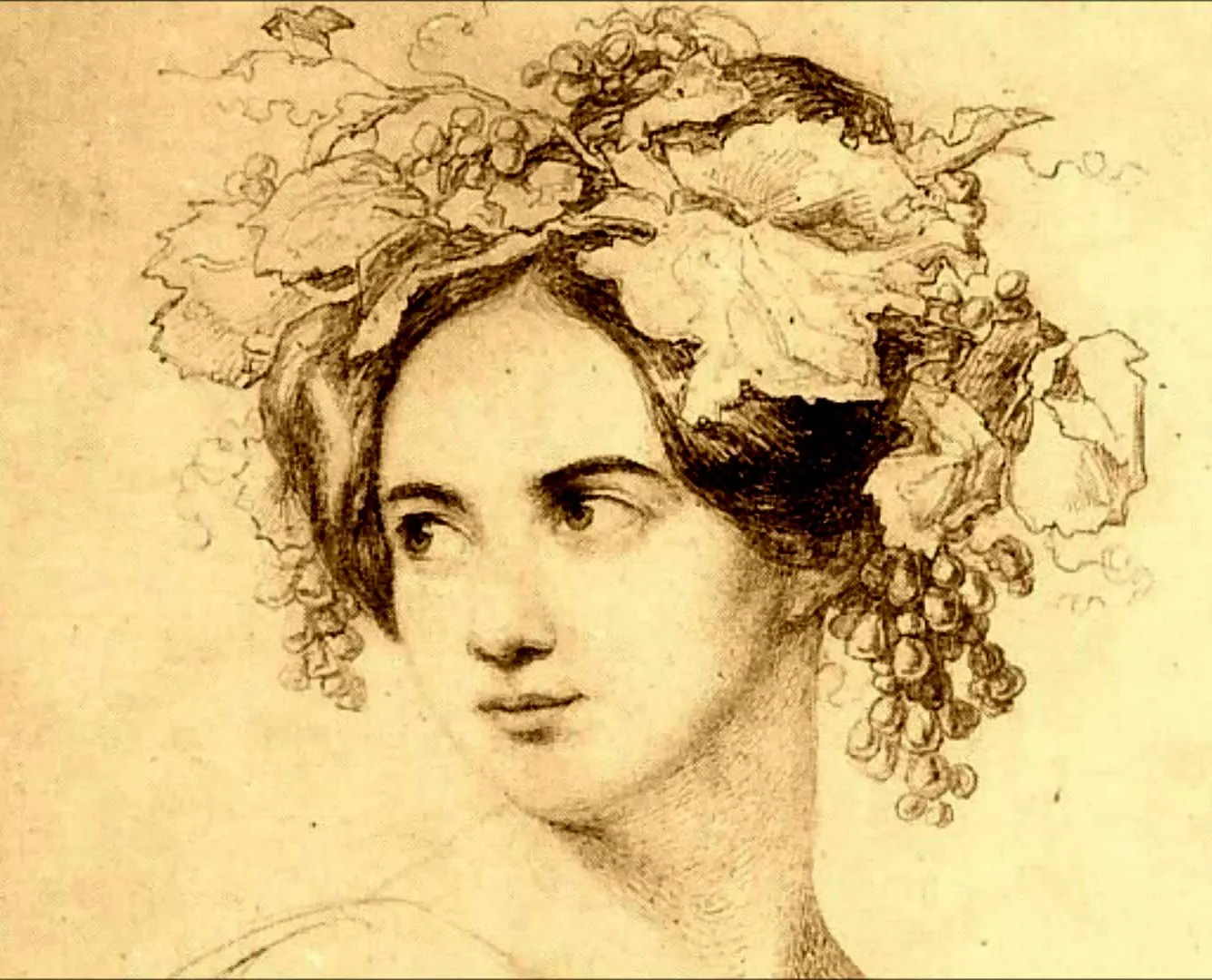
A Muse Reimagined:
This allegorical sketch presents Fanny Mendelssohn not just as a composer, but as a cultural figure entwined with the classical ideals of inspiration and abundance. Such symbolism was rare for women of her time, whose portraits typically emphasized domesticity over creative force.
She hosted one of Berlin’s most influential musical salons, premiering her own compositions in private while shaping the tastes of an entire generation. Though her public voice was muted, her influence rippled outward — through manuscripts, mentorship, and the quiet authority of her artistry.
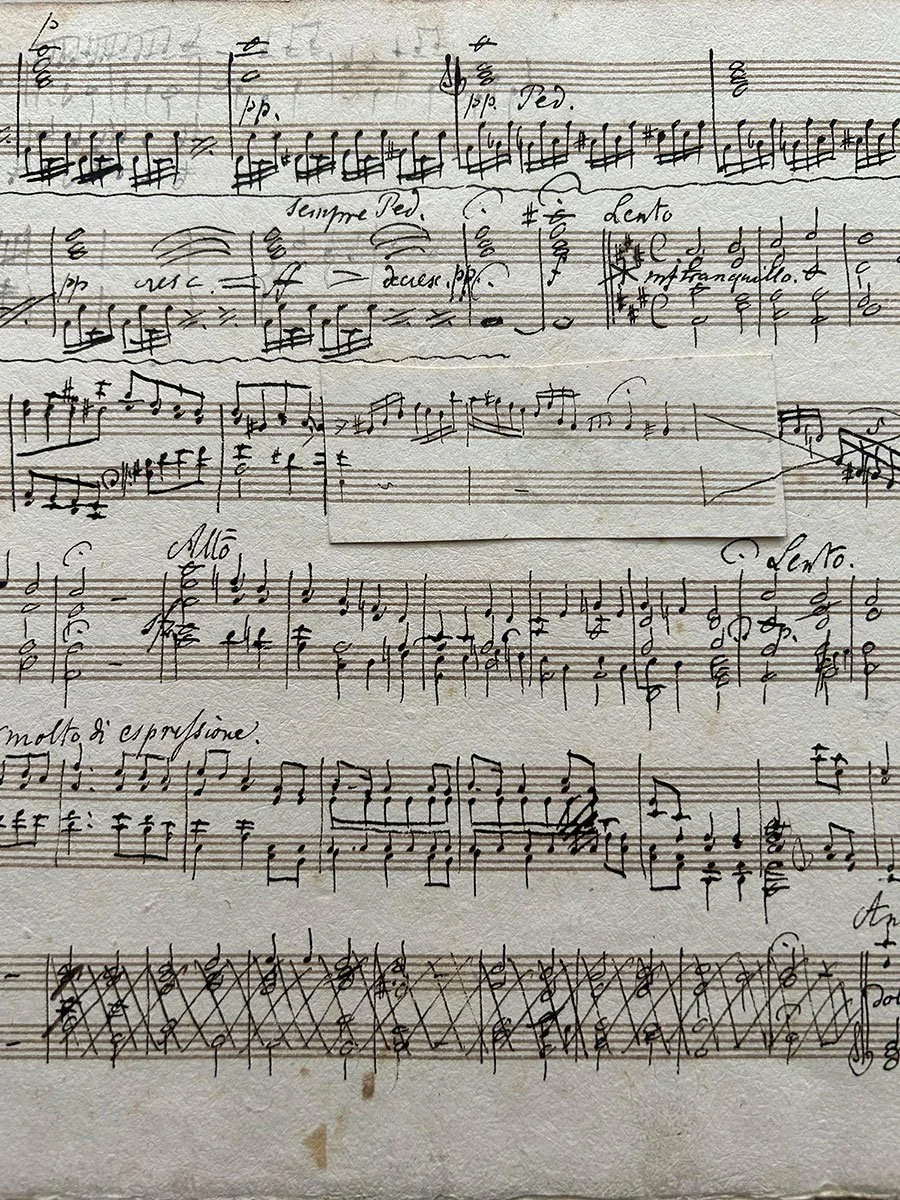
Autograph Manuscript, ca. 1840s
This original manuscript showcases the expressive detail and editorial precision of Fanny Mendelssohn’s compositional hand. Phrases like molto di espressione, sempre ped., and tranquillo reflect her Romantic-era sensitivity to nuance and emotional contour. The visible corrections — including crossed-out staves and pasted-over revisions — reveal a composer deeply engaged in refining her musical voice, not merely transcribing inspiration.
Such markings were rarely preserved for women of her time, whose works were often published anonymously or under male relatives’ names. This sheet stands as a rare artifact of authorship: a direct window into the decisions, hesitations, and convictions of a visionary who composed with both mastery and urgency.
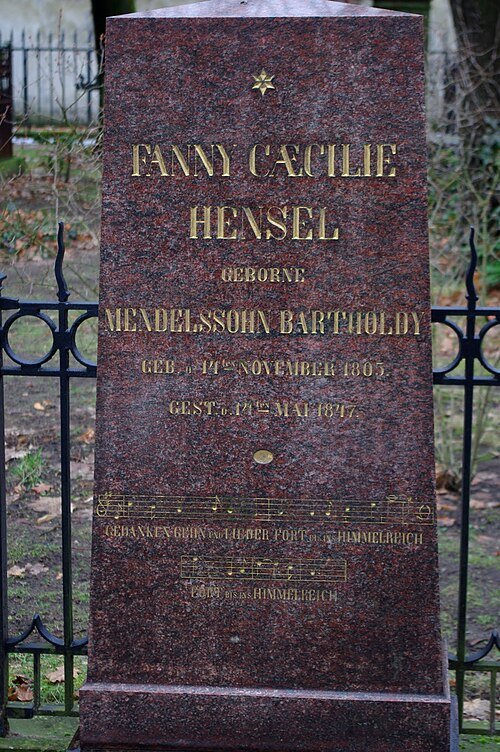
Gravesite of Fanny Mendelssohn (1805–1847)
Located in Berlin’s Trinity Cemetery, this headstone marks the resting place of a composer whose legacy was long overshadowed. Though her music once circulated quietly, her name now stands in stone — a testament to brilliance that refused to be buried.