
Unbuttoned: Courage Under Fire
Episode 8: Unbuttoned in the Line of Fire — Dr. Mary Edwards Walker’s War for Recognition
Before the scroll begins its descent, before the fabric of her story is fully unfastened, we invite you into the fierce clarity of a life lived against the grain. What follows is not a simple archive, but a reclamation — a constellation of surviving artifacts that together illuminate Dr. Mary Edwards Walker, Civil War surgeon, dress reformer, and the only woman ever awarded the Medal of Honor.
As you scroll, you’ll encounter military portraits, and the unmistakable silhouette of her chosen uniform — each image a testament to Walker’s refusal to bow to convention, her insistence on practicing medicine on her own terms, and her lifelong battle for women’s rights and bodily autonomy.
This is the full reveal. Not just of a woman, but of a firebrand who stood unbuttoned before the world and never stepped back from the heat.
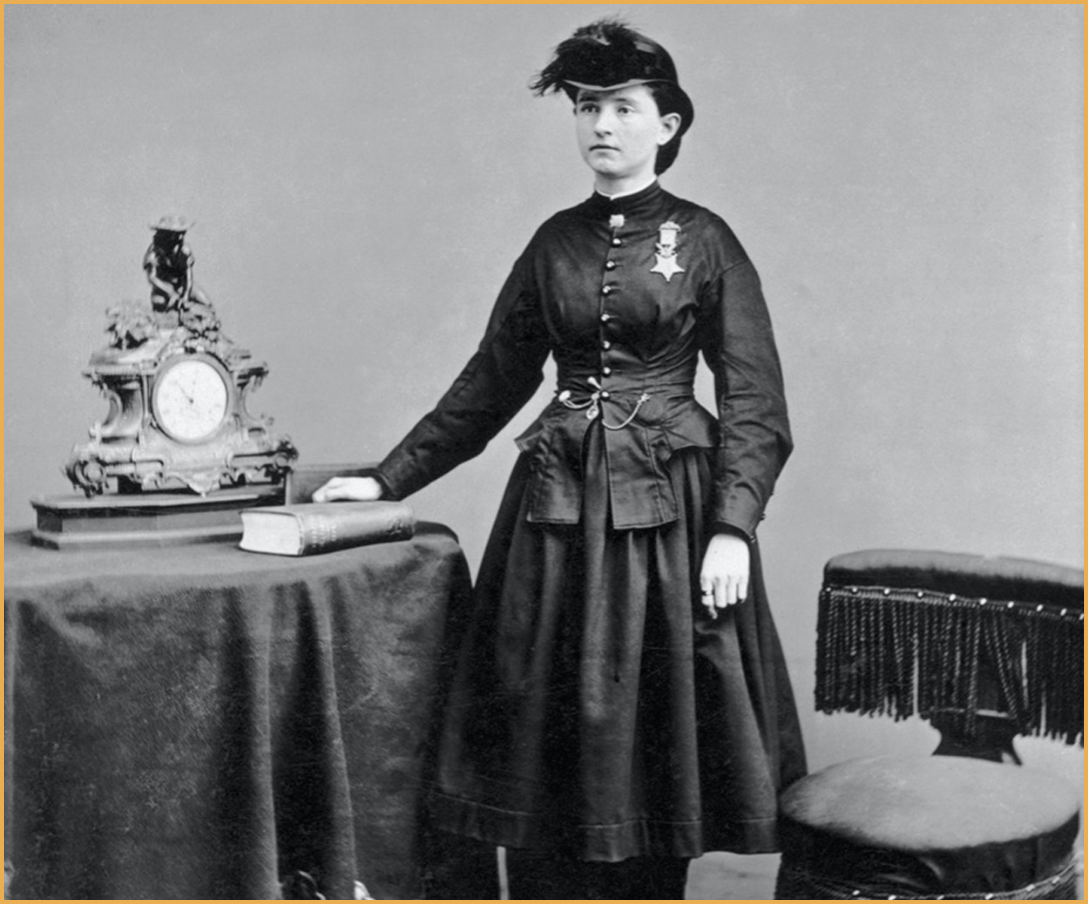
Dr. Mary Edwards Walker, circa 1875–1890. Medal of Honor recipient, Civil War surgeon, and dress reform advocate.
In this portrait, Dr. Mary Edwards Walker stands not merely for herself, but for every woman who refused to be reshaped by convention. The chains at her waist, the Medal of Honor on her chest, the tailored coat and feathered hat — each detail is a declaration. She wore what she believed in, practiced medicine on her own terms, and stood firm in the fire of ridicule and resistance.
This is not just a photograph. It is a stance. A silhouette of defiance. A woman unbuttoned before the world, daring it to look away.
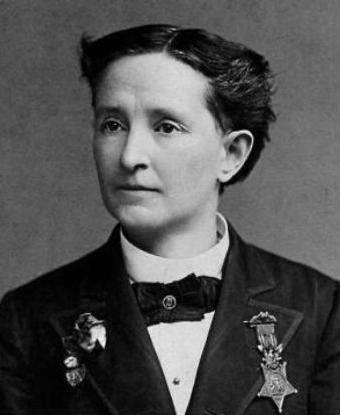
Dr. Mary Edwards Walker, Medal of Honor Recipient
In this portrait, Dr. Mary Edwards Walker wears the uniform she refused to surrender — a tailored coat, bow tie, and the Medal of Honor pinned proudly to her chest. Awarded in 1865 for her service as a Civil War surgeon, Walker remains the only woman in U.S. history to receive the Medal of Honor. Though the medal was rescinded in 1917 during a review of eligibility, she continued to wear it defiantly until her death. It was officially reinstated in 1977.
Her attire was more than personal style — it was political protest. Walker challenged 19th-century gender norms by wearing trousers, advocating for dress reform, and demanding equal rights for women in medicine and beyond.
Estimated date: circa 1870s–1890s
Status: Public domain (commonly held in Library of Congress and Wikimedia archives)
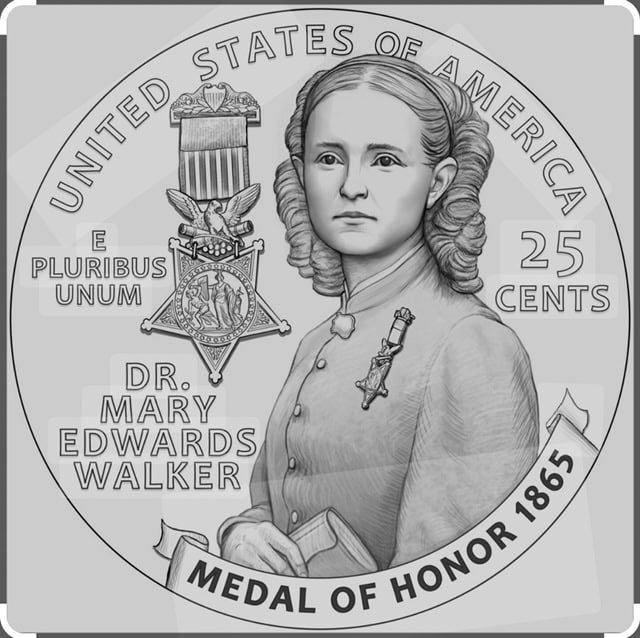
This image depicts a 2024 U.S. quarter from the American Women Quarters Program, issued by the United States Mint to honor Dr. Mary Edwards Walker — Civil War surgeon, dress reform advocate, and the only woman ever awarded the Medal of Honor.
Obverse (front): Standard George Washington profile used in the series
Reverse (back): Features Dr. Walker in Civil War-era dress, wearing her Medal of Honor — which she received in 1865 for her service treating wounded soldiers near the front lines.
Inscription highlights:
“DR. MARY EDWARDS WALKER”
“MEDAL OF HONOR 1865”
“UNITED STATES OF AMERICA”
“E PLURIBUS UNUM”
“25 CENTS”
The coin’s design intentionally foregrounds her defiance of gender norms — from her choice of attire to her lifelong advocacy for women’s rights and medical equality. Though her Medal of Honor was controversially rescinded in 1917, she continued to wear it until her death. It was reinstated posthumously in 1977.
This quarter is part of a broader effort to elevate underrepresented figures in U.S. history — and in Dr. Walker’s case, to commemorate a legacy of courage, conviction, and radical reform.
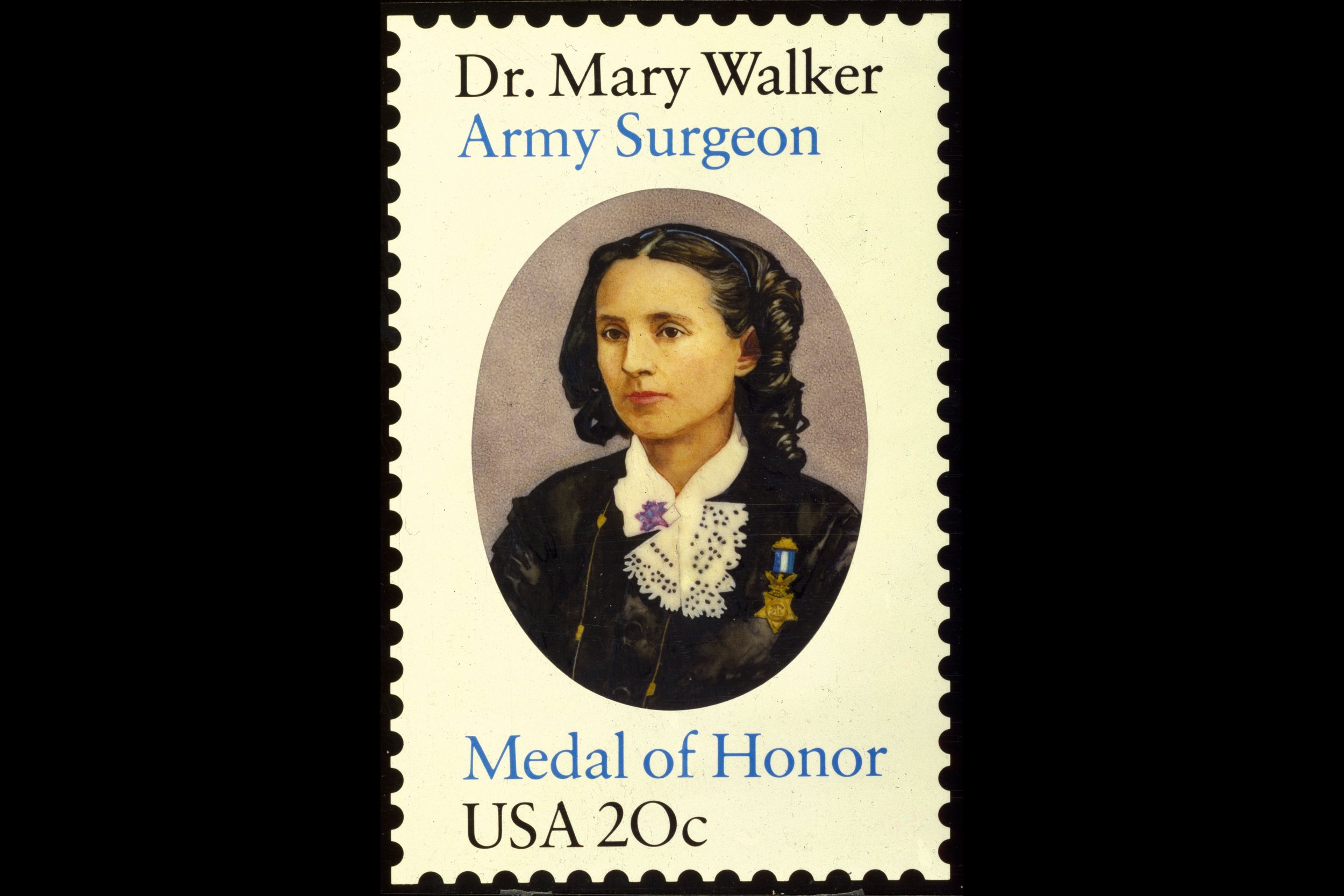
This commemorative stamp honors Dr. Mary Edwards Walker, a pioneering Civil War surgeon and the only woman ever awarded the Medal of Honor. Issued by the United States Postal Service in 1982, it recognizes her service, advocacy for women’s rights, and lifelong defiance of gender norms — symbolized here by her Medal of Honor and reformist attire.
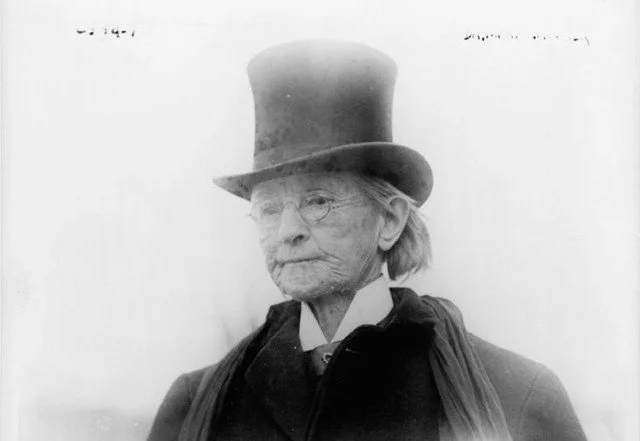
Dr. Mary Edwards Walker, Unbowed in Her Final Years
In this late-life portrait, Dr. Mary Edwards Walker remains unmistakably herself — top hat, round spectacles, and reformist attire intact. Decades after the Civil War, she continued to defy convention, wearing her Medal of Honor despite its controversial revocation in 1917. Until her death in 1919, she stood as a living challenge to gender norms, medical exclusion, and historical erasure. This image is not just a closing note — it is a final stance.