
The Sonata Before Silence
Episode 5: The Concert begins with George Bridgetower
Before the bow meets string, before the sonata unfurls its first breath, we invite you into the resonance of a legacy nearly obscured. What follows is not a recital, but a reclamation — a constellation of surviving fragments that together reveal George Bridgetower, the virtuoso violinist whose brilliance once shared the stage with Beethoven himself.
As you scroll, you’ll encounter engraved portraits, concert programs, and echoes of salons where Bridgetower’s artistry astonished audiences across Europe — each artifact a portal into his genius, resilience, and the cultural defiance of an 18th‑century Black musician navigating courts and concert halls.
This is the full reveal. Not just of a man, but of a movement.
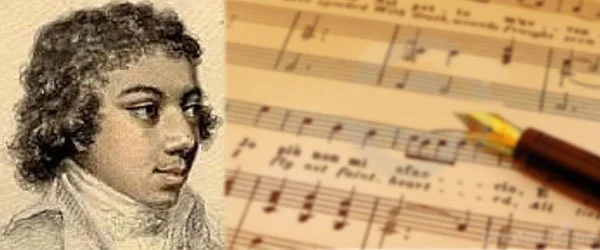
George Augustus Polgreen Bridgetower (1778–1860) was a virtuoso violinist of African and European descent, born in Poland and raised in England. He gained early fame performing for European royalty and was recognized for his exceptional talent as a child prodigy.
The image shows a historical portrait of Bridgetower, likely based on an 18th-century engraving or drawing, alongside sheet music and a fountain pen—symbolizing his deep connection to classical music and composition.
Bridgetower is best known for premiering Beethoven’s “Sonata for Piano and Violin No. 9,” originally dedicated to him and later renamed the “Kreutzer Sonata.” Despite his early acclaim, Bridgetower’s legacy was largely forgotten until recent efforts to reclaim his place in music history.
This visual pairing of portrait and score reflects both his artistic identity and the historical silence surrounding his contributions.
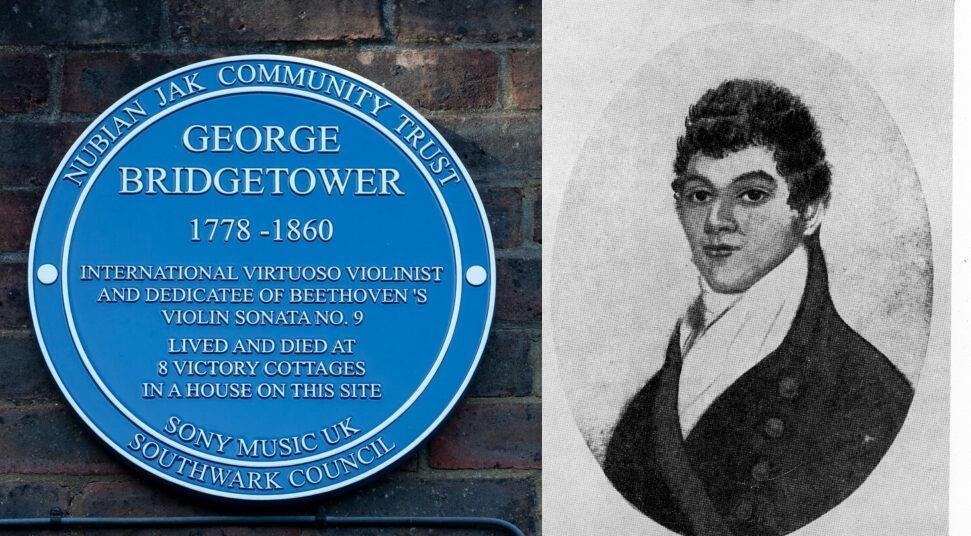
George Bridgetower (1778–1860) was an internationally acclaimed violinist of African and European descent, born in Poland and raised in England. He gained prominence as a child prodigy, performing for European royalty and later collaborating with Ludwig van Beethoven, who originally dedicated his Violin Sonata No. 9 to Bridgetower.
The blue plaque, installed by the Nubian Jak Community Trust in partnership with Sony Music UK and Southwark Council, marks the site of Bridgetower’s final residence at 8 Victory Cottages in Peckham, London. It honors his legacy as a pioneering Black classical musician and the original dedicatee of Beethoven’s Kreutzer Sonata.
The adjacent portrait depicts Bridgetower in formal attire, reflecting his stature within 18th-century European musical circles. Together, the plaque and illustration commemorate his contributions to classical music and his overlooked place in history.
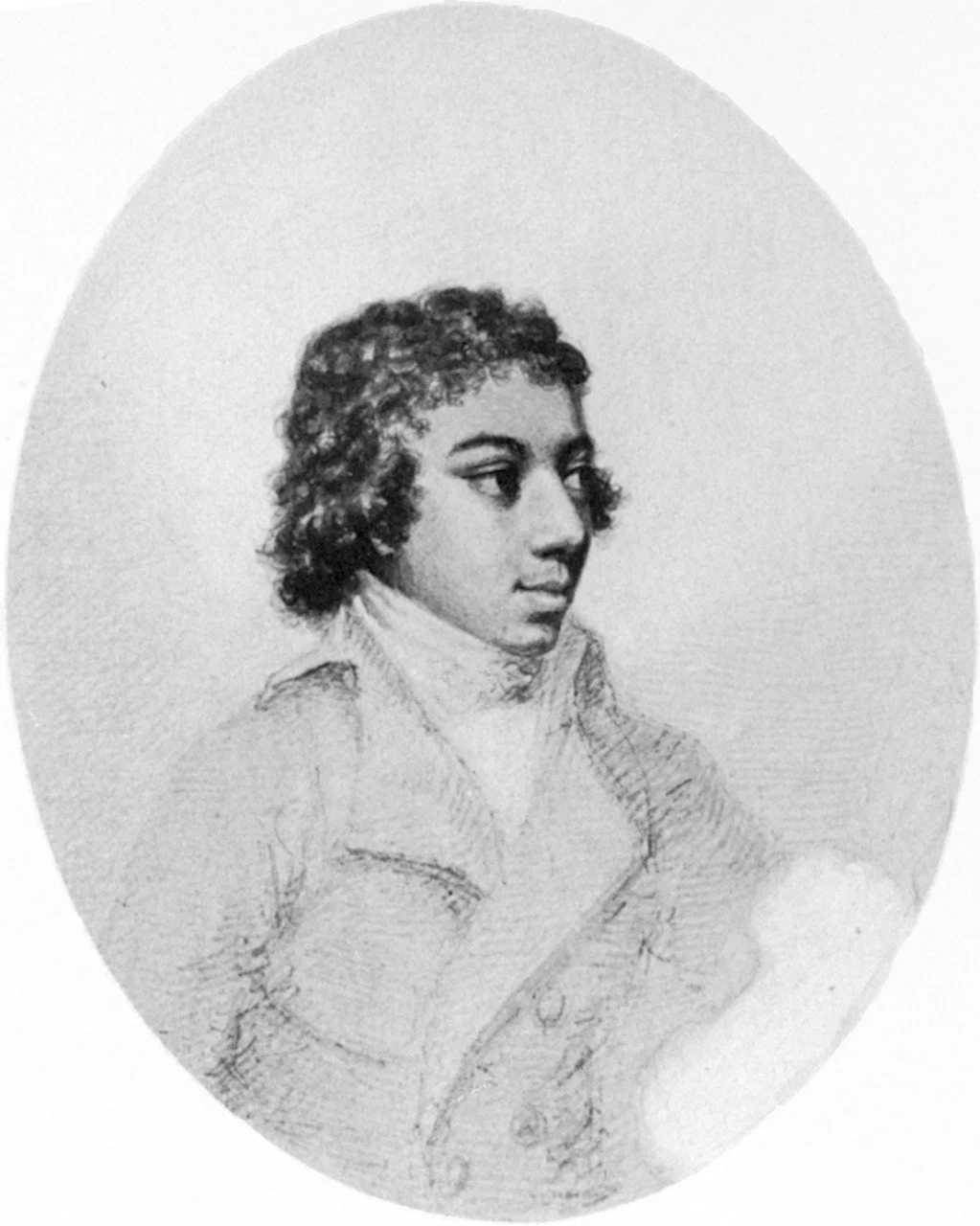
George Bridgetower (1778–1860) This portrait depicts George Augustus Polgreen Bridgetower, a virtuoso violinist of African and European descent. Born in Poland and raised in England, Bridgetower gained early fame performing for European royalty and was the original dedicatee of Beethoven’s Violin Sonata No. 9—later renamed the Kreutzer Sonata.
The image, sourced from the California Revealed archive and attributed to the UCLA Ethnomusicology Archive, is in the public domain and offers a rare visual representation of Bridgetower’s presence in early 19th-century classical music. His attire and posture reflect the Regency-era style, while the unfinished lower portion echoes the fragmentary nature of his historical record.