
Wiped Away: The Storm Behind the Invention
Episode 4: The Invention Begins with Mary Anderson
Before the wipers sweep the glass, before the patent is filed and the snow begins to fall, we invite you into the quiet ingenuity of a woman who saw clearly what others overlooked. What follows is not a museum of machines, but a restoration — fragments of sketches, newspaper clippings, and testimony that together reveal Mary Anderson, the inventor of the first successful windshield wiper.
As you scroll, you’ll encounter her original 1903 patent, accounts of early resistance to her design, and echoes of a mind attuned to motion and foresight — each artifact a portal into Anderson’s vision, persistence, and the quiet defiance of early 20th-century women in innovation.
This is the full reveal. Not just of an inventor, but of a movement toward visibility, clarity, and the right to be recognized.
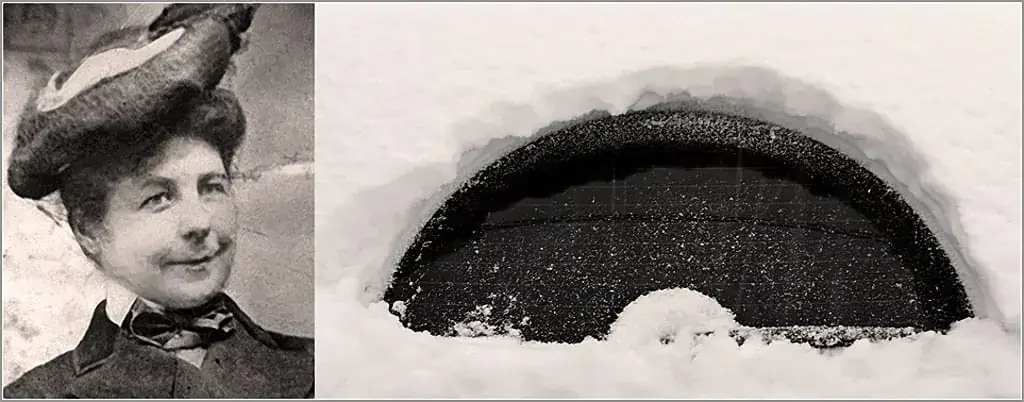
Mary Anderson, inventor of the windshield wiper
Mary Elizabeth Anderson (1866–1953) was an American inventor and entrepreneur credited with the first operational windshield wiper, patented in 1903 and later recognized by her induction into the National Inventors Hall of Fame in 2011
This image juxtaposes a portrait of Mary Anderson, inventor of the windshield wiper, with a snow-covered tire that eerily mimics her silhouette. In 1903, Anderson patented the first functional wiper blade after witnessing a streetcar driver struggle with visibility during a snowy ride. Her invention—initially dismissed—became a standard feature in automobiles by the 1920s, revolutionizing driver safety in inclement weather.
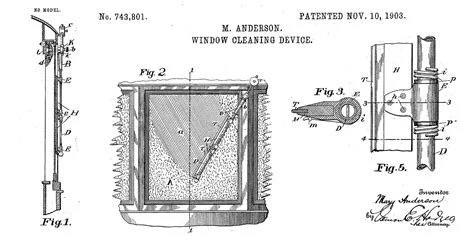
This original patent drawing, filed by Mary Anderson and granted on November 10, 1903 (U.S. Patent No. 743,801), marks a pivotal moment in automotive history. Anderson’s “Window Cleaning Device” was designed to improve visibility for electric car and streetcar operators during inclement weather—particularly snow and sleet.
At a time when drivers had to stop and manually clear their windshields, Anderson envisioned a mechanical arm with a rubber blade, operated from inside the vehicle. Her design featured a spring-loaded lever mechanism that allowed the blade to sweep across the glass and return automatically, a concept that laid the foundation for modern windshield wipers.
Though manufacturers initially dismissed the invention as impractical, Anderson’s foresight proved essential. By the 1920s, similar devices became standard in automobiles, validating her contribution to transportation safety and innovation.
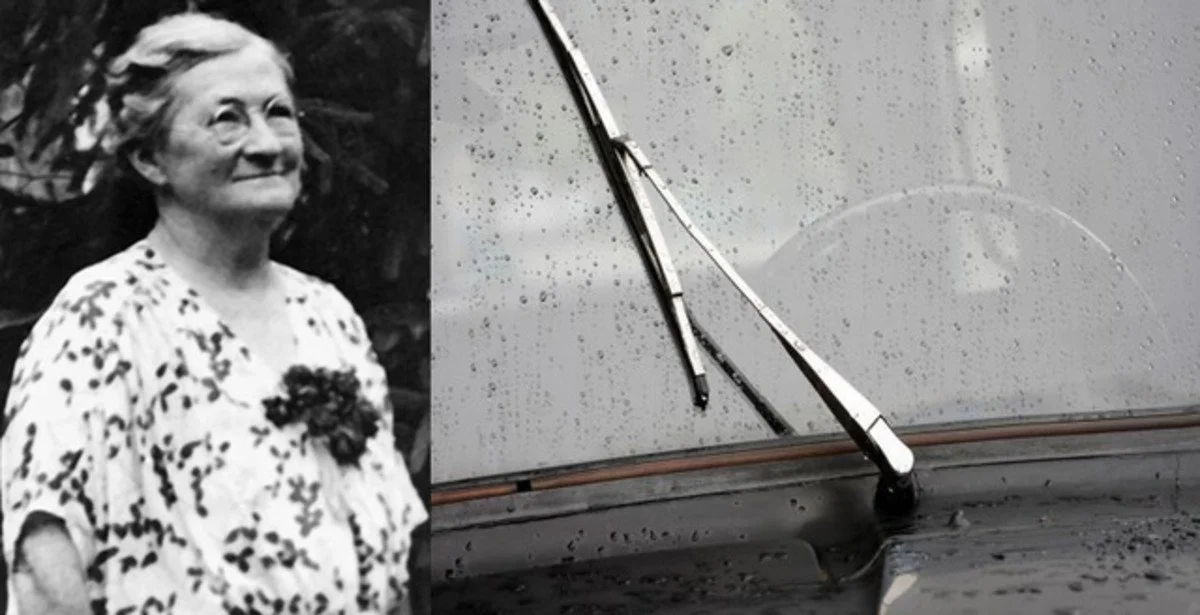
On the left, we see Mary Anderson, the inventor whose 1903 patent for a “Window Cleaning Device” laid the groundwork for the modern windshield wiper. On the right, a contemporary windshield in action—clearing rain with rhythmic precision—embodies the enduring relevance of her innovation.
Anderson’s idea was born during a snowy streetcar ride in New York City, where she observed the driver struggling to maintain visibility. Her solution: a manually operated blade that could sweep across the windshield from inside the vehicle. Though initially dismissed by manufacturers, her design became foundational as automobiles gained popularity.
This image pairing bridges past and present, honoring a woman whose foresight transformed transportation safety. The rain-streaked glass is not just a surface—it’s a canvas where Anderson’s ingenuity continues to ripple forward.
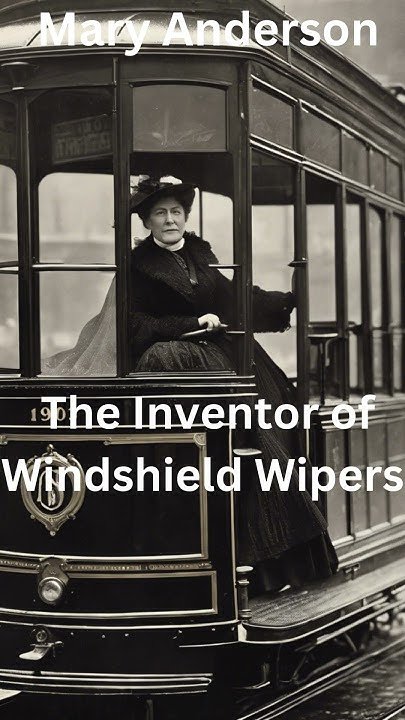
This photograph captures Mary Anderson, the visionary behind the windshield wiper, seated in a streetcar—perhaps not unlike the one that sparked her idea. In 1902, during a snowy visit to New York City, Anderson observed a streetcar driver struggling to maintain visibility, repeatedly stopping to clear the windshield by hand. That moment of discomfort became a seed of innovation.
By 1903, she had patented a mechanical “Window Cleaning Device” (U.S. Patent No. 743,801), operated from inside the vehicle. Though dismissed by manufacturers at the time, her invention became foundational as automobiles gained popularity, transforming driver safety and visibility forever.
This image is more than a portrait—it’s a quiet prelude to a breakthrough. A woman observing the world, seated in the very conditions that would inspire her to change it.Whatever it is, the way you tell your story online can make all the difference.