
Five Crossings: A Story of Courage on the Water
Episode 26: Five Crossings — A Story of Courage on the Water— Tom Lee
This archive gathers the world that shaped a life defined not by recognition, but by an instinct to act when the moment demanded more than witness. Here you’ll encounter traces of work carried out along the river’s edge—photographs, accounts, and remnants of a presence that stepped forward while others stood still. Each piece offers a window into the split‑second choices, the steady resolve, and the unspoken belief that a stranger’s life is never beyond reach.
These materials do not seek to carve a monument. They reveal the grain of a life lived in motion and responsibility: the crossings, the rescues, the quiet returns to shore, the risks taken without promise of reward. Together, they form a record of courage offered freely, again and again, in a moment history nearly allowed to drift away.
Move through these records with care. Let the water speak through what endures.
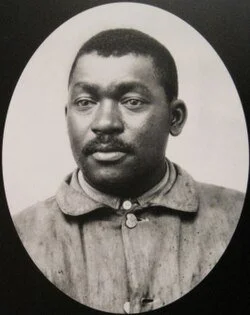
Born: 1885 Died: 1952
This portrait stands as one of the few surviving images of a life shaped by work, responsibility, and an instinct to act when others could not. The expression is steady, the posture unadorned — a reminder that courage often grows far from recognition, in the routines and labors that rarely enter the record. What remains here is not a symbol, but a person whose choices on the water carried weight far beyond the frame.
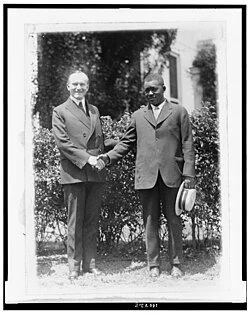
October 20, 1926 Washington, D.C. — White House.
Tom Lee was formally received and honored by President Calvin Coolidge for rescuing 32 passengers from the M.E. Norman the previous year.
The handshake is formal, but the story behind it is anything but ceremonial. It marks the rare instance when a life built on quiet labor and instinctive bravery was acknowledged in full view of the country.
This image endures not as a symbol of reward, but as a record of a country pausing long enough to honor someone it might otherwise have overlooked. The gesture is brief; the legacy is not.
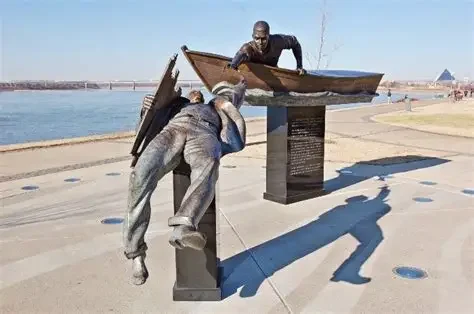
This sculpture marks the moment when one person’s instinct to act reshaped the fate of dozens. Cast in bronze and set along the river that defined his life, it captures the reach, the urgency, and the quiet resolve that guided him across the water again and again. There is no dramatization here — only the truth of a choice made in seconds, carried out with nothing more than strength, courage, and a small wooden boat.
The memorial stands not as an ornament, but as a reminder: that heroism can rise from ordinary work, that a single act can echo across generations, and that the river still holds the memory of the day one man refused to let strangers slip beneath its surface.
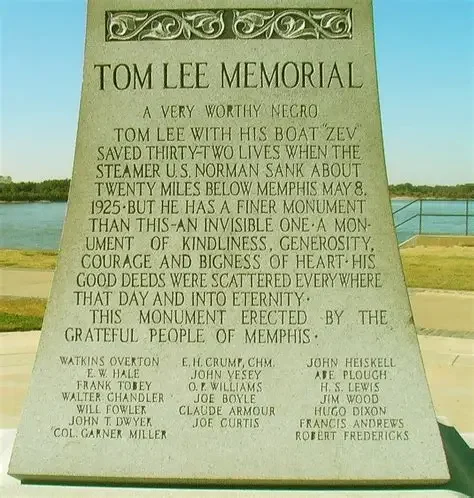
This plaque preserves the essential truth of a day when one person’s courage altered the course of dozens of lives. Its language is simple, its form unadorned — a fitting reflection of the man it honors. Set along the river he knew so well, it stands as a quiet acknowledgment of a life defined not by recognition, but by responsibility, instinct, and an unwavering commitment to others.