
The Badge and the Burden: A Hidden Story of Early American Service
Episode 23: The Badge and the burden— Hamilton Bradley
This archive gathers the world that molded a life spent in service to a country that rarely looked back. Here you’ll encounter traces of work carried out in uniform and in silence—records, images, and remnants of Hamilton Bradley’s presence inside early American institutions, standing watch while others moved freely. Each piece offers a window into the routines of duty, the uncredited choices, and the steady conviction that safety and order should extend beyond those already protected.
These materials do not seek to polish a legend. They reveal the grain of a life lived under scrutiny and expectation: the postings, the reports, the quiet negotiations, the risks that grew with every line crossed and every boundary tested. Together, they form a ledger of commitment to a role that asked much and returned little, yet still shaped the course of a nation in ways history nearly left unnamed.
Move through these records with care. Let the service speak through what endures.
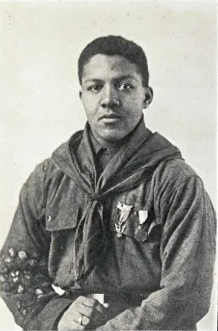
A life of early service, quiet discipline, and uncredited contribution.
This photograph is the sole surviving image of Hamilton Bradley. Taken in 1919, it captures him at approximately seventeen years old, wearing the uniform and insignia of an Eagle Scout — a distinction he earned at a time when such recognition was rarely extended to young Black Americans. It stands as the only visual record of a life shaped by duty, perseverance, and the pursuit of excellence inside institutions that were not built with him in mind.
Hamilton Bradley (c. 1902 – August 28, 1976)
Bradley was born around 1902 in Maryland, the eldest of four children in a family navigating the shifting realities of early‑20th‑century America. His adolescence unfolded during a period of migration, labor, and limited opportunity, yet he rose through the ranks of the Boy Scouts with uncommon determination. By December 1919, he achieved the rank of Eagle Scout — confirmed by contemporary newspaper accounts — marking him as one of the earliest known African American Eagle Scouts in the United States.
In the years that followed, Bradley’s life moved through the demanding corridors of service and public responsibility. He married, raised a family, and worked full‑time jobs in New York, carrying forward the discipline and civic ethos that shaped his youth. Though the historical record is sparse, the fragments that remain reveal a man who shouldered expectations quietly and consistently, contributing to the fabric of American life without the recognition afforded to others.
This single photograph is more than an image — it is an anchor. It is the one moment where history allows us to look back at him directly, to see the steadiness in his posture, the medals earned through effort, and the early promise of a life lived in service.
More materials will surround this portrait — documents, records, and contextual images — but this is the only known likeness of Hamilton Bradley. Everything else we know must be read through the lens of this single, powerful frame.
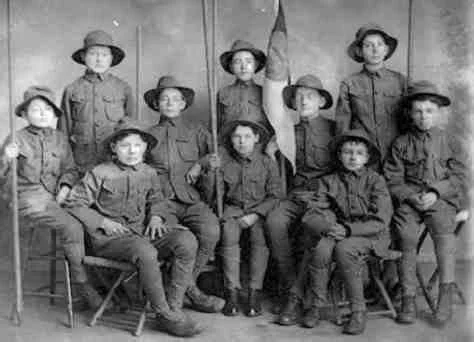
This photograph offers a glimpse into the early culture of Scouting during the 1910s—a period defined by discipline, outdoor training, and collective responsibility. Scenes like this reflect the environment in which Hamilton Bradley earned his Eagle Scout rank, emphasizing the teamwork, structure, and civic ideals that shaped young people of the era. While Bradley does not appear in this image, it serves as an authentic visual reference to the movement that influenced his early development and the values he carried into his later life of service.

While Hamilton Bradley does not appear in this image, it represents the culture of recognition and community service that shaped his own path to becoming an Eagle Scout. It stands as a visual reminder of the movement’s emphasis on leadership, teamwork, and public responsibility—values that Bradley carried into his later life of service.
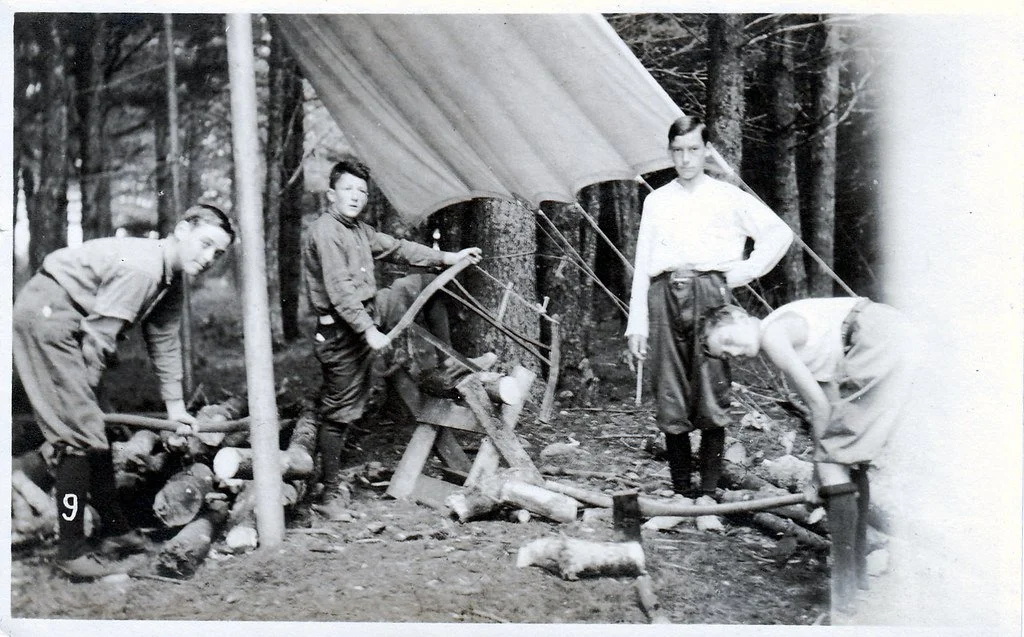
This final photograph returns us to the foundation of early Scouting: the work done with hands, tools, and shared purpose. Scenes like this—cutting wood, building shelter, learning to rely on one another—formed the backbone of the movement that shaped Hamilton Bradley’s youth. Though he is not pictured here, the image reflects the discipline, cooperation, and resilience that defined the world he stepped into long before history thought to record his name. It stands as a reminder that service begins in moments like these: small tasks, steady effort, and the quiet shaping of character in the open air.