
The Runner: The Weight of a Childhood
Episode 25: The Runner: The Weight of a Childhood— Les enfants de France
This archive gathers the world that shaped the children who moved through France in 1916, when the front pressed against their villages and the ordinary rhythms of youth were replaced by the demands of survival. Here you’ll encounter traces of lives carried out in shattered fields and narrow lanes—errands, warnings, and fleeting moments of courage from those too young to be remembered by record, yet old enough to feel the weight of a nation’s fear. Each piece offers a glimpse into the quiet vigilance, the unspoken duties, and the instinctive resolve that guided them through a landscape reshaped by war.
These materials do not seek to elevate a myth. They reveal the grain of childhood lived under bombardment and uncertainty: the distant thunder of artillery, the hurried messages passed between trenches, the risks taken without ceremony, and the small decisions that held consequences far beyond their size. Together, they form a ledger of presence in a moment that asked everything of those who had almost nothing to give, yet still carried their part of the burden through the smoke and ruin.
Move through these records with care. Let the silence speak through what remains.
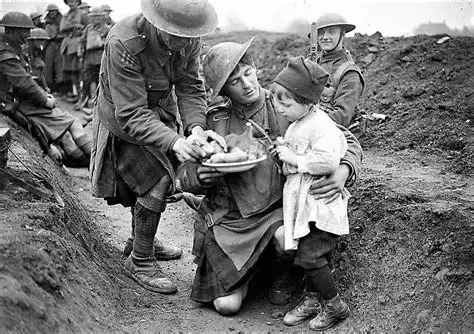
This image reflects the lived reality of Les Enfants de France during the height of the First World War — children navigating a world reshaped by conflict, moving between fear and resilience, and relying on the brief kindness of those stationed along the front.
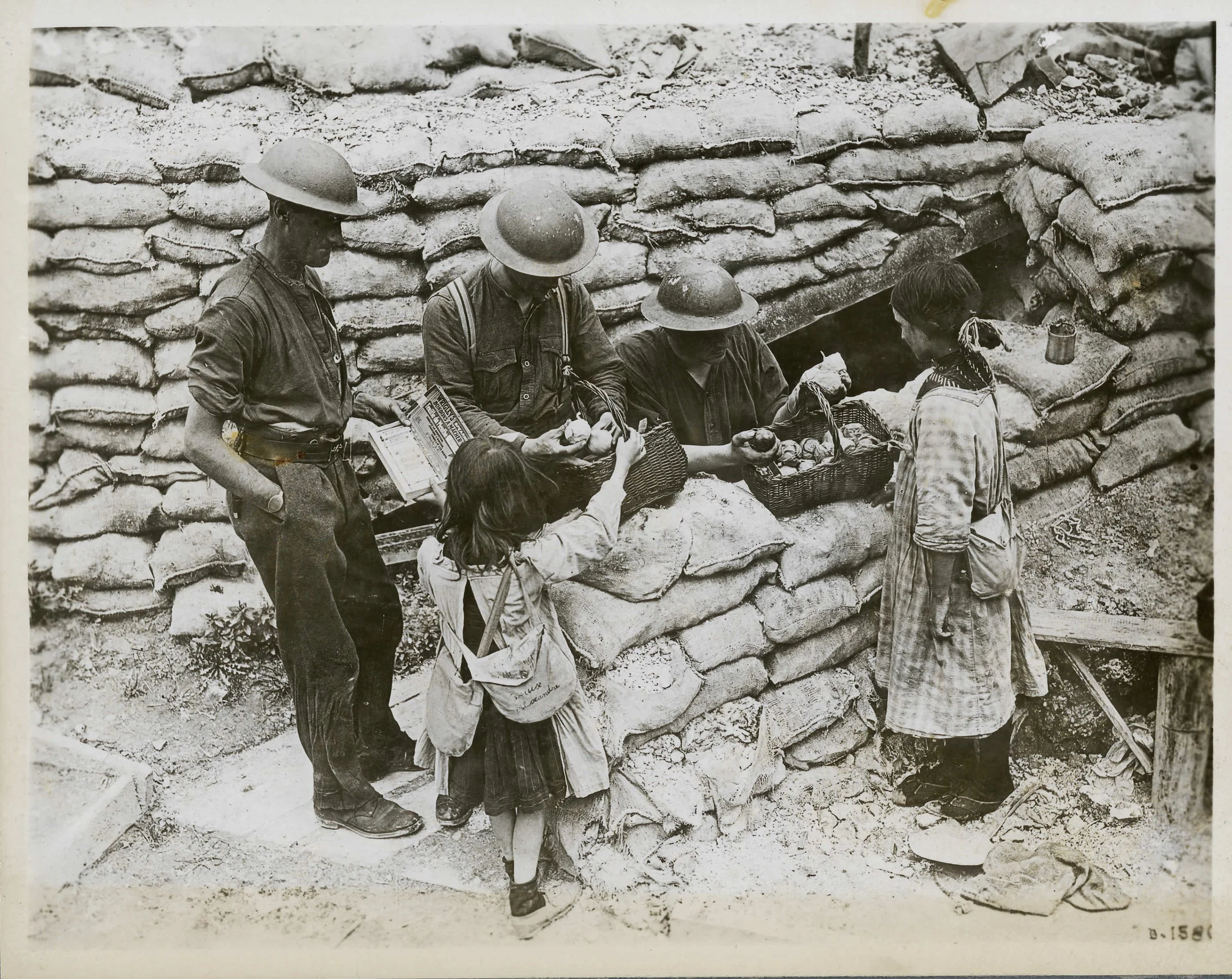
Scenes like this were common across the Western Front, where French civilians — including children — often found themselves caught between advancing armies, destroyed villages, and sudden evacuations. By 1916, entire regions of northern and eastern France had been emptied or shattered by artillery, leaving families displaced and dependent on passing units for food, shelter, or safe passage.
French children in war zones frequently encountered soldiers in trenches, aid stations, or temporary encampments. While the front was overwhelmingly a place of danger, moments of compassion like the one captured here were documented by military photographers and relief organizations: soldiers sharing rations, offering warmth, or guiding lost children toward refugee columns. These gestures stood in stark contrast to the devastation surrounding them, revealing the human threads that persisted even in the most militarized landscapes.
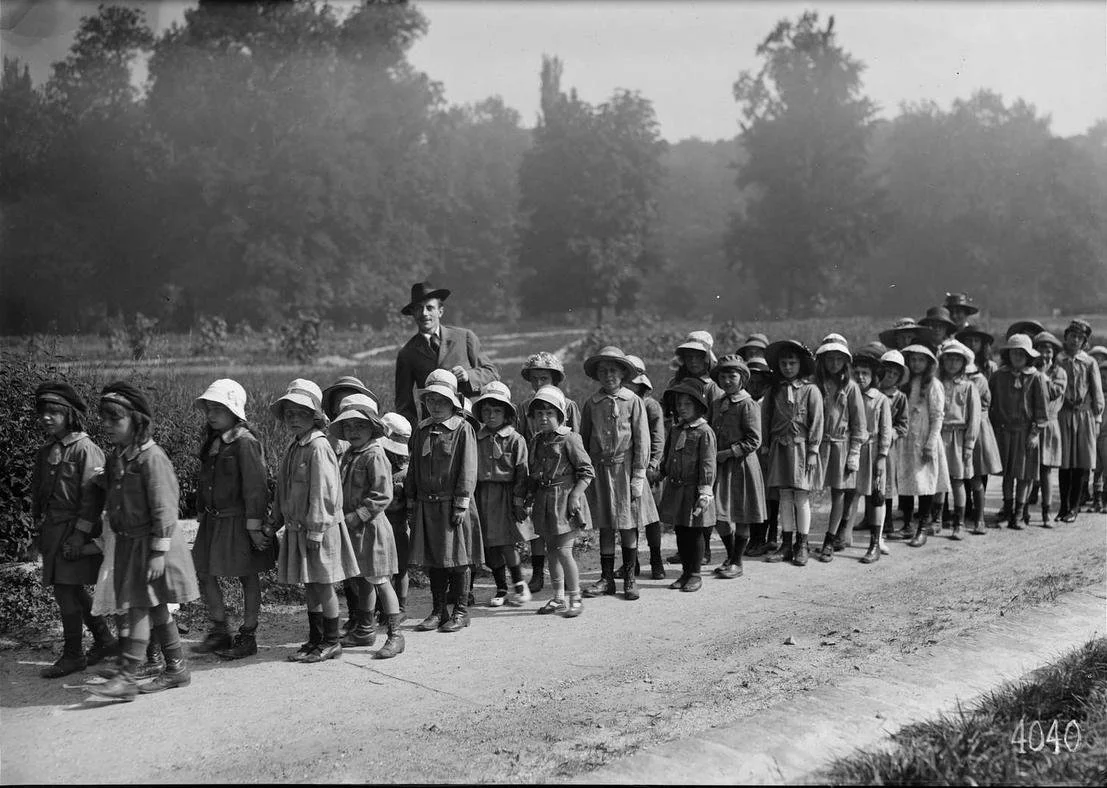
By 1916, the war had displaced more than a million civilians across northern and eastern France, and children often moved in organized groups like this one as villages emptied, schools relocated, and families fled advancing lines of fire. Relief agencies, local authorities, and church networks coordinated these evacuations, guiding children along rural roads toward safer towns, temporary shelters, or makeshift classrooms established far from the front.
Photographs from this period frequently show children walking in orderly lines under the supervision of a single adult — a teacher, priest, or volunteer — reflecting both the fragility and the discipline imposed by wartime movement. These journeys could stretch for miles, sometimes repeated multiple times as front lines shifted and bombardments reached new regions. For many children, the road itself became a kind of temporary home: a place of uncertainty, endurance, and the quiet hope of reaching a place untouched by artillery.
This image captures the collective experience of Les Enfants de France during the height of the First World War — children navigating upheaval not as isolated figures but as part of a generation shaped by displacement, routine interrupted, and the long walk toward safety.
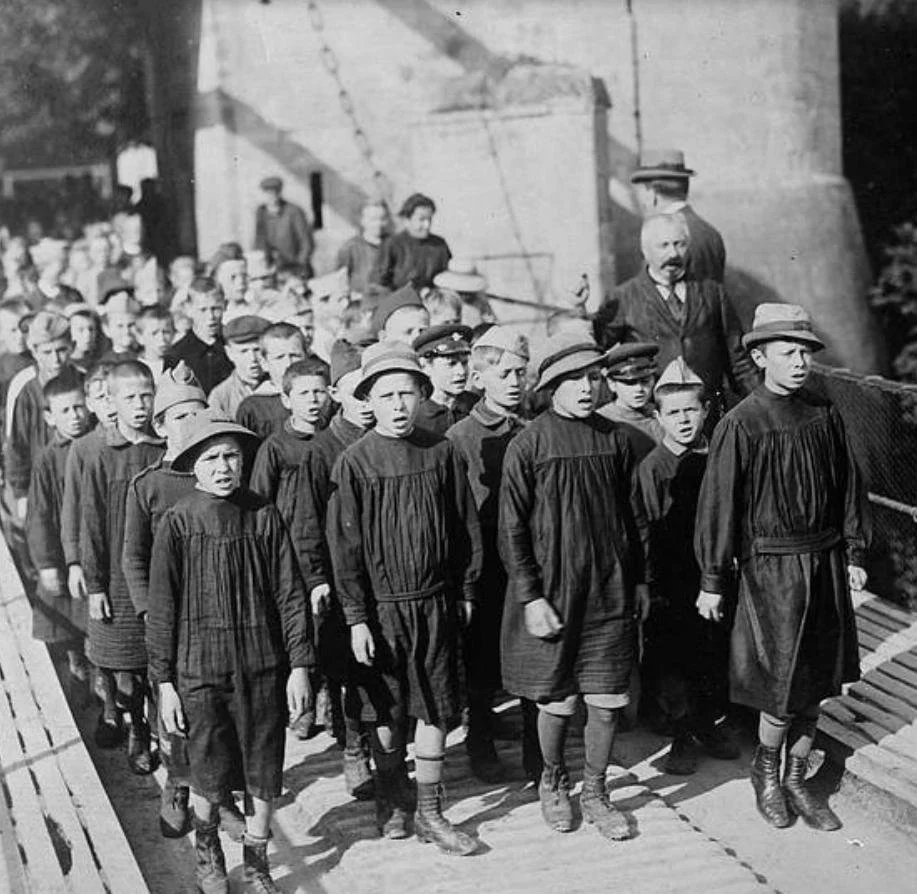
By 1916, boys across northern France were often gathered into supervised groups like this as communities tried to restore routine amid displacement. Their matching clothing signaled order rather than militarization — a way to keep children accounted for as they moved between shelters, makeshift schools, and relief stations. Images like this one show how childhood adapted to the rhythms of war: discipline standing in for stability, and adults doing what they could to protect a generation shaped by upheaval.