
The Promise
Episode 32: The Promise — Gino Bartali, the Champion Who Carried More Than Victory
The Promise brings listeners into wartime Italy, where a celebrated cyclist’s familiar training rides conceal a far more dangerous purpose. During the German occupation beginning in September 1943, Gino Bartali used his bicycle—and the public recognition that accompanied it—to transport forged documents for a network helping Jews escape persecution. Hidden within his bicycle, those papers offered people in danger a chance to survive.
Before those journeys became part of his hidden legacy, Bartali was already one of Italy’s great sporting figures. Born in 1914 in Ponte a Ema, near Florence, he won the Giro d’Italia in 1936, 1937, and 1946, and the Tour de France in 1938 and 1948. His life in competition was defined by punishing climbs, extraordinary endurance, and victories witnessed by thousands. His wartime work demanded another kind of courage: the willingness to risk his life for people whose safety depended on secrecy.
Working within a rescue network spearheaded by Rabbi Nathan Cassuto and Florence’s Archbishop, Cardinal Elia Angelo Dalla Costa, Bartali carried falsified documents between cities under the guise of training. The roads that had made him a champion became routes of quiet resistance, and a bicycle associated with sporting achievement became a means of helping others survive.
This is not only the story of a cyclist riding through war. It is the story of Gino Bartali: a man whose public triumphs stood beside a less visible legacy of conscience, responsibility, and courage. In 2013, Yad Vashem recognized him posthumously as Righteous Among the Nations for his rescue activities. The Promise asks us to look beyond the victories recorded in history—and toward the choices made when no crowd was watching.
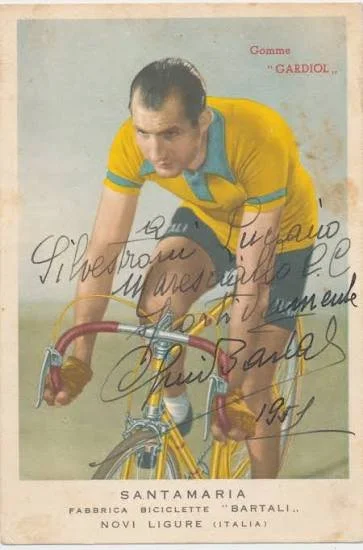
Gino Bartali: A Champion Beyond the Finish Line
This vintage collectible card presents Gino Bartali in the role that made him famous: a champion cyclist. Born near Florence in 1914, Bartali won the Giro d’Italia three times—in 1936, 1937, and 1946—and the Tour de France twice, in 1938 and 1948. His achievements made him one of Italy’s most celebrated sporting figures.
During the German occupation of Italy, that familiar public identity provided cover for a dangerous undertaking. Working with a rescue network helping Jews escape persecution, Bartali carried forged documents concealed inside his bicycle while appearing to make ordinary training rides. Those documents helped people threatened with deportation obtain false identities.
The card celebrates the athlete the public could see. The Promise explores the courage behind that image: the journeys undertaken not for a trophy, but for the safety of others. In 2013, Yad Vashem posthumously recognized Bartali as Righteous Among the Nations for his wartime rescue activities.
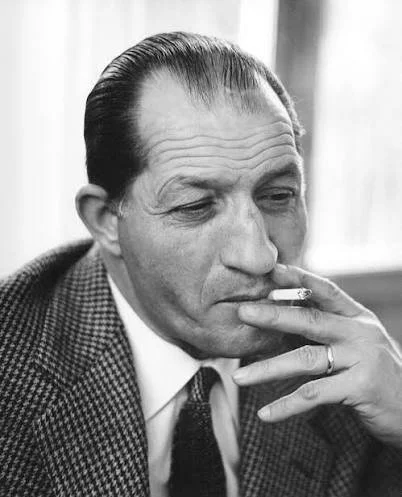
Gino Bartali: The Quiet Weight of Conscience
This black-and-white portrait shows Gino Bartali in 1963, years after the victories that established his place in cycling history. Yet behind his celebrated sporting career lay wartime actions he remained reluctant to discuss—acts of courage remembered through the testimony of people he helped.
Among them was the Goldenberg family. After the German occupation of Italy in 1943, they took refuge in a Florence apartment belonging to Bartali. Shlomo Goldenberg-Paz later told Yad Vashem that his parents credited Bartali with helping and supporting them during their time in hiding. His cousin, Aurelio Klein, also testified that Bartali supplied forged papers to Shlomo’s mother, enabling her to leave the apartment to buy food.
Bartali resisted having his rescue work documented. When researcher Sara Corcos approached him, he initially refused an interview, explaining that conscience had motivated his actions. He eventually agreed to speak after learning of her connection to Rabbi Nathan Cassuto’s family—but insisted that the conversation not be recorded. His legacy rests not only in the races he won, but in the lives of those whose testimony brought his quieter courage to light.