
Rooms Without Rest: The Rise, Ruin, and Resolve of an American Visionary
Episode 21: Rooms Without Rest — J.B. Stradford
Long before the keys turned in the doors he built, before the ledgers filled with names or the corridors echoed with the promise of safe passage, we enter the determined vision of a builder who shaped possibility from a nation that rarely offered him any. What follows is not a simple chronology, but a restoration — a constellation of rooms, risks, and deliberate acts of creation that together reveal a presence that carved prosperity from constraint, challenged the boundaries of ownership, and reimagined what refuge could mean in a country still learning to honor such ambition.
As you move through this story, you’ll encounter the districts raised against expectation, the choices rendered with unwavering intention, and the unmistakable imprint of a life that refused to be diminished. Each surviving record stands as evidence of a mastery he was never expected to claim, a determination to turn displacement into resolve, and a steady insistence on building spaces where dignity could finally take its place.
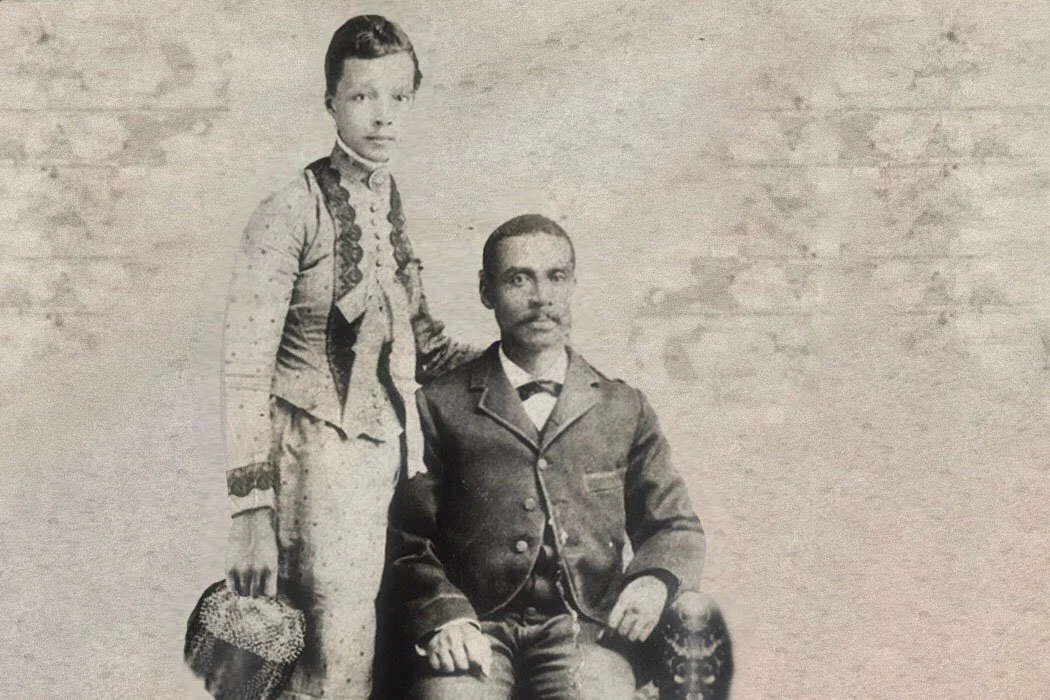
This formal studio portrait captures J.B. Stradford and his wife, Augusta, photographed during the height of their prominence in the early 20th century.
Stradford, born into a family that had escaped enslavement, became one of the most successful Black entrepreneurs in the United States. After earning a law degree from Indiana University, he moved to Tulsa and invested heavily in Greenwood — the district that would become known as Black Wall Street.
Augusta Stradford stood beside him not only as a partner in life, but as a partner in the work of building stability, dignity, and opportunity for Black families in the region. Their presence in this portrait reflects the confidence and self‑determination that defined Greenwood before the 1921 massacre.
Together, they helped shape a community where Black wealth, education, and civic life could flourish despite the constraints of Jim Crow America. This image stands as a testament to their shared resolve and the world they fought to build — a world violently attacked, but never erased.
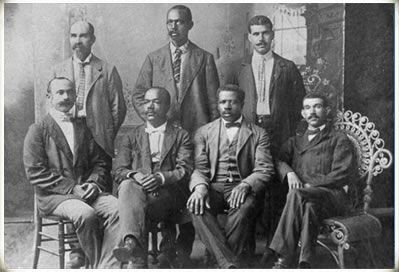
The men in this portrait embody the social world that figures like J.B. Stradford helped cultivate — a world defined by self‑determination, economic ambition, and communal responsibility. Their posture, their clothing, and the deliberate formality of the setting speak to a generation intent on shaping its own future, even as the nation around them sought to limit their possibilities.
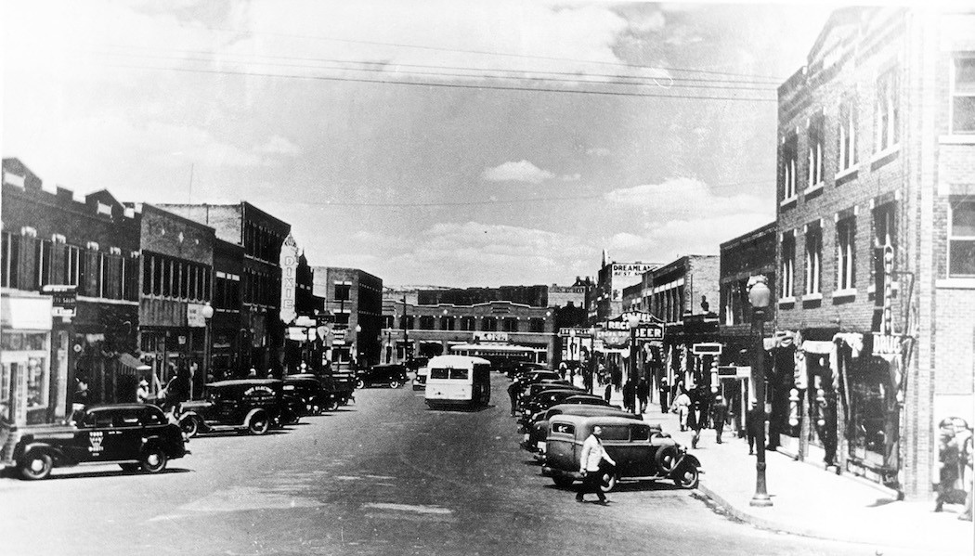
This photograph shows a busy commercial block in Tulsa’s Greenwood District, one of the most prosperous Black communities in early‑20th‑century America.
Businesses like the Dreamland Theatre, the Dixie, cafés, drugstores, and professional offices lined Greenwood Avenue, creating a self‑sustaining economic corridor built entirely by Black entrepreneurs.
Scenes like this reflect the scale and vitality of Black Wall Street before the 1921 massacre — a modern, thriving district powered by Black wealth, mobility, and ambition. It represents the world J.B. Stradford invested in and fought to protect.
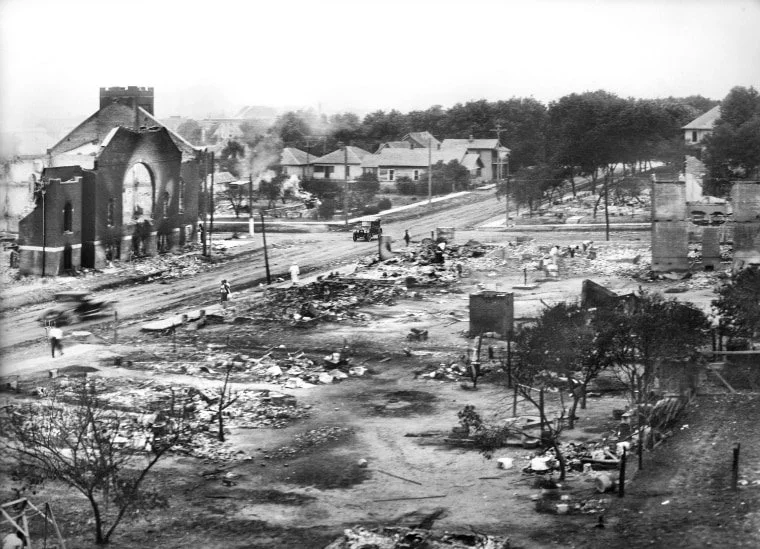
This photograph shows the Greenwood District in the immediate aftermath of the 1921 massacre, its once‑thriving business blocks reduced to rubble and skeletal brick shells.
The Dreamland Theatre, the Stradford Hotel, cafés, offices, and hundreds of homes were destroyed in less than 24 hours.
Where Greenwood had been a center of Black wealth and self‑determination, the landscape here reflects the scale of the attack—an entire community dismantled by coordinated violence. Residents walk through the ruins not as spectators, but as survivors taking stock of what remained.
Placed alongside images of Greenwood’s prosperity, this scene makes clear what was taken, and what Black families were forced to rebuild from nothing.
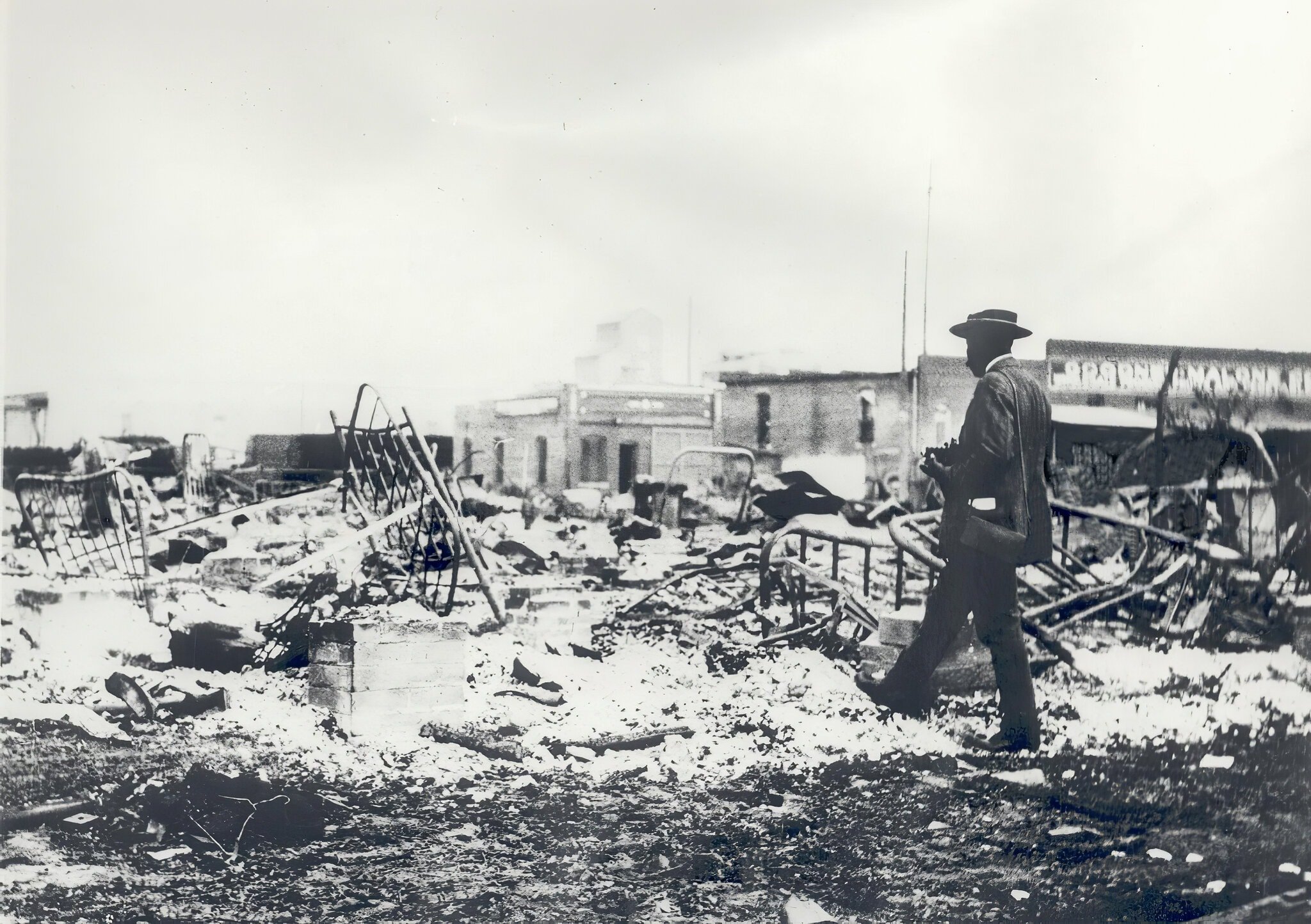
This photograph captures a lone resident walking through the wreckage of Greenwood after the 1921 massacre, moving past the twisted remains of homes, businesses, and community landmarks.
The skeletal brick walls and scattered debris mark what had been one of the most prosperous Black districts in the nation only a day before.
As a closing image, it stands as a stark counterpoint to Greenwood’s earlier vitality, reminding us that the destruction was deliberate, total, and aimed at erasing Black progress. Yet the figure moving through the ruins also signals something else: the beginning of the long, determined work of survival and rebuilding.