
The Grudge — Episode 1 Two Futures. One Collision.
The Grudge Series- The Rivalry between Thomas Edison vs. Nikola Tesla
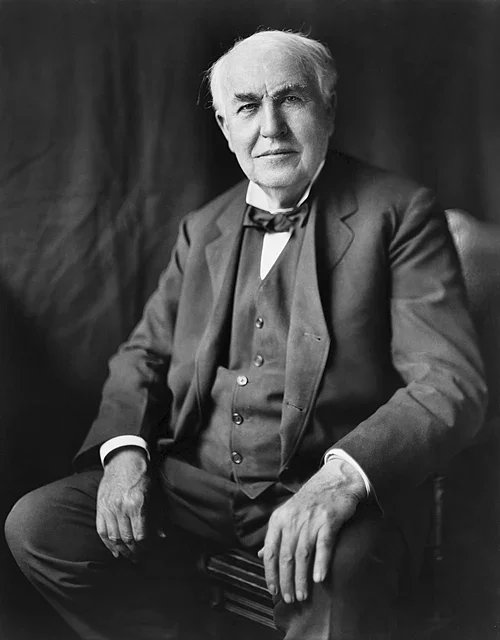
By Louis Bachrach, Bachrach Studios, restored by Michel Vuijlsteke
Thomas Edison — American inventor and businessman
Thomas Edison (1847–1931) was one of the most influential inventors of the industrial age, known for his relentless work ethic, commercial instincts, and the creation of laboratories designed to turn ideas into market‑ready systems. His breakthroughs in electric lighting, power distribution, and recorded sound reshaped modern life and helped define the emerging American identity around innovation and industry.
But Edison’s rise also placed him at the center of a profound technological divide. His commitment to direct current, his control over patents, and his aggressive defense of his business interests set the stage for one of the most consequential conflicts in scientific history. The clash that followed wasn’t just about electricity—it was about vision, credit, loyalty, and the cost of protecting a legacy in a world racing toward the future.
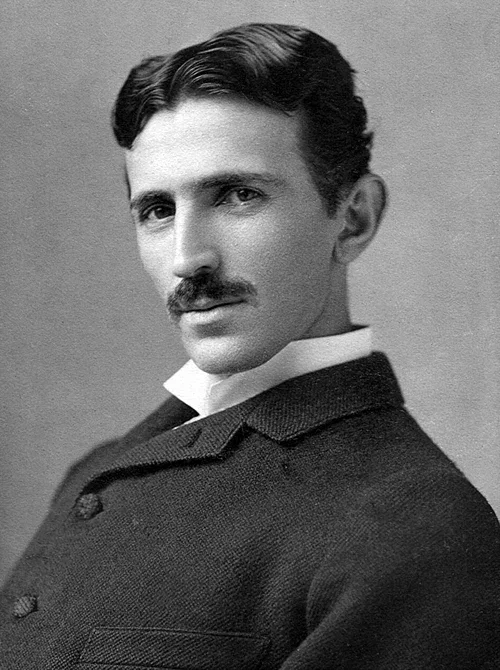
By Napoleon Sarony - postcard Tesla Museum, Public Domain
Nikola Tesla — Serbian-American engineer, futurist, and inventor
Nikola Tesla (1856–1943) was a visionary engineer whose ideas pushed far beyond the limits of his era. Gifted with an ability to imagine entire systems before a single part was built, he championed alternating current, wireless transmission, and a future powered by forces most people of his time could barely comprehend. His work was bold, elegant, and often years ahead of the world’s willingness to believe him.
But Tesla’s brilliance placed him on a collision course with the dominant power structures of his day. His refusal to compromise, his insistence on possibility over profit, and his challenge to the established electrical order turned a scientific disagreement into a defining rivalry. The conflict that followed reshaped industries, rewrote reputations, and left a legacy still humming beneath the modern world.
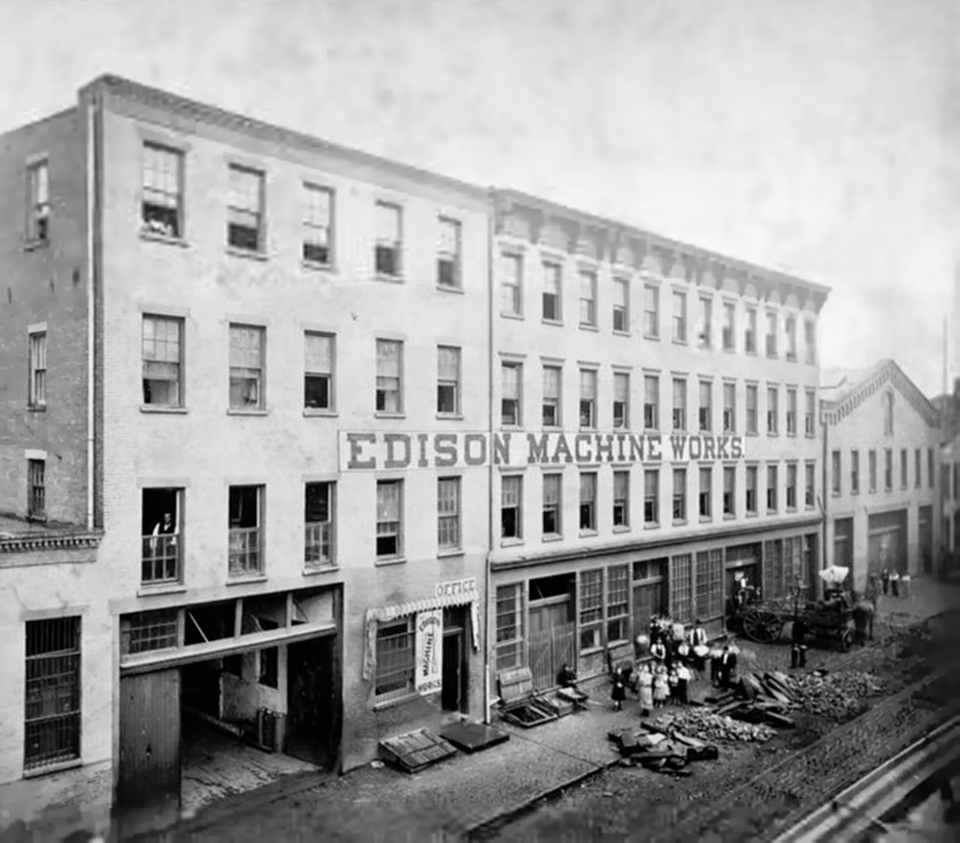
By Charles L. Clarke (1853 – 1941) - Gilder Lehrman Collection, Public Domain
The Edison Machine Works was one of the core manufacturing arms of Thomas Edison’s electrical empire in the late 19th century. Established in 1881 and later relocated to Schenectady, New York, it produced the dynamos, generators, and electrical components that powered Edison’s direct‑current (DC) lighting systems. The facility employed hundreds of machinists, engineers, and draftsmen, becoming one of the largest electrical manufacturing operations in the United States.
This site played a central role in the expansion of Edison’s DC network — and it became a symbol of the industrial scale, financial backing, and infrastructure he brought to the emerging electrical industry. It was from factories like this that Edison attempted to secure dominance during the technological conflict that would define the era.
Public Domain
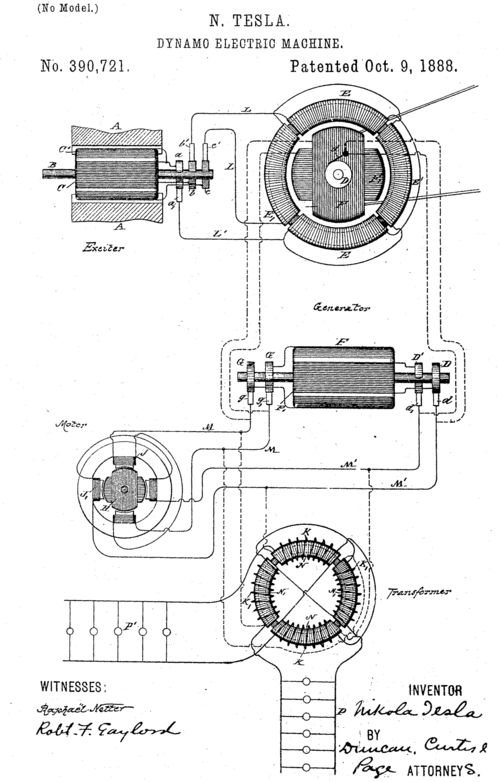
Nikola Tesla’s AC System Patent
This patent drawing represents one of Nikola Tesla’s pivotal contributions to the development of alternating‑current power: his 1888 design for a complete AC generation and transmission system. Filed during the period when Tesla was refining the principles of polyphase electricity, it illustrates the coordinated relationship between the generator, transformer, and motor — the core architecture that made long‑distance electrical transmission possible.
The design captured here helped establish the technical foundation that ultimately powered the first major AC networks in the United States. It also marked the moment when Tesla’s vision for a scalable, efficient electrical system diverged sharply from the direct‑current model championed by Edison. The ideas embodied in this diagram would become central to the technological conflict that reshaped the electrical industry and defined their enduring rivalry.